Iran warns of retaliation after US strikes in Hormozgan, shoots down MQ-9 Reaper drone
A fragile six-week-old ceasefire between the United States and Iran is teetering on the edge of total collapse. On Tuesday, the Iranian Ministry of Foreign Affairs issued a scathing diplomatic protest accusing the American military of "flagrant violations" and "maritime piracy" in the strategic Hormozgan province.
The formal diplomatic broadside serves as the centerpiece of a highly volatile 48-hour window in which backchannel peace talks in Islamabad have collided directly with live military engagements in the Persian Gulf. Even as diplomats attempt to negotiate a permanent opening of the Strait of Hormuz, military forces on both sides have engaged in direct, escalatory combat.
In its official statement, the Iranian Ministry of Foreign Affairs formally condemned what it termed a "blatant violation of the ceasefire by the United States." The statement accuses the United States of conducting illegal operations and "multiple instances of maritime piracy against Iranian commercial vessels" over the past 48 hours.
Crucially, the Iranian government linked these military provocations to ongoing diplomatic channels. The ministry stated: "Committing these aggressive actions, concurrent with the ongoing diplomatic process mediated by Pakistan, once again exposed the malice and bad faith of the US ruling body to the Iranian nation, the people of the region, and the international community."
Declaring the actions a "blatant violation of Article 2, Paragraph 4 of the United Nations Charter," Tehran warned that it "will not leave any malice unanswered" and remains prepared to defend its sovereignty.
Pentagon's counter-narrative
The view from Washington and the US military’s Central Command (CENTCOM) presents a starkly different account of the hostilities. On Monday, CENTCOM officials confirmed that US forces had executed targeted, selective military strikes in southern Iran.
According to military spokespersons, the operation was conducted in "self-defense" against active threats. The strikes reportedly targeted "missile launch sites, active batteries in southern coastal regions" that were poised to target commercial shipping and Iranian fast-attack boats allegedly caught attempting to lay sea mines in the international shipping lanes of the Strait of Hormuz.
Also Read: The 90-day siege: How long can the world survive without Hormuz?
CENTCOM maintained that the military acted "while using restraint" and insisted that, from its perspective, the overarching ceasefire established on April 8, 2026, technically remains in place.
Escalation in the skies
The crisis deepened further on Tuesday morning when the Islamic Revolutionary Guard Corps (IRGC) announced it had actively engaged US military aviation.
According to a statement published on the IRGC's Sepah News website, Iranian air defense units successfully identified and shot down an American MQ-9 Reaper drone after it allegedly entered Iranian airspace over the Persian Gulf.
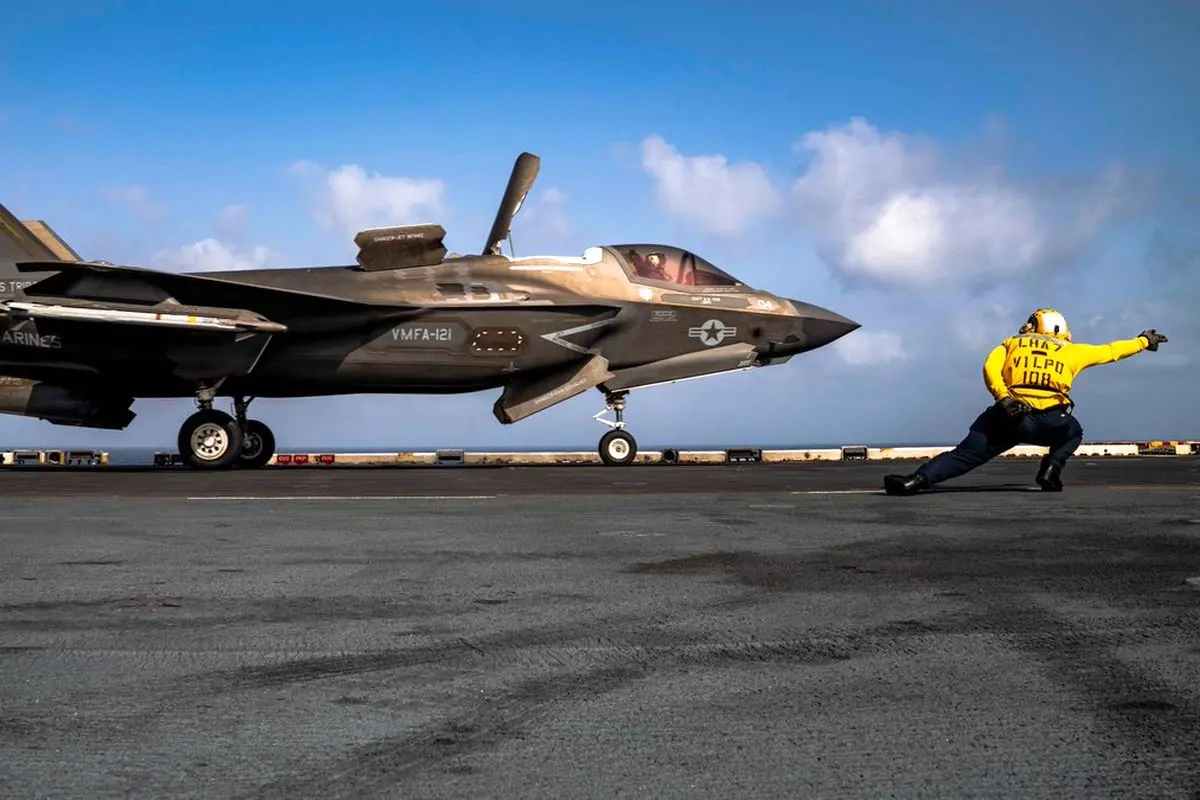
The IRGC also claimed to have fired warning shots or defensive missiles at an RQ-4 Global Hawk surveillance drone and an intruding F-35 Joint Strike Fighter in the same sector.
The downing of the MQ-9 follows Sunday's reported downing of an Israeli-made Orbiter spy drone over the same coastal province of Hormozgan, underscoring a rapidly tightening defensive envelope by Iranian forces.
Trump's 'all-or-nothing' ultimatum
This surge in military friction comes at the worst possible moment for international mediators. Pakistan’s Army Chief, Asim Munir, has been leading intensive mediation efforts to secure a 60-day extension of the April ceasefire.
The proposed diplomatic roadmap is designed to unfold in two critical phases:
Phase One (The Thaw): A 60-day extension of the ceasefire, during which the U.S. would lift its naval blockade and unfreeze up to $12 billion in Iranian assets held in Qatar, while Iran would spend 30 days clearing maritime mines from the Strait of Hormuz to restore commercial shipping.
Phase Two (The Core Negotiations): High-level talks aimed at permanently curbing Iran’s nuclear advancement.
However, political realities on both sides are rapidly choking the negotiations. US President Donald Trump took to Truth Social on Monday to issue an ultimatum, declaring that the pact would either be "great and meaningful, or there will be no deal at all." Trump also demanded that Iran immediately sign onto the Abraham Accords as a condition of any final settlement—a demand that domestic critics and regional experts call highly unrealistic.
Furthermore, US Secretary of State Marco Rubio warned that any attempt by Iran to implement a tolling system or charge fees in the Strait of Hormuz under its newly proposed "Persian Gulf Strait Authority" would make a diplomatic solution completely "unfeasible."
The nuclear sticking point
Beyond the immediate clashes in the Gulf, the peace process is stalled by fundamental disagreements over Iran's nuclear material.
The United States has demanded that Iran's entire stockpile of enriched uranium be completely transported out of the country. However, Iran's newly positioned Supreme Leader, Mojtaba Khamenei, has issued a strict directive rejecting any overseas transfer of the stockpile. Iranian negotiators have instead proposed domestic "down-blending" under international monitoring and a five-year freeze on enrichment, falling far short of the 20-year moratorium demanded by Washington.
With the IRGC downing American aircraft, CENTCOM striking mainland coastal targets, and Tehran’s foreign office issuing formal warnings of retaliation, the window for a negotiated peace is closing. Unless Pakistan’s mediators can broker an emergency de-escalation in the next 24 hours, the Persian Gulf appears poised to descend back into open, unrestricted warfare.