‘Good answers only’: Trump pressures Iran as Tehran studies new US proposal
Tehran: Iran has confirmed that it is reviewing the latest proposal from the United States aimed at easing tensions in West Asia, even as US President Donald Trump issued a fresh warning urging Tehran to respond positively to negotiations.
The latest developments come amid intensified diplomatic activity involving indirect talks between Washington and Tehran, with Pakistan continuing to act as a key intermediary between the two sides.
Iran confirms it received US proposal
Iranian state-run media quoted Foreign Ministry spokesperson Esmaeil Baghaei as saying that Tehran had officially received the American position and was examining the contents of the proposal.
“We have received US views and are reviewing them,” Baghaei said, according to Iranian media reports.
Iran’s Foreign Ministry stated that the latest communication was delivered through Pakistani mediators and added that several rounds of message exchanges had already taken place based on Tehran’s original 14-point negotiation framework.
The announcement signals that indirect diplomacy between Iran and the United States remains active despite escalating rhetoric from Washington.
The issue was discussed during a high-level meeting in Tehran between Iranian President Masoud Pezeshkian and Pakistani Interior Minister Mohsen Naqvi on Wednesday.
According to Iranian officials, both sides reviewed recent regional developments, bilateral ties, and the latest status of indirect Iran-US negotiations.
Iran also acknowledged Pakistan’s role in supporting diplomatic engagement and regional stability during a period of heightened tensions across West Asia.
Reports have additionally suggested that Pakistan Army Chief Asim Munir may visit Iran as part of broader diplomatic consultations linked to the negotiations, although no official confirmation has been announced regarding a final agreement.
Trump issues stern warning to Tehran
The latest diplomatic developments follow sharp remarks from US President Donald Trump, who indicated that negotiations with Iran were approaching a decisive stage.
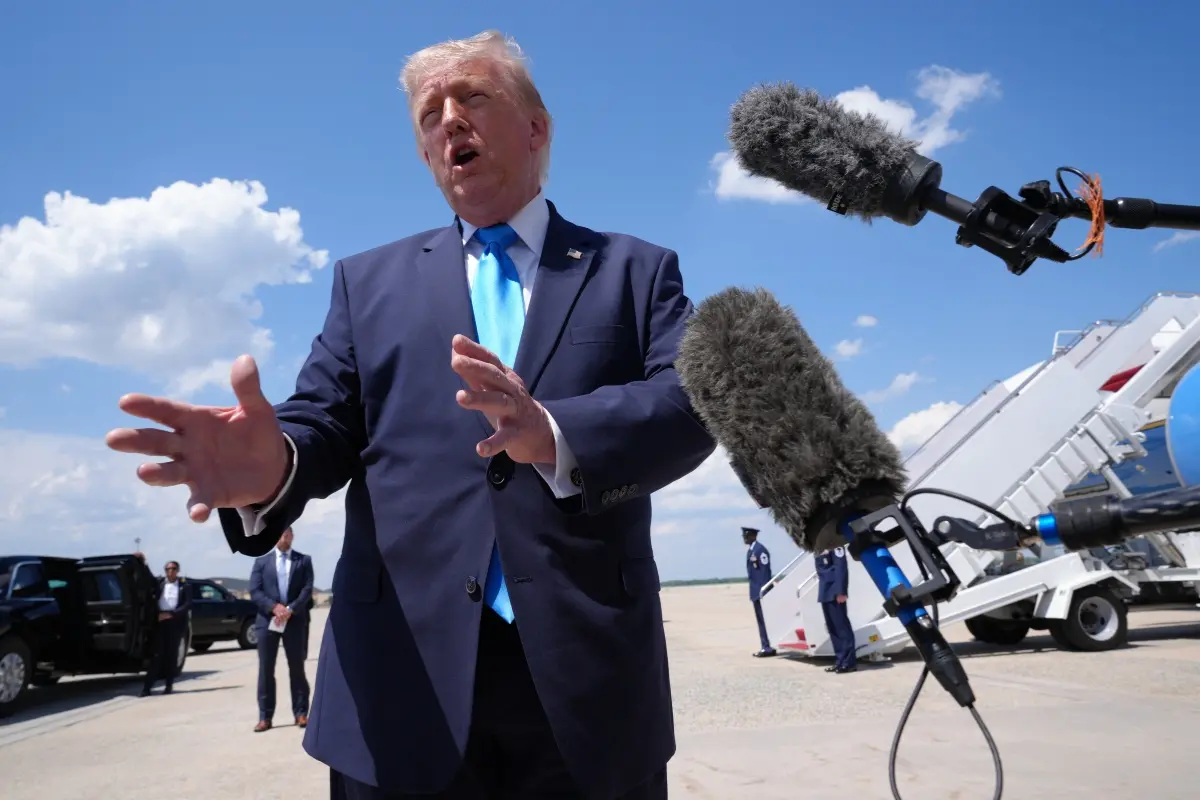
Speaking to reporters at Joint Base Andrews on Wednesday, Trump said:
“It’s right on the borderline, believe me. If we don’t get the right answers, it goes very quickly. We’re all ready to go. We have to get the right answers — it would have to be complete 100% good answers.”
Trump’s comments suggested growing impatience within the US administration over the pace and direction of negotiations.
White House rhetoric escalates further
The rhetoric intensified further after Stephen Miller, Deputy Chief of Staff for Policy and Homeland Security Advisor, issued a direct warning to Tehran during an interview with Fox News.
“Iran has a choice to make: they can either agree to a piece of paper that is satisfactory to the United States, or they can face a punishment from our military the likes of which has not been seen in modern history,” Miller said.
The statement added to concerns that diplomatic negotiations remain fragile despite continued communication channels.
The ongoing talks are unfolding against the backdrop of broader instability across West Asia, where fears of renewed military confrontation remain elevated.
Multiple regional stakeholders are attempting to prevent escalation by encouraging diplomatic engagement between Tehran and Washington. Analysts say any breakthrough agreement could significantly reduce tensions in the region, while failure to secure progress could increase the risk of confrontation.
For now, both countries continue indirect discussions through intermediaries, with the international community closely watching whether the latest proposal will lead to de-escalation or further tensions.
Uncertainty over final outcome
While Iran has not publicly disclosed details of the proposal, officials have indicated that the review process is ongoing. No timeline has been announced for Tehran’s formal response.
The coming days are expected to be critical as diplomatic efforts continue alongside increasingly forceful public messaging from the United States administration.
(With ANI inputs)