Iran unleashes missile barrage on Israel in retaliation | WATCH
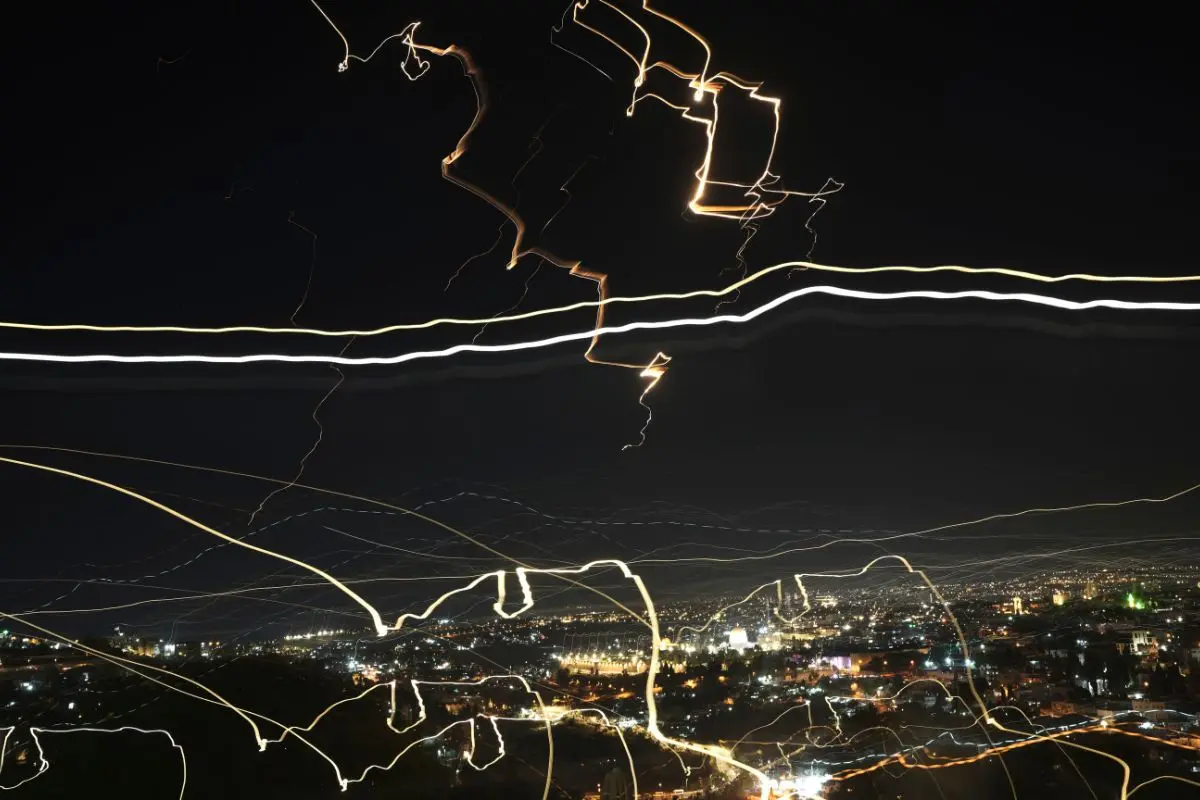
Dubai: Iran launched a major retaliatory attack against Israel late Friday night, unleashing waves of ballistic missiles and drones targeting key Israeli cities including Tel Aviv and Jerusalem. The barrage came in response to Israel’s unprecedented airstrikes a day earlier on Iranian territory, which targeted nuclear and military infrastructure and killed senior Iranian officials.
Explosions were seen and heard across Israel’s skies, with buildings in Jerusalem and Tel Aviv shaken by the force of the blasts. The second wave of attacks struck early Saturday, with sirens once again sounding and reports of Israeli interceptor missiles lighting up the night sky. The Israeli military urged civilians to seek shelter amid renewed fears of further strikes.
A hospital in Tel Aviv treated seven people injured in the second barrage, most with light wounds. One woman was critically hurt after being trapped under rubble from a building hit by a projectile. In Ramat Gan, east of Tel Aviv, Associated Press journalists observed burned-out cars and significant damage to several homes, including one nearly torn apart by the blast.
Meanwhile, in Iran, air defence systems fired into the sky over central Tehran shortly after midnight, with the sound of explosions reverberating across the capital.
Iranian media reported a fire at Mehrabad International Airport, with footage posted to social media showing flames and smoke rising from the facility. The cause of the blaze remains unconfirmed.
The powerful Islamic Revolutionary Guard Corps (IRGC) took credit for the missile strikes, saying it had targeted military centres and airbases involved in the previous day’s Israeli attack. Iranian Supreme Leader Ayatollah Ali Khamenei vowed that Israel would not go unpunished, declaring, “We will not allow them to escape safely from this great crime they committed.”
Israeli strikes
Iran’s ambassador to the United Nations said 78 people had been killed and more than 320 wounded in the initial Israeli strikes. He called the operation “state terrorism” and affirmed Iran’s right to self-defence in a letter to the UN Security Council. The Council convened an emergency meeting on Friday afternoon at Iran’s request, amid urgent calls from world leaders for de-escalation.
The United States confirmed it had helped shoot down Iranian missiles using ground-based air defence systems stationed in the region. A US official, speaking on condition of anonymity, said American forces had been repositioned and were actively intercepting threats. The US also began withdrawing diplomatic staff from Iraq and offered voluntary evacuations for the families of US troops across the region.
The Iranian attack followed a vast and highly coordinated Israeli operation the previous night. According to Israeli officials, the airstrike involved 200 aircraft hitting approximately 100 targets inside Iran. Intelligence from the Mossad spy agency was used to position explosive drones and precision weapons inside Iran ahead of the assault, with strikes hitting air defences, missile sites, and nuclear infrastructure.
Nuclear sites targeted by Israel
Among the sites targeted was Iran’s main nuclear enrichment facility in Natanz, where black smoke was seen rising. UN nuclear chief Rafael Grossi confirmed that the above-ground section of the site had been destroyed, including electrical infrastructure, emergency generators, and parts of the enrichment complex where uranium was being enriched up to 60%. Though the underground centrifuge facility was not hit directly, the loss of power may have caused significant damage.
Other key strikes hit the Fordo nuclear site, the nuclear research facility in Isfahan, and surface-to-air missile installations in western Iran. Iran confirmed damage at the Isfahan site. An Israeli military official said the first wave of attacks had cleared airspace for continued operations and that Israel was prepared for an operation that could last up to two weeks, though no fixed timeline had been set.
Among those killed in the Israeli strikes were three top Iranian generals: Gen. Mohammad Bagheri, who oversaw Iran’s armed forces; Gen. Hossein Salami, commander of the Revolutionary Guard; and Gen. Amir Ali Hajizadeh, head of Iran’s ballistic missile programme. Their deaths represent a significant loss to Iran’s military leadership, and Iranian media confirmed that several other senior military officials and nuclear scientists were also killed.
Planned attack
Prime Minister Benjamin Netanyahu said the attack had been months in the making, planned since November following the assassination of Hezbollah leader Hassan Nasrallah. The strike had been scheduled for April but was delayed. He said Israel informed the United States in advance, though American officials reiterated that the US had no involvement in the operation and had advised against it earlier in the week due to ongoing negotiations over Iran’s nuclear programme.
Netanyahu defended the operation as necessary to neutralise a growing threat, saying, “This is a clear and present danger to Israel’s very survival.” He addressed the Iranian people directly, emphasising that Israel’s conflict was with Iran’s leadership, not its citizens. “Our fight is with the brutal dictatorship that has oppressed you for 46 years,” he said.
Trump weighed in
Former US President Donald Trump also weighed in, using his Truth Social platform to urge Iran to make a nuclear deal with Washington. “Iran must make a deal, before there is nothing left, and save what was once known as the Iranian Empire,” he wrote, warning that Israel’s attacks “will only get worse.”
The wider region is now on high alert, with fears of a broader war involving Hezbollah, Iranian proxies, or even Gulf states. While Iran launched over 100 drones in its first response on Friday, Israel reported most were intercepted outside its airspace. As Israel began mobilising reservists and redeploying troops across the country, officials in Tel Aviv said the military was prepared for further attacks.
The UN’s atomic watchdog had censured Iran just a day before the Israeli strike, citing its failure to comply with obligations under the nuclear non-proliferation framework. Iran maintains its nuclear programme is for civilian purposes only, while Israel argues it is a cover for nuclear weapons development.