‘We do not seek war, but won't surrender’: Iran’s UN envoy lays out red lines amid strikes
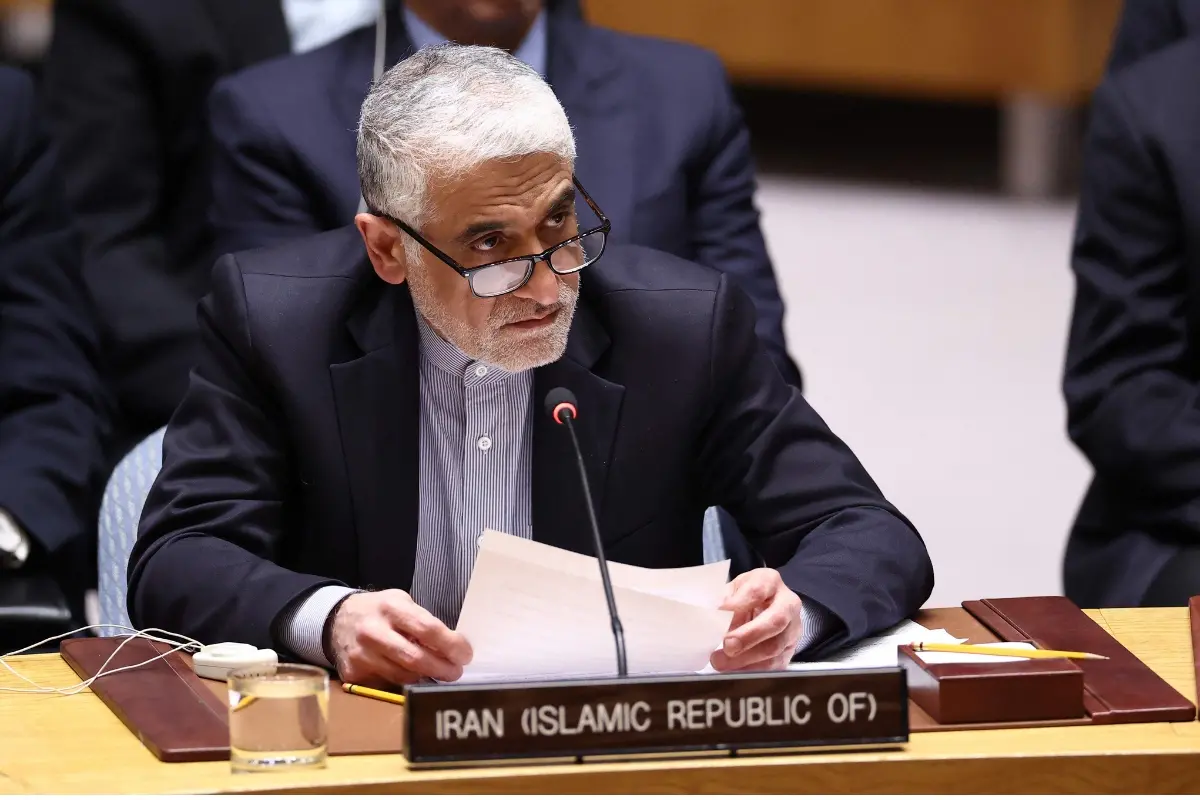
New York: Iran’s permanent representative to the United Nations on Monday issued a scathing condemnation of the joint U.S.-Israeli military campaign, calling on the Security Council to move past "ambiguity" and hold both nations accountable for what he described as a calculated "act of aggression."
Speaking to reporters at the U.N. headquarters in New York, Ambassador Amir Saeid Iravani characterised the ongoing offensive as a deliberate and unprovoked assault on the foundational principles of international law.
“The United Nations can not remain silent. Accountability is not optional,” Iravani said, insisting that “the Security Council must act firmly, clearly, and without ambiguity.”
Allegations of War Crimes
Iravani accused the United States and Israel of specifically targeting civilian centres and infrastructure under the guise of "Operation Epic Fury." He highlighted a strike in southern Iran’s Hormozgan province that reportedly resulted in the deaths of 165 schoolgirls.
“Major cities and densely populated civilian areas were targeted. Hundreds of innocent civilians lost their lives, many more were wounded,” he said. “These acts constitute aggression. They constitute war crimes. They constitute crimes against humanity.”
ALSO READ: ‘The Iran war could go longer than four weeks,’ says Trump
Violation of Sovereignty
The envoy argued that the Saturday airstrikes, which killed Iranian Supreme Leader Ayatollah Ali Khamenei, represented a "flagrant violation" of the U.N. Charter, specifically the provisions protecting the territorial integrity and sovereignty of member states.
“This is a flagrant violation of the Charter of the United Nations ... which strictly prohibits the threat or use of force against the sovereignty and territorial integrity of any state,” Iravani said. He further characterised the assassination of Khamenei as “an egregious breach of international law and a direct attack on sovereign equality,” warning that “such conduct endangered the entire international system.”
Iravani dismissed the "imminent threat" justification utilised by the Trump administration, asserting that “The aggression was clear. Responsibility also was clear.” He maintained that Iran’s nuclear program is “exclusively peaceful” and that Tehran had been “engaged in serious diplomatic negotiations.”
“For the second time, the United States chose force over diplomacy and violated the Charter. There are no legal grounds that justify this attack,” he stated.
The Right to Self-Defence
Defending Tehran’s retaliatory missile strikes against Israel and regional U.S. assets, Iravani cited Article 51 of the U.N. Charter, which outlines a nation's inherent right to respond to armed attacks. He argued that Iran’s response has been "lawful, necessary, and proportionate" by focusing solely on military objectives.
“Iran is exercising its inherent right to self-defence under Article 51 of the Charter,” Iravani said.
While stressing that Tehran’s goal is not a regional conflagration, he maintained that the Islamic Republic would not be intimidated into submission. “Iran does not seek war. Iran does not seek escalation, but Iran will not surrender its sovereignty,” he said.