Iran President apologises over protest crackdown, says nuclear sites open for inspections
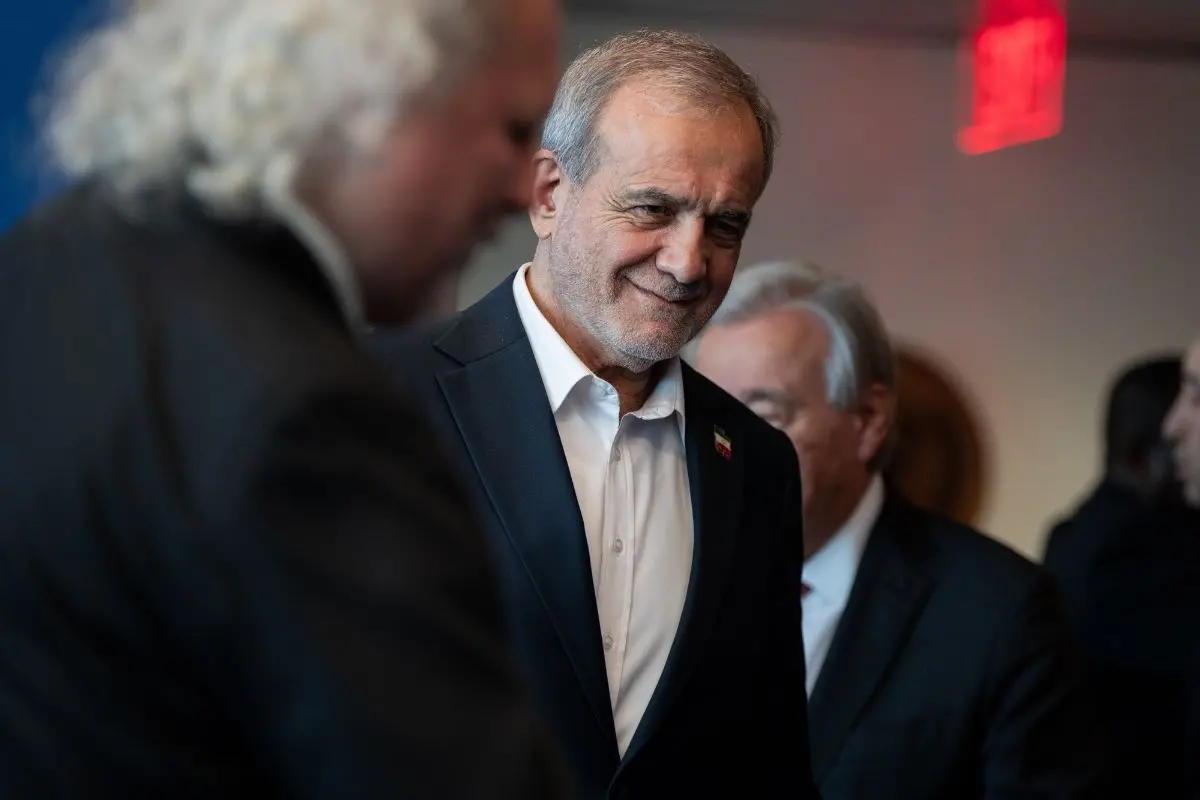
Tehran: Iranian President Masoud Pezeshkian on Wednesday apologised for the government’s crackdown on the recent nationwide protests in the country. His statement came on the occasion of Iran’s commemoration the 47th anniversary of its 1979 Islamic Revolution, with mass rallies and official ceremonies, even as the country’s leadership faces mounting pressure both at home and abroad.
Tens of thousands took to the streets waving portraits of Supreme Leader Ayatollah Ali Khamenei and revolutionary founder Ayatollah Ruhollah Khomeini, alongside Iranian and Palestinian flags. Chants of “Death to America!” and “Death to Israel!” echoed through the crowds, while state television broadcast images of jubilant supporters. Yet in Tehran, as government fireworks lit the sky on Tuesday night, residents shouted from their homes: “Death to the dictator!”
President Pezeshkian’s apology
At the official ceremony, President Pezeshkian struck a conciliatory tone, apologising to “all those affected” by the bloody crackdown. He acknowledged the “great sorrow” felt by citizens but stopped short of directly blaming security forces for the violence.
“We are ashamed before the people, and we are obligated to assist all those who were harmed in these incidents,” he said, while dismissing what he described as “Western propaganda” surrounding the unrest.
Also Read | Iran may dilute 60% enriched Uranium if all sanctions are lifted, nuclear chief says
Nuclear talks and distrust in US
Pezeshkian also reiterated that Iran was “not seeking nuclear weapons” and declared the country ready for “any kind of verification.”
Iran remains locked in negotiations with the United States over its nuclear programme, though prospects for a deal appear uncertain. The International Atomic Energy Agency has been unable for months to inspect and verify Iran’s nuclear stockpile.
Foreign Minister Abbas Araghchi, speaking to Russian broadcaster RT, voiced scepticism about Washington’s intentions. “Last time we negotiated, last June, we were in the middle of negotiation then they decided to attack us, and that was a very, very bad experience,” he said. He added that while a “better deal than Obama” might be possible, trust in the US remains fragile.
Senior Iranian security official Ali Larijani travelled from Oman to Qatar on Wednesday, continuing shuttle diplomacy in the Gulf. Qatar, which shares a vast offshore gas field with Iran, has previously played a mediating role in talks. The country also hosts a major US military base, targeted by Iran during last year’s Iran-Israel conflict.
Also Read | US–Iran nuclear talks begin in Oman as Washington boosts military presence in Arabian Sea
US pressure and Trump’s threat
Meanwhile, US President Donald Trump has signalled a hardening stance. The aircraft carrier USS Abraham Lincoln, accompanied by warships and fighter jets, has already been deployed to the Middle East. American forces recently shot down an Iranian drone near the carrier and intervened when Iranian forces attempted to stop a US-flagged vessel in the Strait of Hormuz.
Trump told Axios he was considering sending a second carrier group, declaring, “We have an armada that is heading there and another one might be going.” Israeli Prime Minister Benjamin Netanyahu, visiting Washington, has urged the US to adopt the strictest possible terms in any nuclear agreement with Tehran.
AP