Strait of Hormuz tension: Iran says US warship retreated after warning over crossing attempt
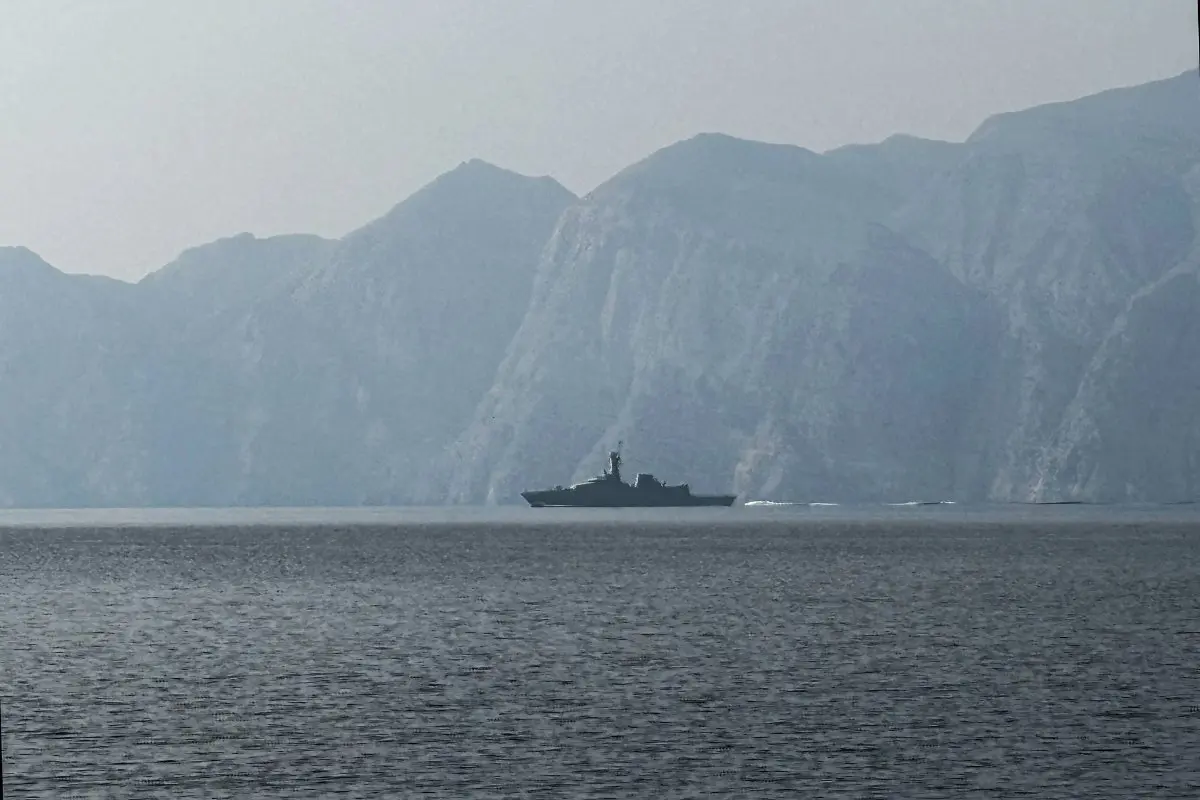
Tehran/Washington: Iran has warned a US warship against crossing the strategically vital Strait of Hormuz, with state television claiming the vessel retreated after being threatened with attack.
According to Iranian state TV, a warning was issued to the US military vessel stating it would be targeted within 30 minutes if it attempted to cross the strait. A senior Iranian military official said the vessel turned back following the warning, signalling a sharp escalation in tensions in the region.
Iran's state-run news agency said three-party talks had begun after Iranian preconditions, including a reduction in Israeli strikes on southern Lebanon, were met, and after U.S. and Iranian officials met separately with Pakistani Prime Minister Shehbaz Sharif. There were no immediate further details, nor a US comment.
The U.S. delegation, led by Vice President JD Vance and the Iranian delegation, led by Parliament Speaker Mohammad Bagher Qalibaf, were discussing how to advance the ceasefire already threatened by deep disagreements and Israel's continued attacks against the Iranian-backed Hezbollah in Lebanon.
“I cannot say whether they are sitting in the same room or in separate rooms, but talks have started and are progressing well,” said one Pakistani official with knowledge of the peace efforts, speaking on condition of anonymity because they were not authorised to talk to the media.
The development comes amid heightened rhetoric from US President Donald Trump, who has asserted that Iran is “losing big” in the ongoing conflict while signalling a potential American move in the region.
In a recent post on Truth Social, Trump said the US was “starting the process of clearing out the Strait of Hormuz,” framing it as an effort to secure global shipping lanes. He also claimed that “massive numbers” of empty oil tankers were heading to the United States to load what he described as the “best and sweetest” crude, underscoring Washington’s push to position itself as a key energy supplier amid disruptions.
On the diplomatic front, parallel engagements are underway in Pakistan. A US delegation led by Vice President JD Vance and an Iranian delegation headed by Parliament Speaker Mohammad Bagher Qalibaf have held separate meetings with Pakistan Prime Minister Shehbaz Sharif in Islamabad. However, no direct talks between Washington and Tehran have been officially announced.
Meanwhile, tensions remain high on the ground, with Israel continuing its strikes in Lebanon, complicating ceasefire efforts. Iran has reportedly linked progress in negotiations to a halt in Israeli military operations.
The conflict has already taken a heavy toll, with thousands reported dead across Iran, Lebanon, Israel and Gulf states. The disruption in the Persian Gulf, a crucial artery for global energy supplies, has sent oil prices soaring and raised concerns over supply chain stability.