India to Iran: Two wars that quietly powered Asim Munir’s rise
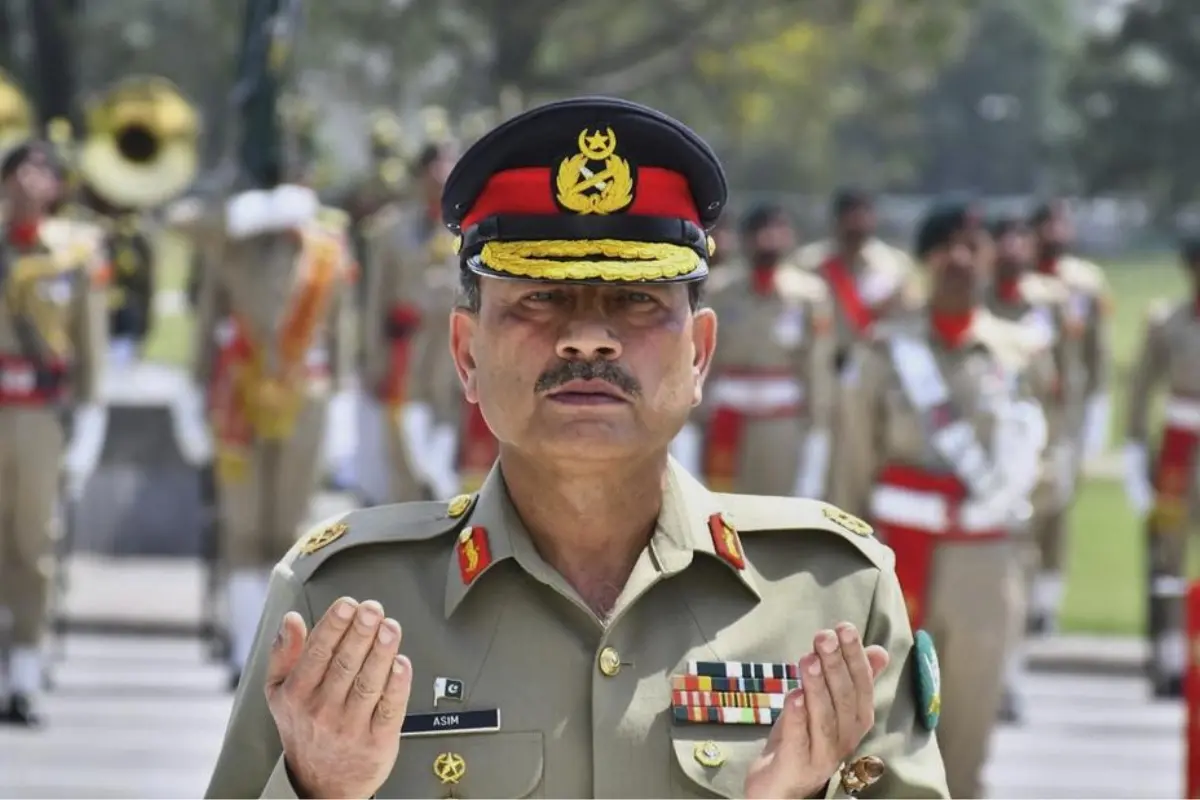
A year after a brief but intense conflict with India, Pakistan’s military chief Asim Munir has emerged at the centre of another major geopolitical crisis — this time as a mediator in the escalating tensions between the United States and Iran.
His rapid rise from battlefield commander to key diplomatic interlocutor has drawn attention, raising questions about how two separate wars have reshaped both his role and Pakistan’s position on the global stage.
From India war to global spotlight
The reports by Al Jazeera impiles, trajectory of Asim Munir has been shaped by two major conflicts — the 2025 India–Pakistan confrontation and the ongoing US–Iran tensions.
Following the deadly Pahalgam attack in Indian-administered Kashmir, India launched strikes under Operation Sindoor, triggering a brief but intense war between the two nuclear-armed neighbours. Pakistan responded with its own military actions, leading to a fast-escalating conflict that ended in a ceasefire brokered through backchannel diplomacy.
The war significantly elevated Munir’s profile within Pakistan, leading to his promotion to Field Marshal — a rare five-star rank in the country’s military hierarchy.
Rise from military commander to Field Marshal
After the conflict, Pakistan’s government credited Munir’s leadership during the crisis and formally elevated him to Field Marshal, making him only the second officer in the country’s history to hold the title.
His role was further expanded when he was later appointed as the country’s first Chief of Defence Forces, consolidating command over multiple branches of the military.
This restructuring marked a significant shift in Pakistan’s civil-military balance, placing Munir at the centre of both defence and strategic decision-making.
Shift to global diplomacy: US–Iran crisis
Munir’s influence expanded beyond South Asia during the escalating US–Iran conflict. Pakistan emerged as a rare diplomatic channel capable of engaging both sides.
In recent months, he has reportedly held discussions with officials from United States and Iran, including backchannel contacts that contributed to a temporary ceasefire arrangement.
Pakistan’s mediation efforts included talks hosted in Islamabad and high-level visits involving delegations from both Washington and Tehran.
Washington engagement and Trump’s remarks
Munir’s growing diplomatic role was acknowledged publicly by US President Donald Trump, who described him as a key figure in facilitating dialogue during the crisis.
A meeting at the White House further signalled Pakistan’s re-emergence as a strategic interlocutor in US–Middle East diplomacy.
Analysts say this engagement reflects Washington’s interest in maintaining multiple channels during a volatile regional conflict.
Strategic balancing in the Gulf
Pakistan has also strengthened defence ties in the Gulf region, including a strategic mutual defence agreement with Saudi Arabia. This has placed Islamabad in a delicate position, balancing relationships with Gulf allies, Iran, and the United States simultaneously.
The situation has been further complicated by instability around the Strait of Hormuz, a critical route for global energy supplies.
Domestic consolidation and controversy
Domestically, Munir’s rise has coincided with increased consolidation of military authority. Constitutional changes have formalised a unified defence command structure, extending his tenure and expanding institutional control.
Critics argue this marks a concentration of power within Pakistan’s military establishment, while supporters say it enhances operational efficiency during regional instability.
A commander at the centre of global tensions
From the India–Pakistan conflict to the US–Iran crisis, Munir’s role has evolved from battlefield commander to diplomatic power broker.
His rising profile reflects Pakistan’s strategic position between competing global blocs — and the growing intersection of regional wars and global diplomacy.