How long does it take for a tsunami to reach the shore after an earthquake?
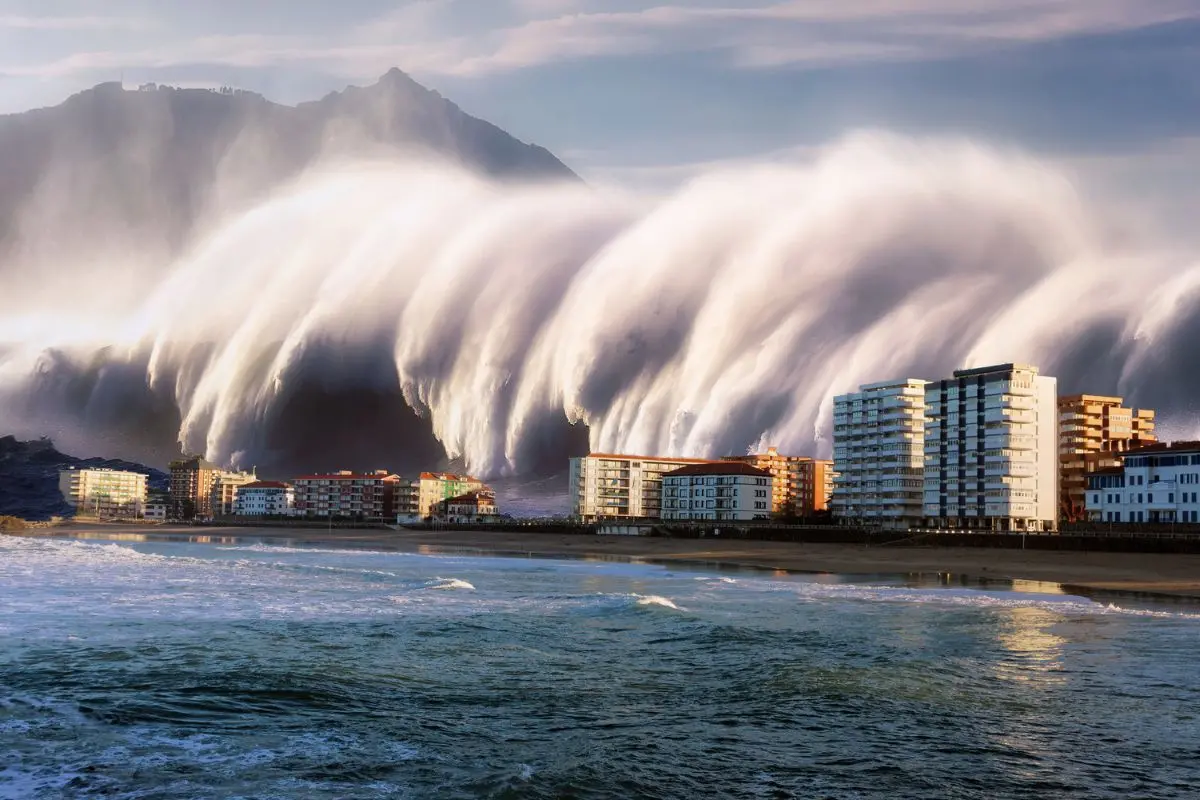
An earthquake measuring 8.8 magnitude struck off Russia’s Far East early Wednesday, prompting tsunami warnings across the Pacific. Waves were reported along the Kuril Islands and Japan’s Hokkaido, while alerts were issued as far away as Hawaii, Chile and the Solomon Islands.
Japan’s Meteorological Agency confirmed that a 30-centimetre wave reached the port of Nemuro in Hokkaido, while the coastal town of Severo-Kurilsk saw the first waves hit shortly after the quake. Though no immediate damage was reported, residents were moved to higher ground as a precaution.
The Pacific Tsunami Warning Center stated that waves of up to 3 metres were possible along coastal areas of Russia and Ecuador, while Hawaii, Japan and Chile could also face wave surges ranging from 1 to 3 metres.
This latest seismic event has once again raised the question: how quickly can a tsunami follow an earthquake?
Minutes to hours: The variable timeline of tsunami onset
The time it takes for a tsunami to form and reach shore after an earthquake largely depends on the location, depth, and intensity of the quake. In some cases, tsunami waves can hit nearby coastlines within just 15 to 20 minutes — offering very little time to escape. In other scenarios, particularly when the earthquake's epicentre is far offshore, it may take several hours for waves to reach populated areas.
Tsunami waves move at jet-like speeds — up to 800 km/h (500 mph) in deep waters — though they are almost imperceptible at sea, with wave heights measuring only a few feet. But as these waves approach land, they slow down and rise dramatically in height due to the shelving of the ocean floor.
Lessons from the 2011 Japan tsunami
A timelapse of the devastating 9.1 magnitude earthquake and tsunami that struck Japan in 2011 highlights the vast reach of tsunami waves over time. The quake hit Japan's northeast coast at 2:46 pm local time. Within three hours, waves reached the southern coast of Russia’s Kamchatka Peninsula — nearly 750 miles away. The tsunami reached Alaska’s Gulf in nine hours, and then slammed into the California coast 40 minutes later. By the 20-hour mark, it had travelled as far as South America.
What causes a tsunami?
Most tsunamis are triggered by undersea earthquakes, particularly when a quake causes a sudden displacement of the seabed, pushing a vast volume of water outward in a ripple effect. These waves radiate in all directions from the quake’s epicentre.
Tsunamis may also be caused by volcanic eruptions, underwater landslides, or even the collapse of glaciers. The severity and height of the resulting waves depend on multiple factors — including the magnitude of the quake, amount of water displaced, topography of the seafloor, and the presence of natural barriers that may absorb some of the shock.
Natural warning signs to watch for
While tsunami alert systems are in place, natural signs can offer crucial early warnings — especially in regions with limited time to respond. These include:
- A long or powerful earthquake (lasting more than 20 seconds)
- A sudden retreat or rise of ocean water, exposing reefs and the seabed
- A loud roaring noise similar to a train or aircraft
- Violent ground shaking near coastlines
If you observe any of these signs, immediate evacuation to higher ground is essential.
What to do when a tsunami warning sounds
Contrary to popular belief, you cannot outrun a tsunami. Even the fastest athletes would struggle to escape the surge of water if they hesitate. The best strategy is early detection and swift evacuation. Time is critical — hesitation can prove fatal. When official warnings are issued or natural signs appear:
- Stay calm but act quickly.
- If indoors during an earthquake, drop, cover and hold on.
- As soon as the shaking stops or a warning is received, evacuate to higher ground — at least 30 metres (100 feet) above sea level or one mile inland.
- If elevation is not possible, head to the fourth floor or higher in a sturdy building.
- Do not return to coastal areas until the all-clear is given by authorities. Tsunamis often arrive in multiple waves, with the second sometimes more powerful than the first.