Why are the remains of Hiroshima’s atomic bomb victims still being dug up 80 years later? | SEE PICS
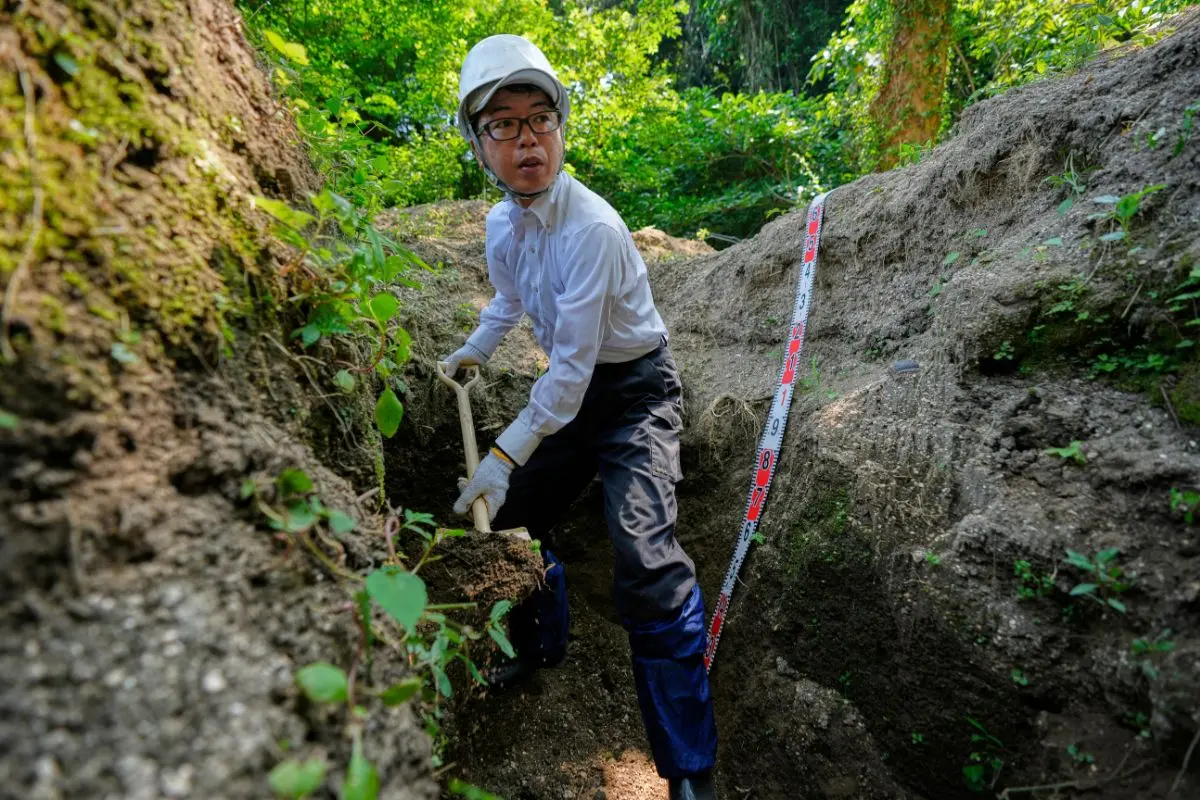
Ninoshima, Japan: Eighty years after the atomic bomb destroyed Hiroshima, efforts are ongoing on the nearby island of Ninoshima to recover the remains of thousands who died in the aftermath. Though the island was once used as a military quarantine site, it became a field hospital and burial ground following the August 6, 1945 bombing. Now, researchers and survivors' families are on a mission to account for the missing and bring long-overdue closure.
A key figure in this search is Rebun Kayo, a Hiroshima University researcher who has spent years combing through forested hillsides on Ninoshima. Armed with a shovel, helmet, and insect repellent, Kayo has recovered nearly 100 bone fragments — including pieces of skull and the jawbone of an infant with teeth still intact.
A final resting place amid chaos
In the days following the bombing, military boats transported thousands of severely burned and dying victims from Hiroshima to Ninoshima, about 10 kilometres south. Many were already in critical condition, arriving naked with flesh hanging from their bodies. Due to inadequate medical care and a lack of resources, only a few hundred survived by the time the field hospital closed on August 25.
Most victims died in agony and were hastily buried in chaotic operations overseen by the Imperial Army. Historical records indicate that soldiers cremated bodies around the clock and eventually resorted to using bomb shelters and burial mounds as makeshift graves when the island’s facilities were overwhelmed.
“Until that happens, the war is not over for these people,” said Kayo, who continues to search for remains based on eyewitness accounts from local residents.
Memories that haunt
Among those still affected by that day is Tamiko Sora, now a nursing home resident, who was just three years old at the time of the blast. Her home was only 1.4 kilometres from the hypocentre. Though her family survived, she sustained facial burns and carries emotional scars from the experience.
While fleeing the city, she encountered a young girl named Hiroko and a badly injured woman begging for help for her baby. Her family was unable to assist, and they later searched orphanages in vain. Sora now suspects those people may have been transported to Ninoshima and possibly buried there.
“I feel they are waiting for me to visit,” she said during a pilgrimage to the island’s cenotaph. “When I pray, I speak the names of my relatives and tell them I’m well and tell them happy stories.”
Fragments of history
On a recent visit, Kayo showed Sora a plastic box containing the infant’s jaw and other bone fragments carefully laid on cotton. He told her the remains could be from a child similar in age to the one she met in the aftermath of the bombing.
“I’m so happy you were finally found," Sora told the remains. "Welcome back.”
Kayo began his search in 2018 on the advice of a local whose father witnessed the mass burials. “The little child buried here has been alone for all these years,” he said. “It's just intolerable.”
A site of war and tragedy
Before becoming a field hospital, Ninoshima was used by the Imperial Army to train suicide attackers, employing wooden boats meant for deployment in the Philippine Sea and Okinawa. The island was home to a major military quarantine centre, making it a central location during Japan’s wartime expansion.
“Hiroshima was not a city of peace from the beginning. Actually, it was the opposite,” said Kazuo Miyazaki, a 77-year-old historian and guide from the island. “It’s essential that you learn from the older generations and keep telling the lessons to the next.”
Miyazaki’s own mother served as an army nurse on Ninoshima and witnessed the horrors firsthand. Accounts from other survivors and military personnel echo the overwhelming conditions on the island.
“I was speechless from the shock when I saw the first group of patients that landed on the island,” recalled former army medic Yoshitaka Kohara in 1992. “I was used to seeing many badly wounded soldiers on battlefields, but I had never seen anyone in such a cruel and tragic state. It was an inferno.”
Kohara said when he informed the few remaining survivors that the war had ended on August 15, they didn’t respond — only tears ran from their eyes.
Thousands still missing
Since 1947, the remains of around 3,000 atomic bomb victims have been discovered on Ninoshima. However, thousands more are believed to remain buried in unmarked locations across the island.
(With inputs from AP)