Hezbollah claims to have fired 'numerous' rockets towards Israel
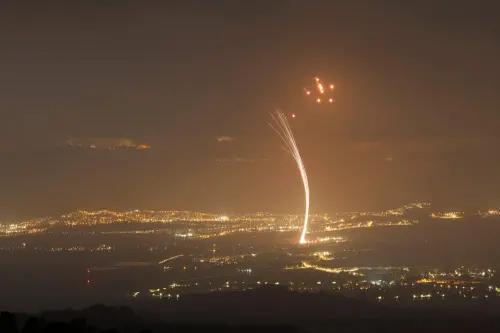
Beirut: Hezbollah said Saturday it had launched dozens of Katyusha rockets at Israel, the latest in a series of attacks it says is in support of the Palestinian people.
The Iran-backed group said its latest attack, on Beit Hillel in northern Israel, was in response to Israel's attacks on Kfar Kela and Deir Siriane in Lebanon which, it said, had injured civilians there.
Fears of Middle East war grow after Hamas leader's killing
Middle East tensions soared Saturday as Iran and its allies readied their response to the assassination of Hamas's political leader, blamed on Israel, spurring fears of a regional war.
Israel ally the United States said it would move warships and fighter jets to the region, while Western governments called on their citizens to leave Lebanon -- where the powerful Iran-backed Hezbollah movement is based -- and airlines cancelled flights.
The killing earlier this week of Hamas leader Ismail Haniyeh in Tehran, hours after the Israeli assassination of Hezbollah's military chief in Beirut, has triggered vows of vengeance from Iran and the so-called "axis of resistance".
Iran-backed groups from Lebanon, Yemen, Iraq and Syria have already been drawn into the nearly 10-month war between Israel and Palestinian militant group Hamas.
Israel on Saturday again traded fire with Hezbollah, carried out a deadly raid in the occupied West Bank, and struck a school compound in Gaza City in an attack that the Hamas-ruled territory's civil defence agency said killed at least 17 people.
Numerous schools turned displacement shelters have been hit across Gaza in recent weeks, Israel insisting the facilities had been used by militants. Hamas denied using civilian infrastructure for military activities.
Haniyeh was buried on Friday in Qatar, where he had been based. Israel, accused by Hamas, Iran and others of the attack, has not directly commented on it.
Iran said on Saturday it expects Hezbollah to hit deeper inside Israel and to no longer be confined to military targets.
The Pentagon said it was bolstering its military presence in the Middle East to protect US personnel and defend Israel.
It said an aircraft carrier strike group led by the USS Abraham Lincoln would be deployed, as well as additional ballistic missile defence-capable cruisers and destroyers and a new fighter squadron.
In Beirut, 20-year-old student Diana Abu Aasel told AFP she feared "something bad will happen to my family and friends.
"If there is war, I don't think I will be able to bear staying" in Lebanon, she said.
Crowds of thousands rallied Saturday in Morocco, Jordan and Turkey to denounce Haniyeh's killing and show solidarity with Palestinians, AFP correspondents reported.
Haniyeh's killing is among a series of attacks since April that have already heightened fears of a regional conflagration.
His death came hours after Israel struck south Beirut, killing Hezbollah military commander Fuad Shukr.
Britain urged its citizens in Lebanon on Saturday to leave immediately. "Tensions are high, and the situation could deteriorate rapidly," said Foreign Secretary David Lammy.
The US embassy in Lebanon told Americans to leave on "any ticket available".
Israel has vowed to destroy Hamas in retaliation for its unprecedented October 7 attack which triggered war in Gaza and resulted in the deaths of 1,197 people, mostly civilians, according to an AFP tally based on Israeli official figures.
Militants also seized 251 hostages, 111 of whom are still held captive in Gaza, including 39 the military says are dead.
Israel's campaign against Hamas has killed at least 39,550 people in Gaza, according to the territory's health ministry, which does not give details of civilian and militant deaths.
Haniyeh was Hamas's lead negotiator in efforts to end the war. His killing raised questions about the continued viability of efforts by Qatari, Egyptian and US mediators to broker a truce and exchange of hostages and prisoners.
Hamas officials but also some analysts and protesters in Israel have accused Netanyahu of prolonging the war to safeguard his ruling hard-right coalition.
His critics in Israel again took to the streets of Tel Aviv Saturday to demand a hostage release deal.
US Secretary of State Antony Blinken spoke separately with his French and British counterparts on Saturday about the situation in the Middle East, State Department spokesman Matthew Miller said.
Blinken and Lammy "reaffirmed the need to deescalate rising tensions... and prevent the conflict from spreading", Miller said in a statement.
Violence has also surged in the Israeli-occupied West Bank, where Palestinian official sources said two Israeli air strikes killed nine people in the north of the territory Saturday.
The military said it had "eliminated terrorist cells".
The war in Gaza has caused widespread destruction and displaced almost the entire population of the territory where, the UN said on Friday, public health conditions "continue to deteriorate".
It said nearly 40,000 cases of Hepatitis A, spread by contaminated food and water, have been reported since the war began.
Hezbollah has been exchanging near-daily cross-border fire with Israeli forces since October, saying it is acting in support of Hamas.
Clashes continued on Saturday, Hezbollah announcing the deaths of two of its fighters, including a 17-year-old from the south Lebanon town of Deir Siriane.
Several airlines have suspended flights to Beirut and Tel Aviv.
Flights to Beirut by Air France and low-cost carrier Transavia France will remain halted until at least Tuesday, their parent company said Saturday.
Turkish Airlines on Saturday cancelled its night-time flights to Tehran for the second night running, AFP correspondents noted. AFP