Hamas dissolves Gaza governing body to clear way for technocratic transition
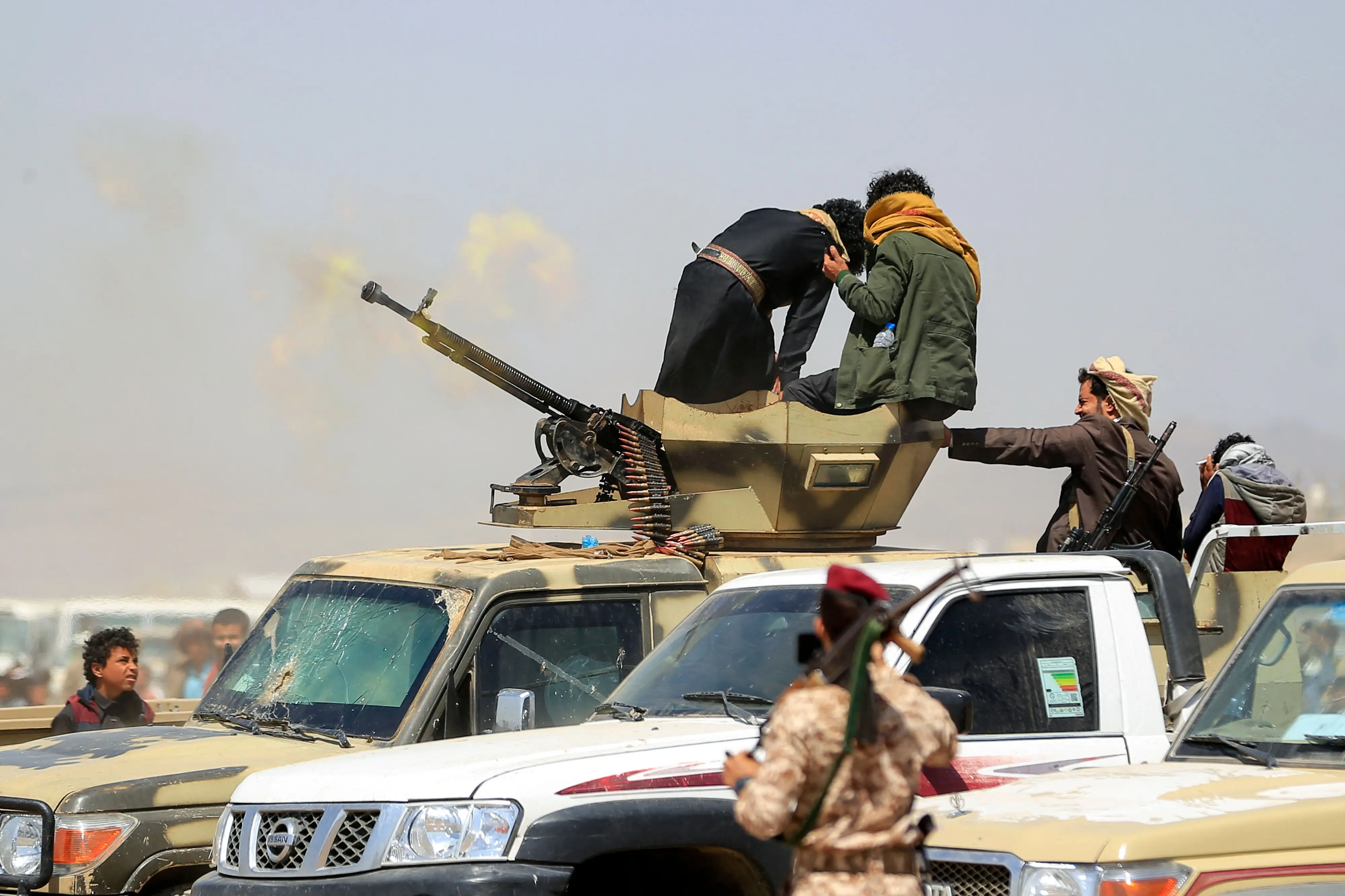
Gaza City: The Palestinian Islamist movement Hamas announced on Monday the formal dissolution of the administrative body that has governed the Gaza Strip for nearly 20 years, aiming to transition civilian authority to a technocratic committee.
The announcement signifies a major political pivot for Hamas, which has maintained exclusive control over Gaza since driving out the rival Fatah faction in 2007, following its legislative election victory the year before. Since a ceasefire was instituted last October between Israel and Hamas, the group has repeatedly stated its willingness to relinquish day-to-day administrative duties, though the critical issue of its disarmament remains at a standstill.
"The head of the government's emergency committee Mohammed al-Farra has officially submitted his resignation," Ismail al-Thawabta, the head of Hamas's government media office said.
"He has also decided to dissolve the committee to facilitate the administrative and governmental transition to the National Committee for the Administration of Gaza (NCAG)."
The NCAG, currently operating out of Cairo, was established by the Board of Peace under US President Donald Trump during the brokering of the October 2025 ceasefire.
"Hamas has taken a new step in that it will no longer be in charge of the Gaza Strip, in order to remove any pretexts for the occupation, which continues its aggression and war of extermination," Hamas spokesman Hazem Qassem told AFP. "We hope for the swift entry of the National Committee for the Administration of Gaza, and Hamas affirms its readiness to hand over governmental responsibilities to the committee to ensure its success."
Challenges ahead for the new administration
The NCAG has stated its willingness to take over governance of the territory.
"We affirm that the National Committee for the Administration of Gaza is fully prepared to assume its national responsibilities as soon as the necessary resources and capabilities are available," Ali Shaath, head of the committee, wrote on X.
"The fundamental requirements for the committee's success are a single authority, a single law with a clear mandate and a single armed force under the authority of this single entity."
The committee has remained stationed in Cairo for several months, reportedly due to diplomatic objections from Israel regarding its deployment into the war-ravaged enclave of 2.1 million residents.
Mkhaimar Abusada, a political analyst based in Gaza, characterised Hamas’s announcement to AFP as a "symbolic gesture".
"The problem is not with dissolving their governmental committee, but with agreeing to disarmament," Abusada observed. "Hamas has not agreed to disarming itself and that is still the sticking point."
Hamas and various Palestinian factions have engaged in multiple mediation sessions in Cairo to bridge political gaps, specifically focusing on the second phase of the truce protocol.
"From Hamas's perspective, this checks a few boxes," noted a diplomatic source who participated in the Cairo discussions. "It shows they are moving the process forward, puts the spotlight on what they portray as Israel's failure to follow through on its commitments."
Ceasefire hurdles and security deadlock
While the initial phase of the ceasefire successfully saw the release of the remaining Israeli hostages in exchange for detained Palestinians, the transition into phase two has been blocked for months. This subsequent stage requires Hamas to disarm alongside a phased withdrawal of Israeli troops. Instead, Israel has expanded its deployment, now occupying roughly 70 percent of the territory.
Hamas insists that a fully functional Palestinian administration must be established before it considers surrendering its weapons stockpile. Post-war governance remains a primary obstacle; Israel opposes any continued Hamas presence but has also rejected a direct takeover by the Ramallah-based Palestinian Authority for the time being.
Both sides continue to trade accusations of ceasefire violations. Since the truce began, at least 1,072 Palestinians have been killed in Gaza, according to the Health Ministry, whose metrics are regarded as reliable by the UN. Over the same timeframe, the Israeli military has reported the deaths of five soldiers and one contractor.
AFP