Governments race to evacuate citizens as Israel-Iran conflict escalates
Hong Kong: As the conflict between Iran and Israel intensifies, governments across the world are scrambling to evacuate thousands of their citizens caught in the region. The diplomatic and logistical efforts have seen emergency flights, land crossings, and military support mobilised to bring nationals home safely.
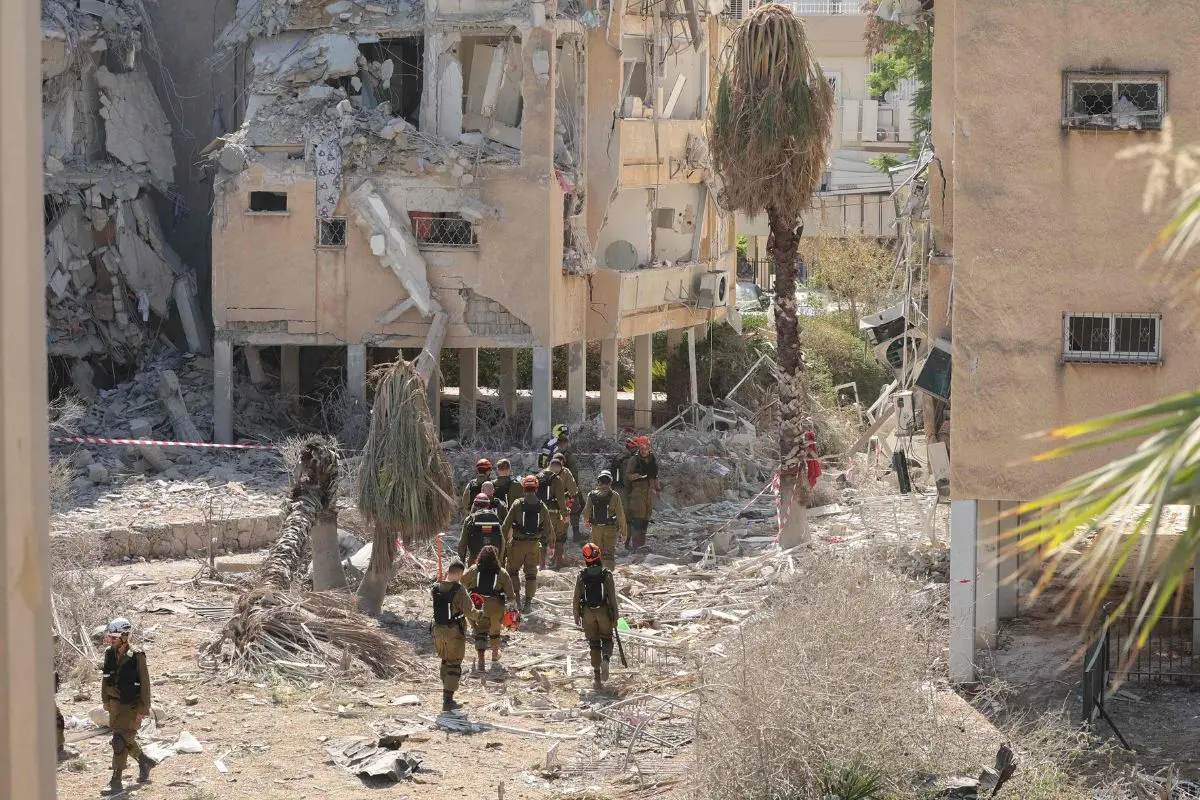
Foreigners have been urgently seeking exit routes since Israel launched a large-scale bombing campaign last Friday targeting Iranian nuclear and military infrastructure, prompting retaliatory strikes from Tehran. With Israeli airspace closed and missile fire continuing, many evacuations are now routed through third countries.
Evacuations via neighbouring states
European governments have already repatriated hundreds from Israel. The Czech Republic and Slovakia announced on Tuesday that 181 people were brought home on government aircraft.
"It was not possible to send the army plane straight to Israel," the Czech defence ministry said in a statement. "The evacuees were taken to an airport in a neighbouring country by buses. They crossed the border on foot."
Germany said it had scheduled flights on Wednesday and Thursday via Jordan, while Poland confirmed that the first group of its citizens was set to return on Wednesday.
Greece reported evacuating 105 nationals, alongside other foreign citizens, through Egypt. Meanwhile, a private aircraft carrying 148 people landed in Bulgaria’s capital, Sofia, on Tuesday.
US, Australia begin extraction plans
In a statement on X, U.S. Ambassador to Israel Mike Huckabee said the embassy was "working on evacuation flights & cruise ship departures" for "American citizens wanting to leave Israel."
Australia has launched efforts to remove roughly 1,500 citizens from Iran and over 1,200 from Israel. However, Foreign Minister Penny Wong said missile barrages had rendered civilian air traffic too dangerous.
"There's no capacity for people to get civilian aircraft in, it is too risky, and the airspace is closed," Wong told national broadcaster ABC. "We have taken the opportunity to get a small group of Australians out of Israel through a land border crossing. We are seeking to try and do more of that over the next 24 hours."
Asian nations mobilise resources
Japan has ordered its military aircraft to be placed on standby for approximately 1,000 Japanese nationals in Israel and 280 in Iran. Government spokespersons said embassies in both countries are working to evacuate citizens to neighbouring territories via buses.
India confirmed that around 110 students were airlifted out of Iran on a special flight from Armenia on Thursday.
New Zealand announced the closure of its embassy in Iran. Two staff members and their families were evacuated overland to Azerbaijan.
“If and when opportunities arise to assist the departure of other New Zealanders in Iran and Israel, we will pursue them with urgency,” Foreign Minister Winston Peters said in a statement.
Pakistan tightens border, focuses on repatriation
Pakistan has sealed its borders with Iran except for the return of its own citizens. The foreign ministry reported that approximately 1,000 Pakistanis had crossed back into the country, including at least 200 students. Families of diplomats and some non-essential embassy staff in Iran have also been repatriated.
As the crisis enters its second week, nations continue to monitor the volatile situation closely.