Netanyahu's political future hangs in balance as rival Gadi Eisenkot gets mandate to form Israel government
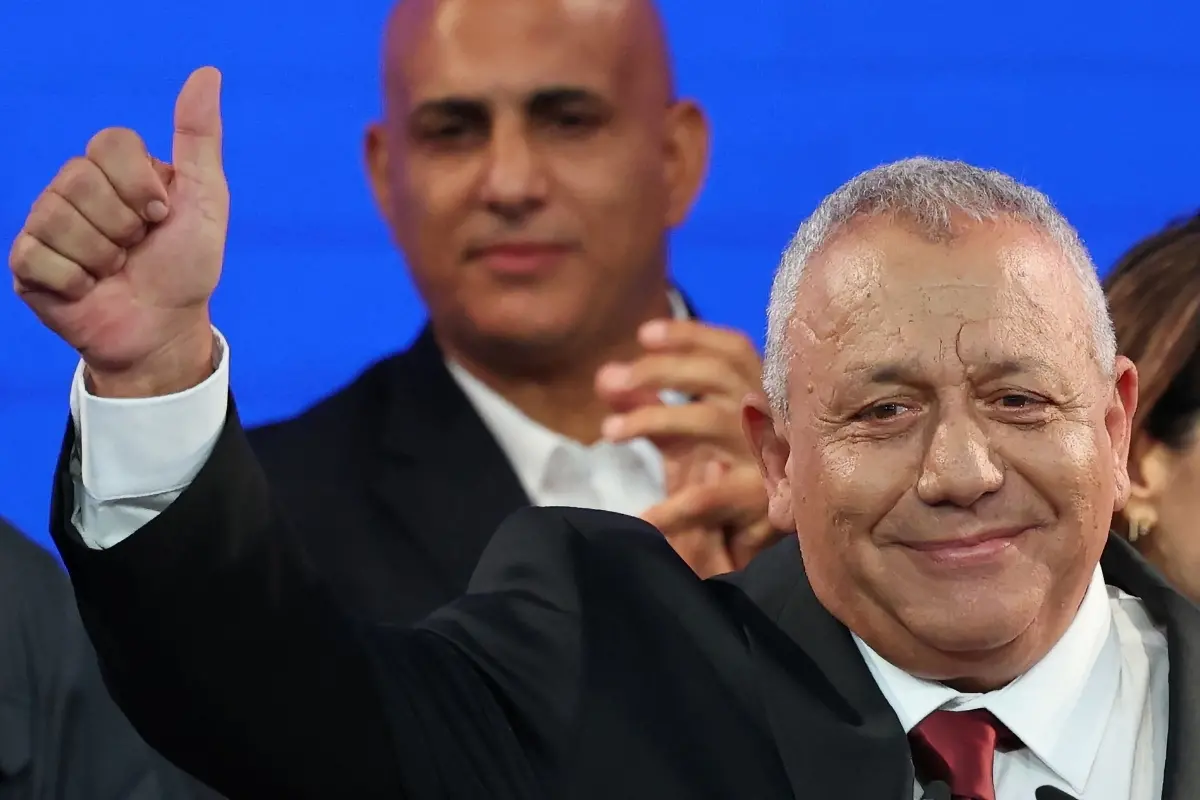
With Benjamin Netanyahu's coalition falling short of a parliamentary majority, Israel is entering another potentially bruising phase of political negotiations, with one of the prime minister's fiercest opponents now getting the first opportunity to form the next government.
Israeli President Isaac Herzog on Saturday tapped former military chief Gadi Eisenkot to form a government after an election delivered no clear majority to either political camp, putting fresh pressure on Netanyahu's long-standing hold on power.
Eisenkot, whose Yashar party emerged as the second-largest political force in the 120-member Knesset, secured the most endorsements, including support from Arab political leaders.
Herzog's spokesperson confirmed that Eisenkot had been invited to the President's Residence and would formally receive the mandate to form the government.
In the October 27 election, Netanyahu's Likud emerged as the largest single party, securing 27 seats.
However, his broader religious-nationalist coalition managed just 53 seats, eight short of the 61 required for a parliamentary majority.
Eisenkot's coalition, comprising four Jewish-led parties ranging from the centre-left to the right, secured 48 seats.
Meanwhile, two parties representing Israel's Arab minority won a combined 19 seats, an unprecedented electoral showing that has placed them in a potentially decisive position.
Despite their willingness to support Eisenkot, the Arab parties remain a complicated political partner.
The anti-Netanyahu camp has so far resisted joining forces with them, while Arab leaders have strongly criticised the policies of Netanyahu and his far-right allies.
After Herzog's announcement, Eisenkot called for a national emergency government, saying on X he would do everything possible to justify the responsibility entrusted to him.
Eisenkot faces uphill coalition battle
The 66-year-old former military chief has 28 days to assemble a governing coalition, with a possible 14-day extension. However, securing the required parliamentary support is expected to be difficult.
Eisenkot could try to form a minority government backed by Arab parties outside the coalition.
Another possibility is an arrangement with ultra-Orthodox political groups, although he and his allies have previously distanced themselves from such an alliance.
A unity government involving Netanyahu is also an option. Political analysts, however, consider all three possibilities unlikely to materialise.
If Eisenkot fails to form a government, the Knesset could give another candidate a chance.
Should subsequent attempts also collapse, parliament could nominate another contender. The entire process has a deadline of approximately 100 days, after which Israel would have to return to the polls if no government is formed.
Who is Gadi Eisenkot?
A relative newcomer to electoral politics, Eisenkot entered the political arena in 2022 after a distinguished military career.
The son of Moroccan immigrants, he could become Israel's first prime minister from the Mizrahi Jewish community, whose ancestral roots lie in the Middle East and North Africa.
He briefly served in Netanyahu's wartime cabinet following Hamas's October 7, 2023, attack on Israel before returning to the opposition.
Since then, he has repeatedly criticised the prime minister's leadership, particularly his handling of the military campaign in Gaza, and has ruled out serving in a government led by Netanyahu.
Eisenkot's political identity is also closely linked to the personal losses suffered by his family during the war. His son and two nephews were killed while fighting in Gaza.
During his election campaign, he emphasised his military credentials and referred to the 'Dahiyeh doctrine', a strategy associated with disproportionate military force against adversaries.
He had employed the approach during Israel's 2006 war with Hezbollah in Lebanon.
He has also criticised violence by Israeli settlers against Palestinians, which has intensified since 2023, and opposed the presence of far-right figures Itamar Ben-Gvir and Bezalel Smotrich in Netanyahu's government.
With the mandate now in his hands, Eisenkot faces the formidable task of bringing together politically divided groups.
His success or failure could determine whether Netanyahu's long political dominance finally ends or Israel heads toward yet another election.