From Bhutto’s gallows to Imran Khan’s jail cell: The chilling pattern of Pakistan’s civilian leaders vs the military
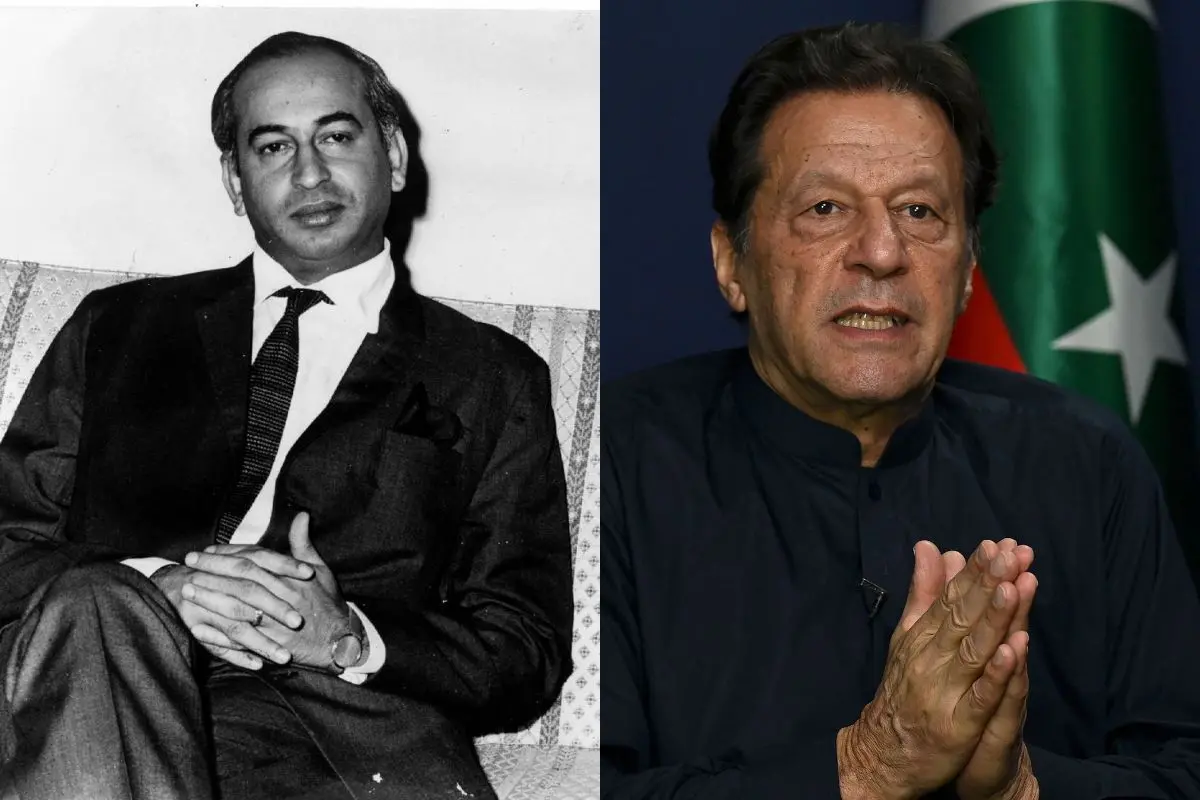
As tensions flare between India and Pakistan following India’s precision strikes in response to the deadly Pahalgam attack that killed 26, Pakistan is once again under the global spotlight — and for a familiar reason. While the cross-border military activity has dominated headlines, it is the unchecked influence of Pakistan’s military establishment over political decision-making that is quietly sparking concern among observers worldwide.
India’s Operation Sindoor, a series of targeted strikes across terror hubs in Pakistan and Pakistan-occupied Kashmir (PoK), was swiftly followed by a declared ceasefire. But peace proved short-lived. Shelling resumed across Jammu and Kashmir by evening, drones were neutralised in Baramulla and Gujarat’s Kutch, and sudden blackouts hit towns from Srinagar to Ferozepur — reminders that the conflict is far from over.
Yet behind Pakistan’s frontline response lies a deeper, more enduring conflict — one that plays out not on the borders, but within the country’s political framework. At the heart of it stands an institution that has time and again shaped the nation’s destiny: the Pakistan military.
Imran Khan’s fall mirrors a pattern
When former Prime Minister Imran Khan was forced out of office in 2022, it was officially through a parliamentary no-confidence vote. But few believe that was the full story. His dramatic exit followed growing tensions with military leadership — a familiar trajectory in Pakistan, where challenging the army often proves politically fatal.
Initially seen as the army’s preferred candidate, Khan’s relationship with the generals deteriorated as he adopted a confrontational tone, openly accusing them of interference and overreach. His fallout with the army not only triggered his removal but marked a turning point in civilian-military dynamics once again tilting in favour of the latter.
Khan’s ouster wasn’t unprecedented. In fact, it followed a historical script in which elected leaders lose favour with the military and are soon ousted, exiled, or imprisoned — a cycle that has haunted Pakistan since its inception.
When Generals took over
Pakistan’s political history is littered with coups and covert power grabs. While democratic elections have occurred regularly, true authority has often rested with military leadership — either in uniform or behind the scenes.
- 1958: Pakistan’s first military takeover saw General Ayub Khan seize power after President Iskander Mirza declared martial law. Ayub swiftly ousted Mirza and became the de facto ruler, launching an 11-year military regime.
- 1977: General Zia-ul-Haq toppled Prime Minister Zulfikar Ali Bhutto, citing unrest and election fraud. Bhutto was later executed under controversial circumstances, and Zia remained in power until a fatal plane crash in 1988.
- 1999: Nawaz Sharif’s attempt to dismiss General Pervez Musharraf backfired, as Musharraf launched a coup, suspended the constitution, and took control. He ruled for nearly a decade, first as Chief Executive and later as President.
Even in times without formal coups, the military has exerted outsized influence, steering foreign policy, manipulating judicial outcomes, and determining which politicians rise or fall.
Why no Prime Minister finishes a term
A telling statistic: not one of Pakistan’s elected prime ministers has ever completed a full five-year term. Whether through direct coups or orchestrated exits, the military has ensured it retains ultimate control. Even Pervez Musharraf, once the country’s most powerful man, died in exile, far removed from the corridors he once commanded.
From Bhutto to Nawaz to Imran, civilian leaders who cross the invisible red lines drawn by Rawalpindi — home to Pakistan’s military headquarters — often find themselves sidelined.