Explained: Why North Korea's long-range missile test should worry the US
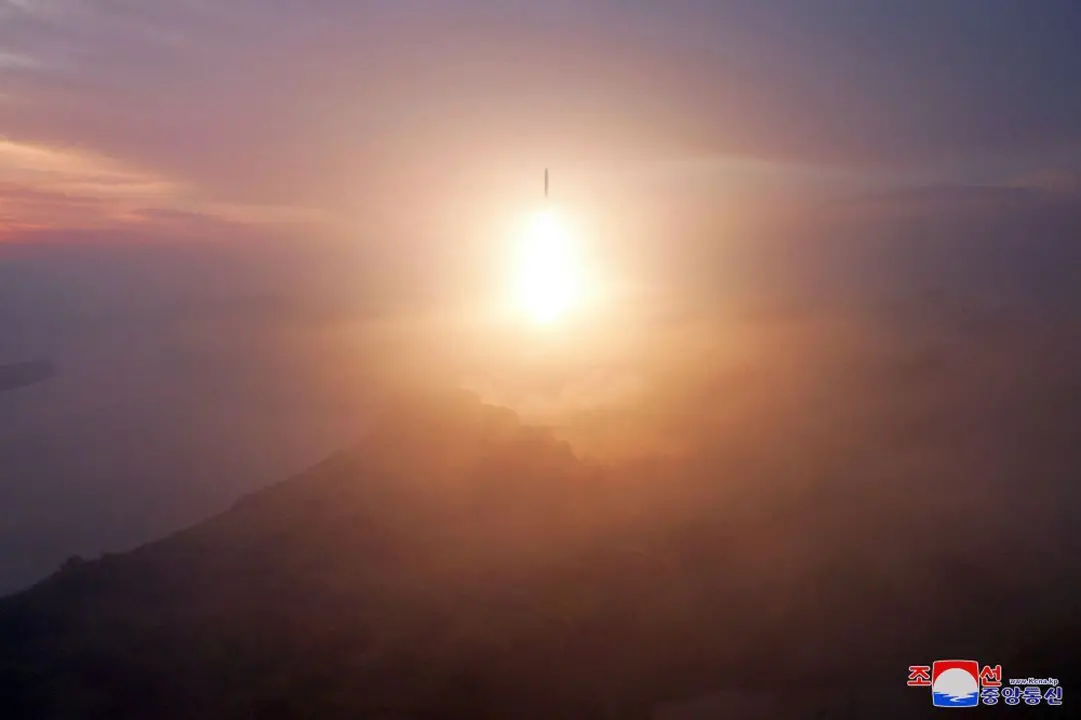
North Korea conducted its first intercontinental ballistic missile (ICBM) test in nearly a year on Thursday, signaling possible advancements in its long-range nuclear capabilities, potentially able to reach the United States mainland. Experts believe the test was a strategic move to capture American attention days before the US election and to respond to international condemnation over North Korea’s alleged support of Russian military efforts in Ukraine.
North Korean leader Kim Jong Un observed the missile launch, calling it "an appropriate military action" to demonstrate North Korea's resolve against perceived threats. State media quoted Kim as emphasizing the importance of nuclear capabilities, reaffirming that North Korea will not abandon its nuclear arsenal in response to "adventurous military maneuvers" by its enemies.
South Korea’s Joint Chiefs of Staff reported that the missile likely followed a high-angle trajectory to avoid neighbouring nations, with Japan's Defense Ministry noting that the missile reached a record altitude of over 7,000 kilometers, surpassing previous North Korean tests. Experts suggest the test may have been to assess whether the missile could carry a larger warhead.
US National Security Council spokesperson Sean Savett condemned the launch as a "flagrant violation" of UN Security Council resolutions, asserting that it heightened regional tensions. He added that the US would take all necessary actions to protect itself and its allies.
South Korea's military noted that the missile was likely launched from a massive 12-axle vehicle, speculated to be North Korea's largest mobile launch platform. This new vehicle, unveiled in September, suggests North Korea is developing a potentially larger ICBM.
Russian support to North Korea?
Some analysts believe Russia may have aided North Korea's technological progress, particularly given North Korea's alleged troop deployments to support Russia in Ukraine.
US Defense Secretary Lloyd Austin confirmed reports of North Korean soldiers in Russian uniforms moving toward Ukraine, calling it a destabilizing action.
South Korean intelligence also suspects Russian assistance in propellant technology, potentially enabling higher engine thrust and payload capacity.
Analysts point to North Korea's expanding military cooperation with Russia since the onset of the Ukraine conflict, suggesting North Korea has been supplying arms to Russia and may receive support in space surveillance and weapons modernization. The ICBM test also comes amid reports that North Korea is prepared for a potential seventh nuclear test.
AP