Explained: How Russia's economy defied global isolation
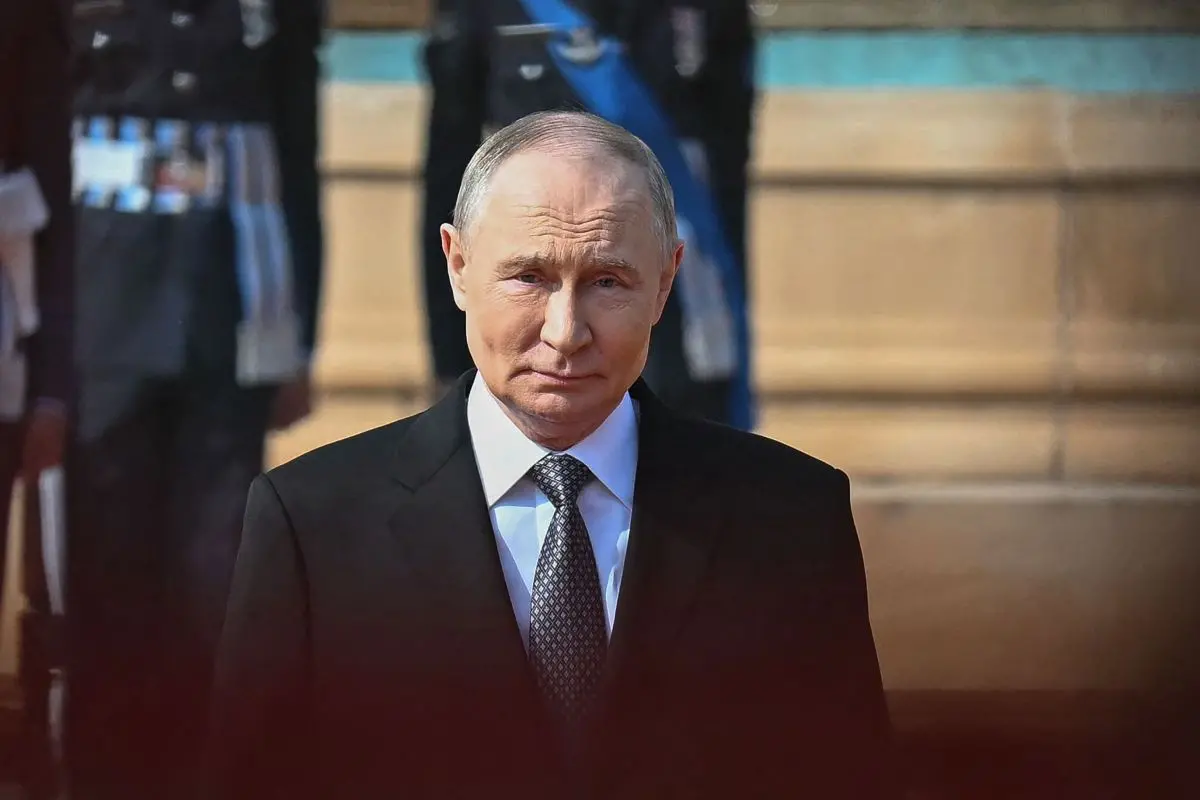
Far from the total collapse predicted by Western officials at the onset of the 2022 invasion of Ukraine, the Russian economy has undergone a radical transformation, emerging as a militarized, China-dependent entity supported by a sophisticated transnational marketplace for sanctions evasion.
Recent data reveals that sanctions have not isolated Russia; instead, they have catalyzed a "rent-seeking ecosystem" spanning Central Asia, the Caucasus, and the Middle East, where regional players have a growing stake in the persistence of these clandestine trade routes.
A decade of defenses
Russia's resilience was not accidental. Between 2014 and 2021, the Kremlin engaged in a "learning under pressure" phase, building macro stability buffers including $600 billion in foreign exchange reserves.
Key to this preparation was the development of alternative Western systems, such as the Mir payment system and the SPFS messaging service, designed to bypass Mastercard, Visa, and SWIFT.
Also Read: 96 drones in 5 minutes: China’s Atlas swarm is a wake-up call India cannot ignore
By mid-2018, the Russian Central Bank had already dumped nearly all its $100 billion in US Treasuries, shifting its holdings into gold and other currencies.
The shadow fleet and energy pivot
Following the 2022 shocks -- which included the freezing of $300 billion in reserves and a ban on high-tech exports -- Moscow stabilized the ruble through aggressive capital controls and high interest rates.
To counter oil and gas embargoes, Russia deployed a "shadow fleet" of over 600 to 800 aging tankers. This maritime network allows the Kremlin to move crude at steep discounts, maintaining vital state revenues through shadow energy sales while bypassing the G7 price cap.
While GDP dipped between 2% and 3% in 2022, it recovered significantly by 2023, driven by a surge in military procurement and construction.
The sanctions-evading ecosystem
Five key regions and sectors have become the "crimes of commerce" critical to Russia's survival:
China: China has become the major buyer of Russian hydrocarbons, coal, and metals, helping to offset the loss of Western markets. China also serves as a vital exporter to Russia, providing essential machinery, electronics, and dual-use goods that are often restricted by Western sanctions. Trade between the two nations has shifted away from Western financial systems. Transactions are increasingly settled in yuan and rubles, and there has been a significant rise in the use of CIPS (China's Cross-Border Interbank Payment System) as an alternative to SWIFT.
Also Read: 'Drill, Baby, Drill' backfires: Iran-linked oil shock is now powering shift to renewables
Central Asia & South Caucasus: Central Asian nations, specifically Kazakhstan, act as a "critical buffer" by serving as a key transit and re-export hub for goods moving into Russia. These nations have seen a surge in imports of items such as electronics, drones, and vehicles from China. These goods are then re-exported to Russia by utilizing Eurasian Economic Union rules, which facilitate easier movement of products between member states
Turkey & India: India buys Russian crude oil at significant discounts. It processes this discounted crude and then re-exports the resulting petroleum products to other global markets. This allows India to capture a profit margin through what the sources describe as "sanctions arbitrage". Turkey acts as a premier logistics and financial middleman for goods moving in and out of Russia. Turkish firms facilitate the re-export of goods on a massive scale, allowing products that might be restricted to reach Russia through Turkish channels.
Crypto & Parallel Finance: Sanctions-related crypto flows surged by 400% in 2025. Platforms like Grinex and the ruble-pegged stablecoin A7A5 now facilitate tens of billions of dollars in transactions outside the traditional banking system.
Domestic strains and European fallout
The shift to a war economy has not been without cost. Russia faces acute labor shortages and wage pressures as workers shift from the civilian sector to the defense industry. Defense spending now consumes 7-8% of GDP, accounting for approximately 30% of all federal spending.
Also Read: Will the US Navy scrap its most high‑tech aircraft carrier?
Meanwhile, the strategy has created "second-order costs" for Europe. In Germany, the loss of Kazakh crude via the Druzhba pipeline -- signalled by Russia as a retaliatory measure -- has led to higher fuel prices and cutbacks in sectors like aviation.
The consensus among analysts is that while sanctions have degraded the technological quality of Russia's output, they have failed to produce an immediate, war-ending shortage.
Instead, the world is witnessing a deepening trend toward dedollarization and a permanent shift toward a lower-productivity, militarized economy that is unlikely to reverse even in the event of a ceasefire.