EXPLAINED | How GBU-57 Bunker Busters and Tomahawk missiles crippled Iran’s nuclear program
New Delhi: Amid the ongoing conflict between Israel and Iran, the United States had on early Sunday morning (local time) launched a coordinated airstrike on three of Iran’s key nuclear sites- Fordow, Natanz, and Esfahan, using some of the most advanced weapons in its military arsenal.
The operation, which experts believe had been under preparation for weeks, saw the deployment of stealth bombers, bunker-busting bombs, cruise missiles, and next-generation fighter jets in a bid to degrade Iran's nuclear capabilities.
GBU-57 Bunker Busters: Earth-penetrating power
“Bunker buster” is a broad term used to describe bombs that are designed to penetrate deep below the surface before exploding. In this case, it refers to the latest GBU-57 A/B Massive Ordnance Penetrator bomb in the American arsenal. The roughly 30,000 pound (13,600 kilogramme precision-guided bomb is designed to attack deeply buried and hardened bunkers and tunnels, according to the US Air Force.
It's believed to be able to penetrate about 200 feet (61 meters) below the surface before exploding, and the bombs can be dropped one after another, effectively drilling deeper and deeper with each successive blast. It was not immediately known how many were used in the Sunday morning strike.
The bomb carries a conventional warhead, but the International Atomic Energy Agency has confirmed that Iran is producing highly enriched uranium at Fordo, raising the possibility that nuclear material could be released into the area if the GBU-57 A/B were used to hit the facility.
Tomahawk Cruise Missiles: Precision from the deep
US Navy submarines, likely from the Virginia and Los Angeles classes, launched 30 Tomahawk cruise missiles aimed at Iran’s other nuclear sites. These long-range missiles are a staple of American precision warfare, able to change targets in-flight and loiter over an area until new instructions are given.
B-2 Spirit Stealth Bombers: Silent and deadly
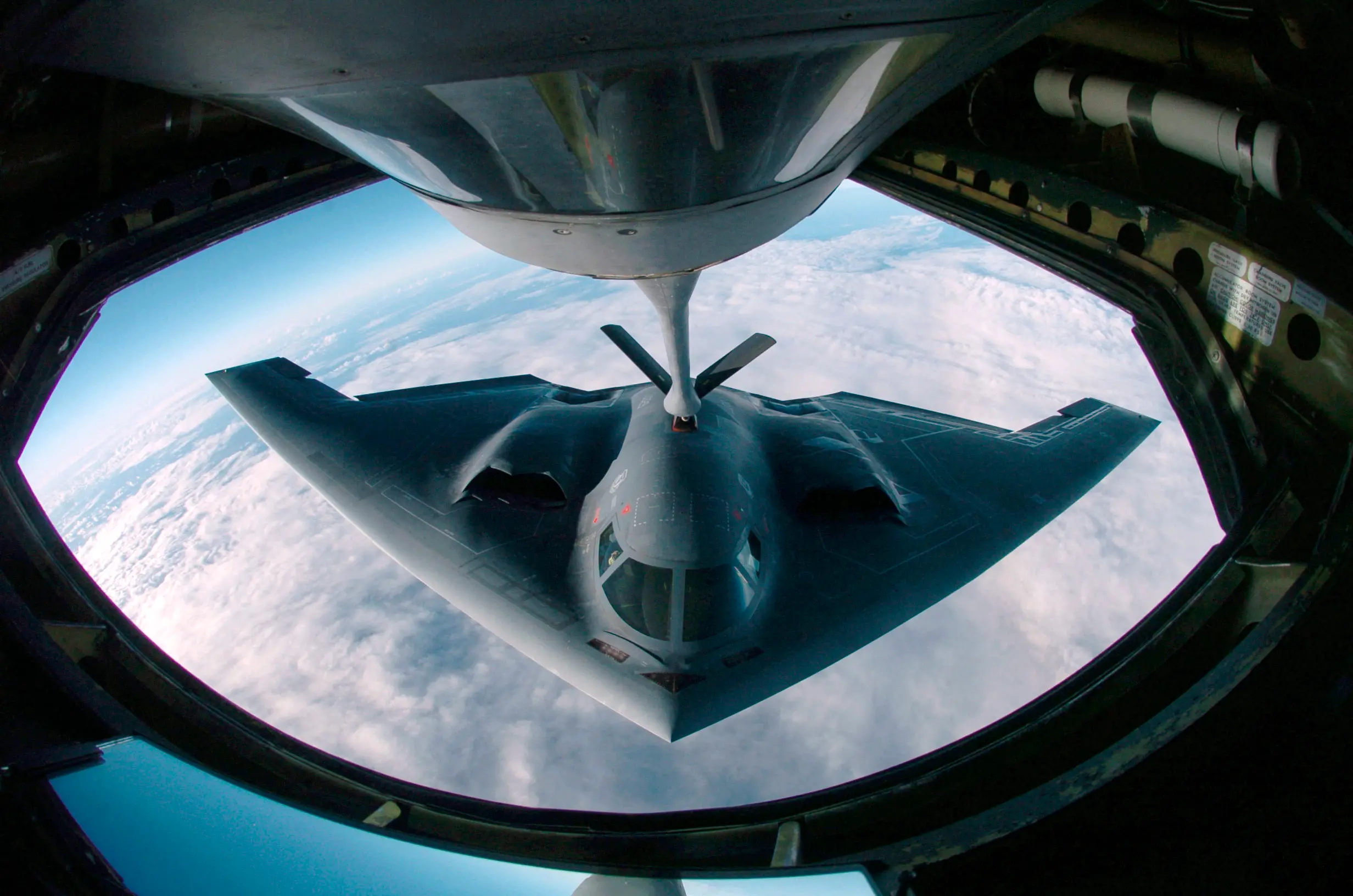
As per reports, leading the mission were six B-2 Spirit bombers, the US Air Force’s most advanced strategic aircraft. Known for their ability to evade radar and penetrate heavily fortified airspace, each B-2 comes with a price tag of over $2.1 billion, making them the most expensive military aircraft ever built.
The B-2s are designed for stealth and precision. Their low radar and thermal signatures, combined with advanced avionics, make them nearly invisible to even the most sophisticated air defense systems. They were likely responsible for delivering the most devastating blows of the mission.
F-22 Raptors and F-35A Lightning II: Securing the skies
To ensure air superiority throughout the mission, F-22 Raptors and F-35A Lightning II fighter jets were deployed as escorts and overwatch units. The F-22, known for its unmatched agility, speed, and stealth, is designed to achieve air dominance even in contested environments.
Meanwhile, the F-35A, a fifth-generation multi-role stealth fighter, brought next-gen targeting systems with the ability to carry out precision strikes in all-weather conditions. It has a wingspan of 35 feet and is 51 feet long.
(with agency inputs)