Dubai’s iconic Toyota Building is being emptied: Why is the landmark being demolished?
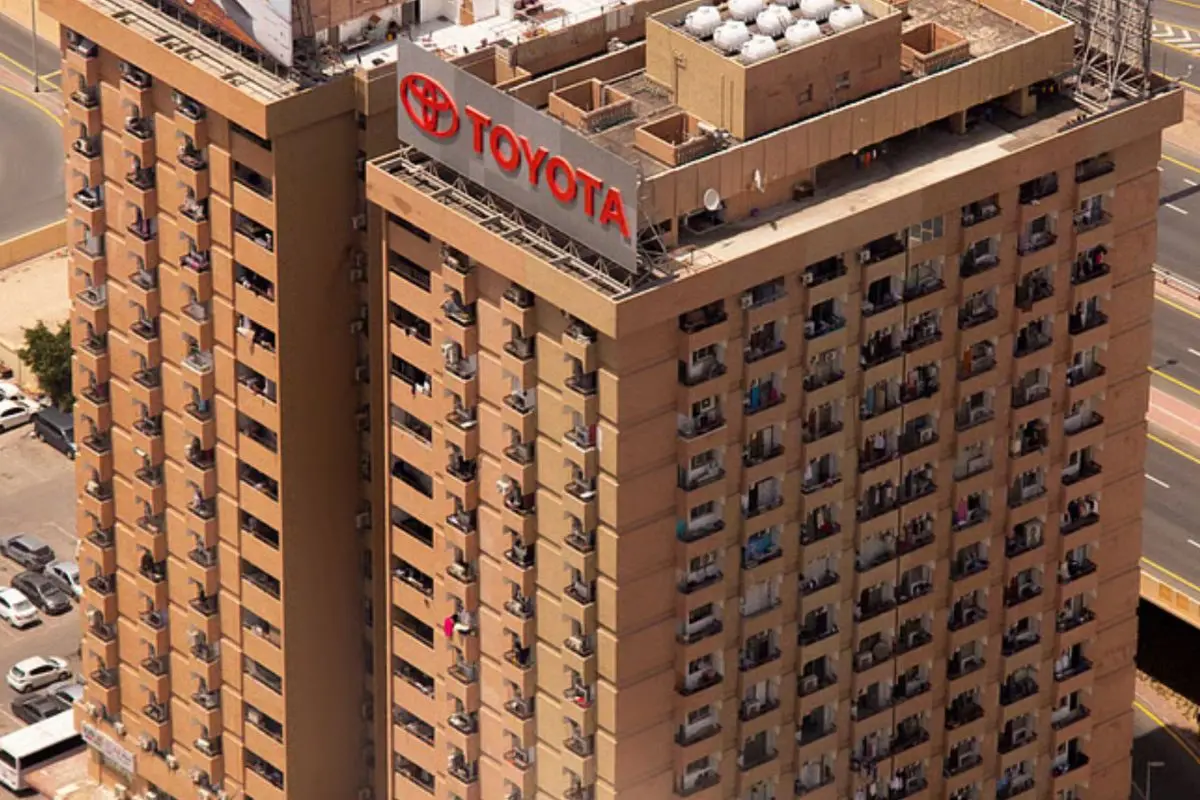
For decades, the giant red Toyota sign on Sheikh Zayed Road made the Nasser Rashid Lootah Building instantly recognisable. Now, more than 50 years after it was built, the landmark is being emptied ahead of its demolition.
The move-out process, however, is not as simple as handing over the keys. Some tenants have been fined over violations inside their apartments and must settle outstanding Dubai Municipality and Dewa matters before they can receive the final clearance from the building management, Khaleej Times reported.
Why is Dubai’s Toyota Building being demolished?
The 15-storey Nasser Rashid Lootah Building dates back to 1974. It became widely known as the Toyota Building after a giant red Toyota sign was placed on its rooftop in 1981.
The building is now being cleared of residents and is eventually expected to be demolished. The management has confirmed the demolition, but no date or timeline has been announced.
The evacuation followed action over overcrowding linked to apartments that had been illegally divided into smaller spaces.
Around 70 per cent of the building has already been vacated, according to Mahmood from the real estate department of Nasser Rashid Lootah Group, as reported by Khaleej Times.
Dubai Municipality is handling violations found inside the apartments directly with the tenants, rather than through the building's real estate management.
Tenants who have been fined must settle those penalties as part of the process of leaving the building.
Why didn't the management know about the partitions?
The building management says it could not simply enter rented apartments to check what tenants had changed inside without permission.
If a tenant does not allow access, police and the relevant authorities would be required to give permission for the management to enter.
The management therefore says it was not aware of the extent of the partitions inside individual apartments or how many people were living in them.
The extent of the overcrowding became clearer after authorities intervened. Mahmood had earlier said some apartments had as many as 15 people living in partitioned rooms.
What do tenants need to do before leaving?
For affected residents, moving out involves more than vacating the apartment.
Tenants have to settle any fines and outstanding dues and complete the required clearances with Dubai Municipality and Dewa.
Once those matters are resolved, they can approach the building's real estate department for the final clearance certificate.
Electricity and water connections to apartments that have already been vacated are also being disconnected as the move-out process continues.
The evacuation has been taking place in stages.
Residents had earlier told Khaleej Times that people living in partitioned accommodation were among the first to be asked to leave. Other occupants were subsequently instructed to vacate as well.
The building management has said the process was not a forceful eviction carried out by its own staff. Its legal department had approached the authorities to seek clarity on the action being taken.
Some residents also approached Dubai Municipality and Dewa while trying to resolve issues concerning their apartments and utility connections.
Why are illegally partitioned flats a concern?
Dubai Municipality has previously warned that unauthorised partitioning of residential properties breaches regulations and can pose safety risks.
Such changes can increase the risk of fires and make it more difficult for occupants to get out quickly during an emergency.
For a building now being cleared after more than five decades, the issue of overcrowding and illegally partitioned apartments has become a key part of the final chapter of the Toyota Building's story.