KF-21EX: Inside South Korea's next-generation stealth fighter jet development
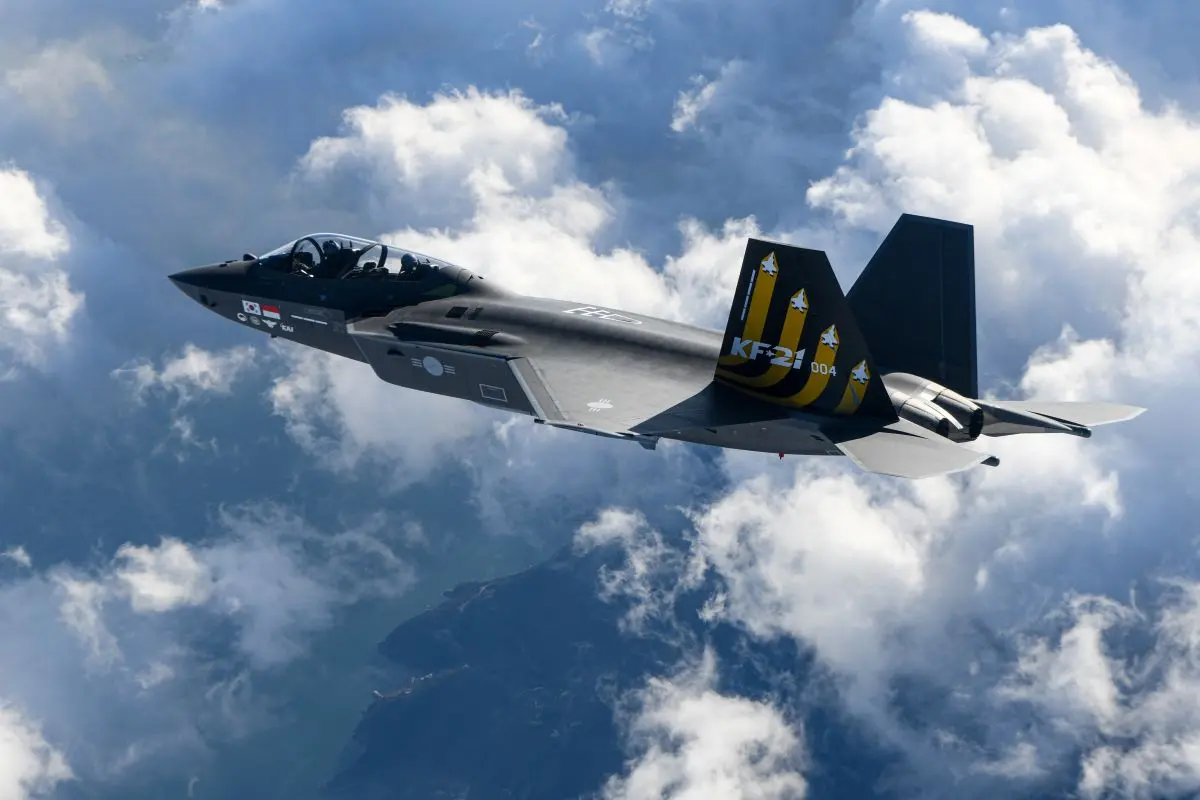
South Korea is fast-tracking the development of a stealthier, more powerful version of its KF-21 Boramae fighter jet. Known as the KF-21EX, the new variant will feature internal weapons bays, enhanced sensors, and advanced stealth features designed to penetrate the adversary's sophisticated air defenses.
The decision was made during the Defense Acquisition Program Committee's 170th meeting on August 8. The new aircraft, developed by Korea Aerospace Industries (KAI), is part of a strategic shift to give Seoul a sovereign tool for deep-strike missions, even if US support were to waver.
Key Upgrades for Enhanced Survivability
The KF-21EX's most significant upgrade is the introduction of twin internal weapons bays. These bays will allow the aircraft to carry up to 900-kilogram-class Joint Direct Attack Munitions (JDAMs), enabling it to strike hardened targets like North Korean bunkers and command infrastructure without compromising its low-observable profile.
This internal carriage is a critical improvement for a fighter that, while not a true fifth-generation stealth aircraft like the F-35, incorporates semi-stealthy features such as a low radar cross-section and S-Duct intakes.
According to South Korea's Ministry of National Defense (MND), the deployment of the KF-21EX will be faster than initially planned.
"The actual deployment of the KF-21 Block 2... will be faster than planned," the MND said in an August 10 statement. "The air-to-ground weapon capability was originally planned to be installed in bulk [into the KF-21 Block 2] by the end of 2028, but the plan has been revised to apply them in stages starting from the first half of 2027."
This accelerated timeline means the Republic of Korea Air Force (ROKAF) is expected to have an "evolved aircraft" with both air-to-air and air-to-ground capabilities within a year after the Block 1 variant is operational.
Collaborative Effort
The KF-21 program, which began in 2001, is a collaborative effort involving KAI, the Korean Agency for Defense Development, and international partners like Indonesia’s PTDI, Eurofighter Typhoon Limited, and Lockheed Martin. Despite its domestic origins, the aircraft incorporates parts from a range of Western suppliers, including General Electric Aerospace for its twin F414 turbofans.
The KF-21EX will also feature an Electro-Optical Targeting System (EOTS), similar to the one found on the F-35, to improve air-to-ground targeting. Other planned weapons for internal carriage include the company's own Air-Launched Effects (ALE) and the U.S.-made GBU-39 Small Diameter Bomb (SDB), along with locally made and international air-to-air missiles.
Looking to the future, KAI is studying the integration of AI-enabled mission computers and "loyal wingman" drones as part of a Manned-Unmanned Teaming (MUM-T) combat system.
A two-seat variant is also being considered to coordinate these advanced drone swarms and perform escort jamming duties. These upgrades position the KF-21EX as a versatile and powerful tool for South Korea's defense strategy in a volatile region.