'No greenwashing of fossil fuels': COP31 deadlock deepens as EU demands explicit mention in climate deal
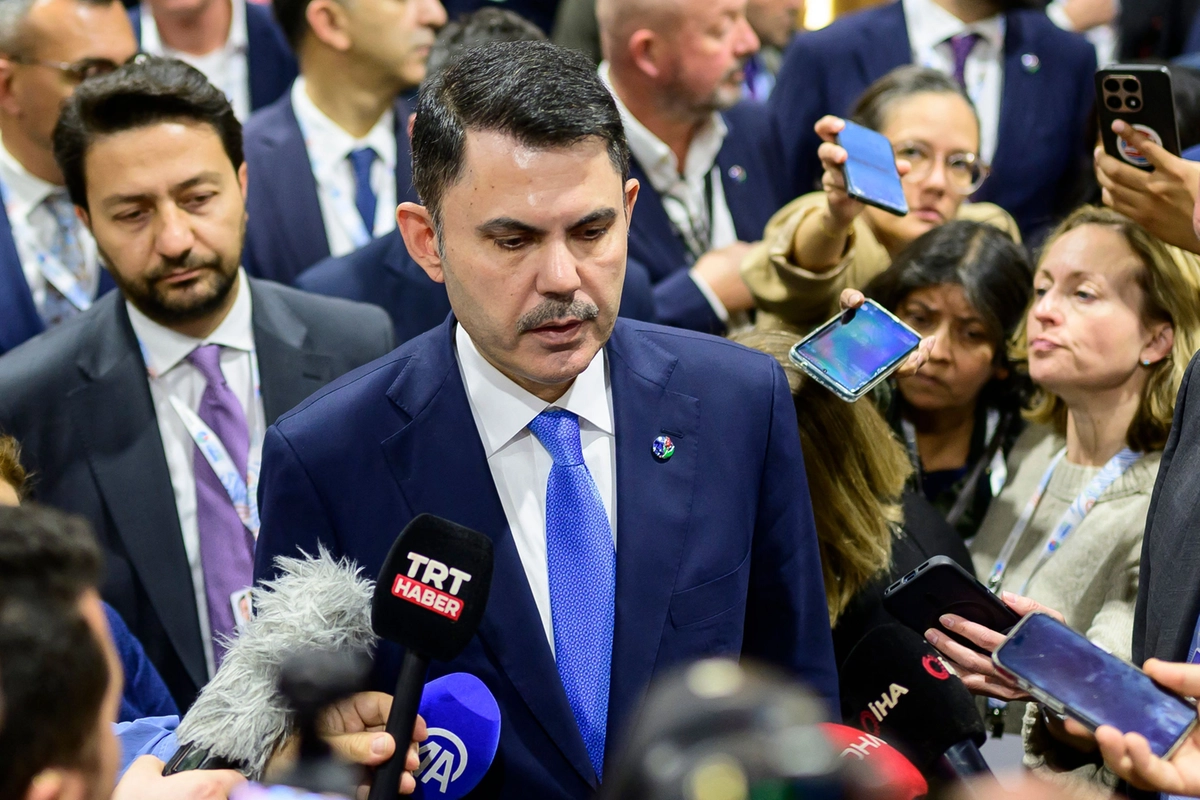
The COP31 climate summit in Turkey has become the longest-running United Nations climate conference, with negotiations continuing more than 40 hours beyond the scheduled closing time. The summit, which was due to conclude on Friday, remained deadlocked on Sunday as nearly 200 countries struggled to reach consensus on a final agreement.
The European Union rejected the proposed 'Antalya pact', arguing that the latest draft failed to explicitly mention fossil fuels, which are the primary source of greenhouse gas emissions driving climate change.
The EU delegation said it would not endorse an agreement that omitted fossil fuels or weakened commitments on climate action.
"We will not endorse a cover decision or an Antalya pact that does not even mention fossil fuels, which is the key driver of climate change," Reuters quoted EU delegation spokesman and Irish minister Darragh O'Brien as saying.
He also warned against what he described as the 'green-washing' of fossil fuels and said the proposed text lacked the climate ambition needed to address the crisis.
O'Brien said the chances of securing an agreement were diminishing by the hour.
Why has the EU rejected the proposed COP31 agreement?
The latest draft agreement, presented by Turkey and Australia, became a major point of disagreement because it did not directly name fossil fuels.
Although the text indirectly referred to the 2023 global agreement to transition away from fossil fuels, it did not include an explicit reference to them.
The EU and several smaller island nations opposed the omission, arguing that a climate agreement must address the main source of global warming rather than rely on indirect language.
Belgium's climate minister Jean-Luc Crucke also criticised the proposal, saying countries should not agree to a text that avoided the issue.
The draft requires consensus among participating countries before it can be adopted, making agreement difficult in the absence of a compromise.
Fossil fuel-producing countries resist stronger commitments
The negotiations have exposed differences between countries seeking stronger commitments to move away from fossil fuels and those that remain heavily dependent on their production and consumption.
Oil-producing countries, including Saudi Arabia, have resisted language that could strengthen commitments on fossil fuel transition.
A German official described the resistance from oil-producing countries as a "fierce fight" during the negotiations.
Efforts to resolve the disagreement continued over the weekend. After threats of a walkout on Saturday, Turkey and Australia convened an urgent meeting involving the EU and Saudi Arabia. However, the discussions did not produce a compromise.
The disagreement reflects a wider challenge in international climate negotiations: countries have different energy requirements, economic priorities and levels of dependence on fossil fuels.
Carbon capture becomes another point of disagreement
Carbon capture technology has emerged as another contentious issue in the proposed agreement.
The latest draft retains support for expanding carbon capture, a technology designed to capture carbon dioxide emissions from industrial facilities and other sources before they enter the atmosphere.
The fossil fuel industry has supported its expansion, arguing that it can help reduce emissions while existing energy infrastructure continues to operate.
However, environmental groups have questioned its cost, effectiveness and potential to prolong dependence on fossil fuels instead of accelerating the transition to cleaner energy.
The disagreement over carbon capture has added to the challenges facing negotiators as they attempt to finalise the agreement.
COP31 president urges countries to reach consensus
As the summit entered unprecedented overtime, COP31 President Murat Kurum appealed to countries to find common ground and adopt the proposed text.
"While no one obtained everything they might have desired, everyone can find a place for themselves within this text—that is the very essence of consensus," Kurum said.
He expressed hope that the agreement would demonstrate that multilateral negotiations could still deliver results despite differences among participating countries.
Kurum later said the proposed cover decision would be presented to countries, leaving its adoption to the participating nations.
He also said those responsible for pushing the negotiations into a deadlock would need to reflect if the agreement failed.
What is the electrification proposal?
Alongside the disagreement over fossil fuels, Turkey and Australia have sought to build support for electrification as a way to reduce emissions and improve energy security.
Electrification involves replacing technologies that directly burn fossil fuels with electric alternatives. Examples include shifting from diesel-powered vehicles to electric vehicles and replacing gas-based heating systems with electric ones.
The draft agreement calls for increasing electricity's share of total final energy consumption to 35 per cent by 2035 and expanding the use of clean energy.
However, it does not explicitly require that the electricity used for this transition must come from renewable sources.
This distinction is important because electrification alone does not guarantee lower emissions. The climate benefits depend partly on how the electricity is generated. If electricity continues to come largely from coal or other fossil fuels, the overall reduction in emissions may be limited.
COP31 breaks the previous climate summit record
The Turkey conference has surpassed the previous record held by COP25 in Madrid in 2019.
According to the Earth Negotiations Bulletin, an independent publication tracking UN treaty negotiations, the Madrid summit concluded at 1.55 pm on Sunday, instead of its scheduled closing time of 6 pm on Friday.
COP31 has now gone further into overtime, with negotiations continuing as delegates attempt to resolve differences over fossil fuels, carbon capture and financial support for developing countries.
Why the COP31 deadlock matters
The disagreement at COP31 highlights the difficulty of translating broad climate commitments into specific actions that countries are willing to accept.
The central dispute concerns whether a global climate agreement should explicitly commit countries to moving away from fossil fuels. While the 2023 global agreement referred to transitioning away from fossil fuels in energy systems, countries remain divided over how that commitment should be reflected in subsequent negotiations.
For the EU, the absence of an explicit reference represents a weakening of climate ambition. Oil-producing countries and economies dependent on fossil fuels have resisted stronger language, reflecting concerns over energy security, economic dependence and the pace of transition.
The debate over carbon capture adds another layer. Supporters view it as one possible tool for reducing industrial emissions, while critics argue that it should not become a substitute for reducing fossil fuel consumption.
The electrification proposal offers a possible area of agreement, but its effectiveness depends on expanding clean electricity generation alongside the adoption of electric technologies.
Climate finance remains another major issue, particularly for developing countries that need financial and technological support to adapt to climate impacts and shift towards lower-emission energy systems.
The outcome of COP31 will therefore matter beyond the wording of its final agreement. It will indicate how far countries are prepared to go in turning previous climate commitments into measurable action.