241 dead in Colombia earthquake as rescue teams race to find survivors
Pereira/Cali: Rescue teams, soldiers and volunteers continued searching collapsed buildings across western Colombia on Tuesday (local time) after a powerful 7.4-magnitude earthquake killed at least 241 people and left thousands affected.
More than 1,670 people were injured, according to municipal authorities. The disaster has triggered one of Colombia’s largest emergency responses in years, with rescuers using cranes, sniffer dogs and heavy machinery to search for people trapped under the rubble.
In Pereira and Cali, families spent the night in parks and other open spaces as aftershocks shook already damaged neighbourhoods. Many residents stayed outdoors fearing further collapses.
Rescuers race against time
Firefighters, soldiers and volunteers worked through piles of concrete and twisted steel, often using their bare hands and basic tools to clear debris.
Rescuers repeatedly stopped work to listen for signs of life. In one operation, a trapped person responded with a whistle after rescuers called into the rubble.
A man and a baby were later pulled alive from a collapsed building, although the man's wife remained trapped, according to a volunteer at the scene.
In Pereira, army units and sniffer dogs searched damaged buildings while volunteers formed human chains to move bricks and pieces of masonry away from collapsed structures.
Families wait for missing relatives
For many families, rescue sites have become places of desperate waiting.
"My aunt lived there. She's under the rubble," said Jorge Gonzalez, standing beside a collapsed building in Pereira.
"I arrived yesterday and I haven't left, and until they find her body I don't intend to leave here."
Other survivors were struggling with the loss of their homes and belongings.
"We lost everything," said Stella Galvis, who escaped with her young son and partner.
"We survived by a miracle, since I managed to get my little boy out and my partner managed to get out too," she added.
Entire neighbourhoods in Cali were reduced to piles of rubble. Cars were crushed beneath fallen walls, while residents searched through debris for whatever belongings they could recover.
Many survivors spent the night in parks because their homes were damaged or because they feared aftershocks.
A park in Pereira was turned into a temporary shelter with tents and mattresses. Some families were left without homes or livelihoods.
"We lost everything, but we're alive," said 23-year-old John Tabasco, who was staying at the shelter with his wife and seven-month-old son.
Hospital partially collapses as aid pours in
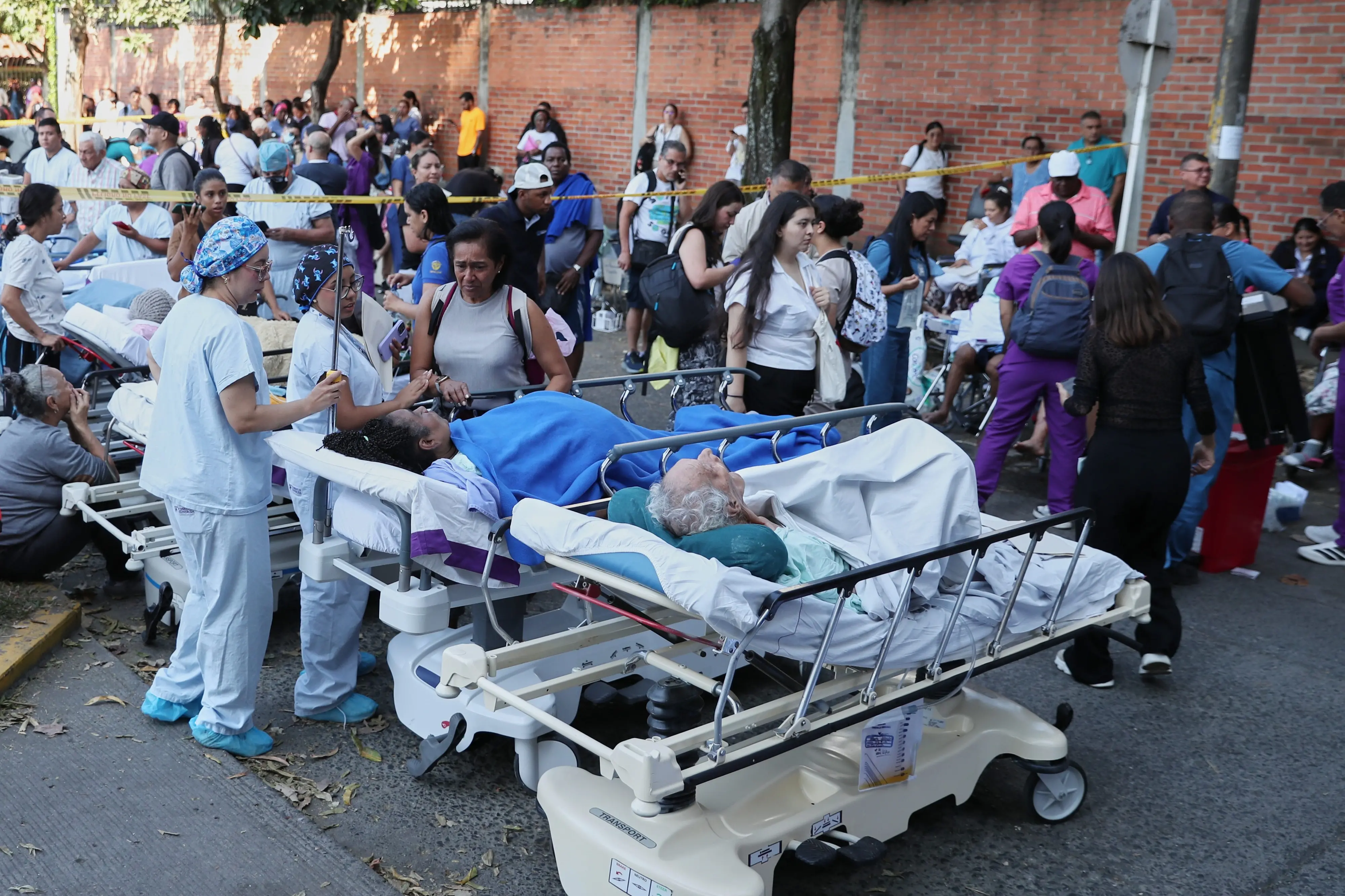
The earthquake also severely affected the health system.
Part of Hospital Universitario del Valle in Cali collapsed, forcing doctors to move patients into a parking area and treat some people outdoors.
Three floors housing paediatric, internal medicine and neonatal services eventually gave way. The hospital's capacity fell from 590 to 350 patients.
Despite the devastation, thousands of Colombians joined relief efforts, bringing food, water and other supplies to affected areas. Long queues also formed at blood donation centres.
President Abelardo de la Espriella declared a state of emergency and announced rent subsidies for families affected by the disaster during a visit to Pereira.
The United States pledged $15.5 million in emergency assistance, while other countries sent messages of support and offered help.
As aftershocks continued, rescue teams remained at collapsed sites, searching for any sound or signal that could indicate survivors beneath the rubble.
(With AFP inputs)