China's mega dam push in Tibet faces fresh scrutiny after deadly Nepal floods
New Delhi/Kathmandu: Catastrophic flooding in Nepal and rising river levels across parts of South Asia have renewed concerns over China's expanding dam-building programme in Tibet, with experts warning that large-scale hydropower projects in the ecologically fragile Himalayan region could exacerbate environmental and disaster risks.
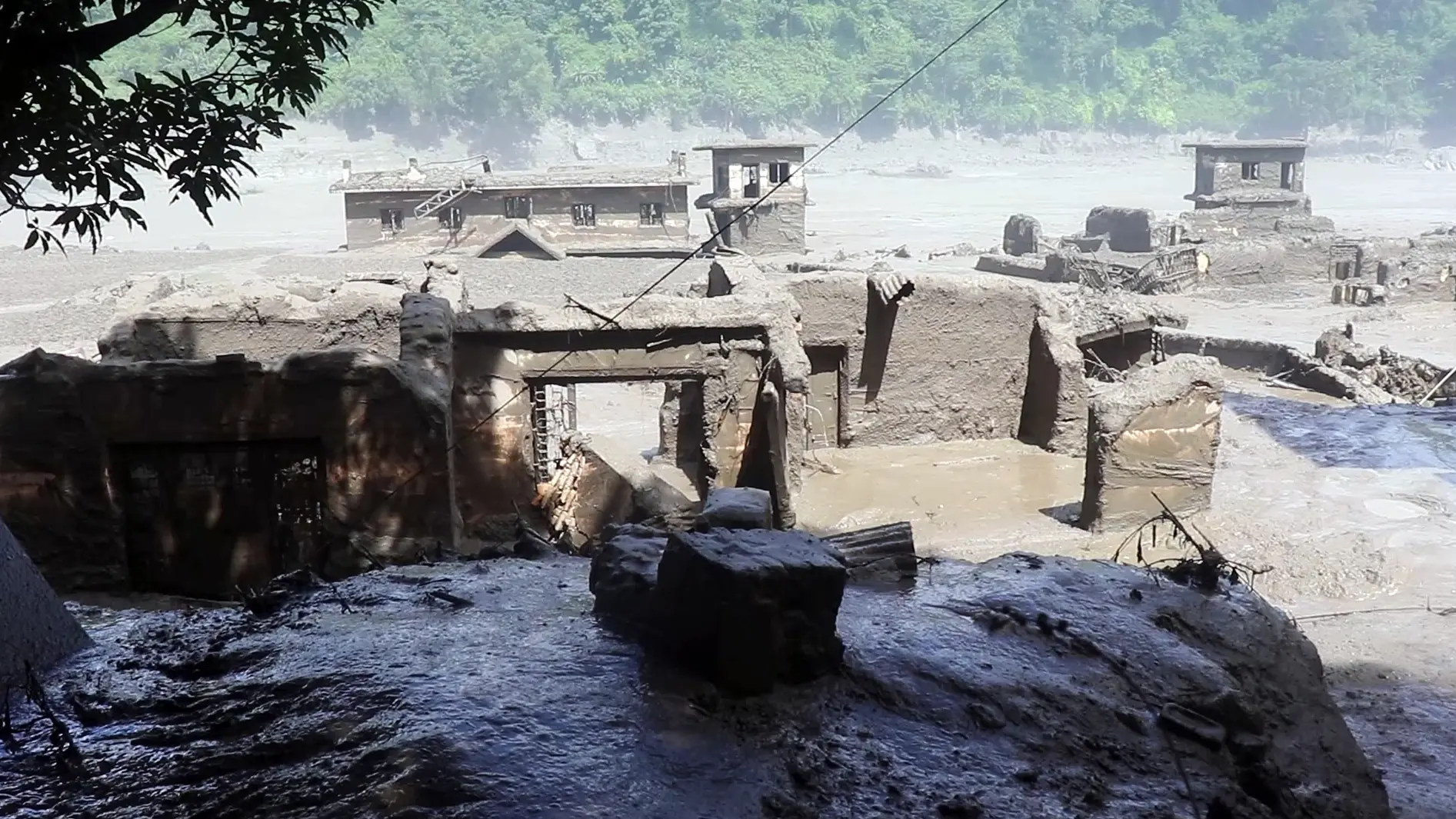
Flash floods in Nepal's Bhote Koshi River, which originates in Tibet, caused widespread devastation on Wednesday, killing at least 22 people, damaging villages and infrastructure, and leaving hundreds missing, including foreign tourists.
Officials said 384 tourists, including 291 from India, the United States, the United Kingdom and Malaysia, were among those reported missing after the river flooded around 9 a.m. local time. Several villages, roads and hydropower projects were destroyed as torrents of water swept through affected districts.
“We have asked both India and China to help us with the rescue efforts,” said Sasmit Pokharel, a spokesperson for the Nepali government.
Dozens of multi-storey buildings, trucks and vans were buried under mud in Nuwakot district, one of the worst-hit areas. Authorities also warned residents in several districts to stay away from the banks of the Bhotekoshi, Trishuli and Narayani rivers.
The disaster has once again drawn attention to China's extensive hydropower development in Tibet, particularly along the Yarlung Tsangpo River, which flows into India as the Brahmaputra and into Bangladesh as the Jamuna.
China has already constructed several major dams in Tibet, including the Zangmu Dam, completed in 2015, along with the Jiexu and Jiacha projects. Beijing has also unveiled plans for the massive Medog (Motuo) Dam near the Great Bend of the Yarlung Tsangpo, close to the Indian border.
The proposed project, expected to generate around 60,000 MW of electricity, nearly three times the capacity of the Three Gorges Dam, would become the world's largest hydropower facility. However, experts have repeatedly raised concerns over its location in one of the world's most seismically active regions.
Researchers and policy analysts argue that the project's scale poses significant risks related to earthquakes, landslides, sediment flow disruption and downstream flooding, potentially affecting communities across India and Bangladesh.
A 2026 report titled The Medog Imperative by the Stockholm-based Institute for Security and Development Policy (ISDP) highlighted concerns over the region's seismic vulnerability.
"Recall the January 2025 earthquake on the Tibetan Plateau that caused massive damage to human life, ecology, and security. Combined with the political sensitivities surrounding Tibet and China's upper-riparian status, the project raises a series of questions that cannot remain outside the purview of global climate governance, especially the United Nations Framework Convention on Climate Change (UNFCCC)," it warned.
The report noted that hydrologists, environmental researchers and geologists have questioned the long-term feasibility and safety of the project because the area lies along the collision boundary of the Indian and Eurasian tectonic plates.
Similar concerns were highlighted in a New York Times report last year, which noted the strategic importance of the Yarlung Tsangpo system for downstream nations.
"The Tibetan plateau was formed by a collision between the Indian and Eurasian tectonic plates millions of years ago. To this day, the Indian plate is still slowly moving toward the Eurasian one, which is why the Himalayas are regularly hit by earthquakes," it noted.
Warning that "Such seismic events threaten the safety of dams", the report cited Chinese officials as saying that cracks appeared in five hydropower dams in Tibet after a magnitude 7.1 earthquake struck near Shigatse in early 2025, killing more than 120 people.
"Even if the Motuo dam is built well enough to withstand an earthquake, the landslides and mudflows resulting from quakes are difficult to contain and can kill people living nearby. Experts say the massive excavation involved in dam construction could make such disasters more likely," it said.
Separate studies published in Chinese hydrology and geology journals have reportedly identified major engineering challenges linked to tunnelling through permafrost, managing unstable sediment and mitigating seismic risks. Researchers at the China Institute of Water Resources and Hydropower Research (IWHR) have also examined the potential for reservoir-induced seismicity at the proposed site.
The latest flooding has also reignited concerns about river management across the region. In India, the Kosi River is witnessing rising water levels, while the Brahmaputra has once again flooded large parts of Assam during the current monsoon season, affecting lakhs of people.
Experts increasingly argue that climate-resilient water management strategies, stronger early-warning systems, transparent cross-border data sharing and smaller adaptive infrastructure projects may offer a safer approach as climate change intensifies extreme weather events across South Asia.