China warns citizens against travelling to Japan over Taiwan dispute
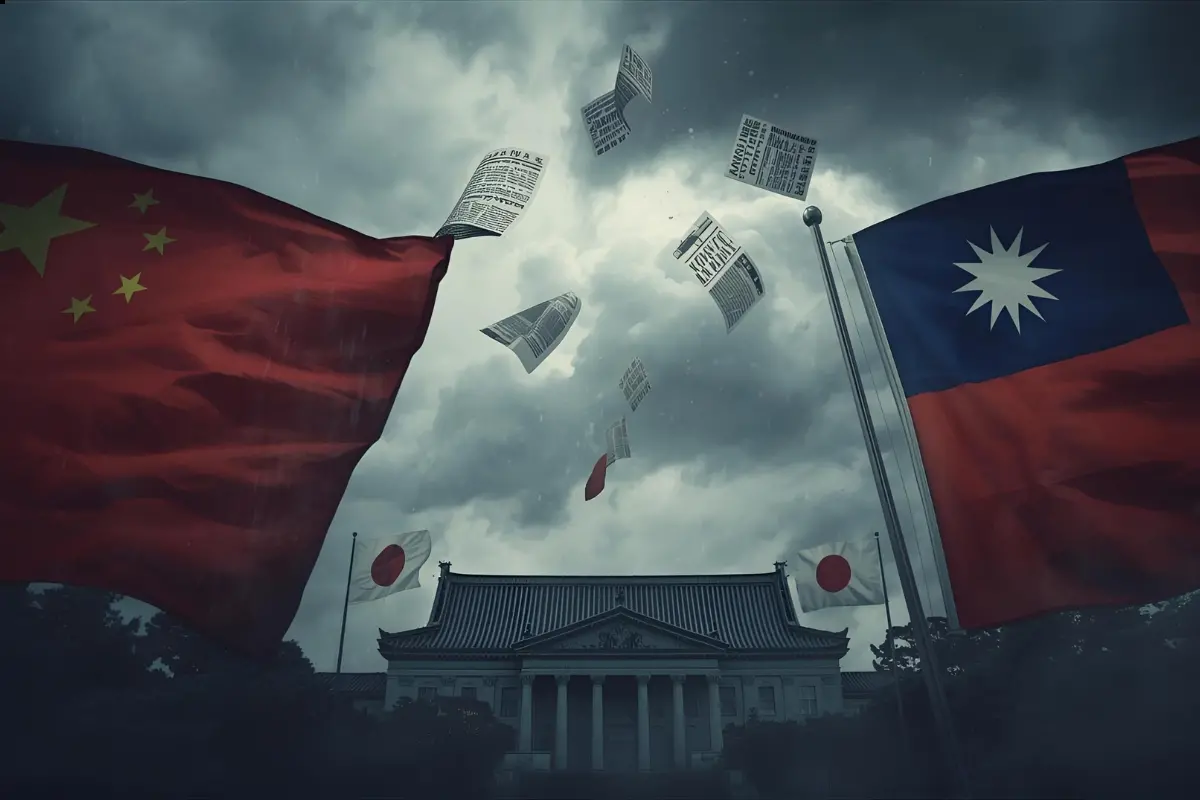
Beijing: Japanese Prime Minister Sanae Takaichi has indicated that Tokyo could respond militarily to a hypothetical attack on Taiwan. Speaking in parliament on 7 November, she said Japan might exercise its right to collective self-defence if a conflict in Taiwan threatened the country’s survival.
The diplomatic tensions escalated on Friday when China summoned Japan’s ambassador, prompting Japan to summon China’s ambassador in response to an “inappropriate” online post, which has since been removed. In a WeChat statement, China’s embassy in Japan warned of “significant risks to the personal safety and lives of Chinese citizens” and urged them to avoid travelling to the country.
Japan’s Chief Cabinet Secretary, Minoru Kihara, described Beijing’s advisory as “inconsistent with the promotion of a strategic and mutually beneficial relationship” and requested that China take appropriate measures. At the same time, China’s major airlines—Air China, China Southern, and China Eastern—offered full refunds or itinerary changes for flights to Japan through 31 December.
Taiwan, which Japan governed until 1945, is claimed by China as part of its territory. Beijing has not ruled out the use of force to assert control, while Japan and China continue to be important trade partners despite historical mistrust and territorial disputes.
Since taking office, Takaichi, a conservative and critic of China, has moderated her rhetoric but maintains her position on Taiwan. She said Japan would refrain from referencing specific scenarios in future discussions, continuing the long-standing policy of strategic ambiguity.
Tensions rose further after the Chinese consul general in Osaka made a controversial online post referring to Takaichi, prompting Japan to call for the envoy to be declared persona non grata. Takaichi, an ally of former Prime Minister Shinzo Abe, has previously visited Taiwan and met Chinese President Xi Jinping during an APEC summit.
China’s travel advisory comes amid one of the most serious diplomatic frictions between the two countries in recent years. Takaichi’s comments on collective self-defence, based on Japan’s 2015 security legislation, represented a rare direct reference to Taiwan’s defence, departing from decades of Japanese strategic ambiguity.
Beijing responded by summoning the Japanese ambassador and issuing the travel warning, citing “severe damage” to people-to-people exchanges. Japanese officials criticised the advisory as inconsistent with maintaining stable bilateral relations.
The advisory also had immediate commercial implications, as China’s leading airlines offered refunds and itinerary changes for flights to Japan, signalling Beijing’s concern for its citizens amid the tensions.
The dispute occurs against a backdrop of longstanding regional friction: Japan and China share a history of mistrust, territorial disputes in the East China Sea, and concern over China’s military expansion in the Asia-Pacific. Takaichi’s previous visits to Taiwan and meetings with both Taiwanese and Chinese officials highlight the sensitivity of her statements.
Analysts suggest the situation underscores the delicate balance Japan seeks to maintain—supporting Taiwan indirectly while avoiding direct military confrontation—and reflects China’s heightened sensitivity to foreign commentary on what it considers core territorial issues.
The international community, including the United States, continues to monitor developments closely, given Taiwan’s strategic significance and potential implications for regional security in East Asia.