China’s nuclear expansion just got bigger; satellite images reveal desert build-up
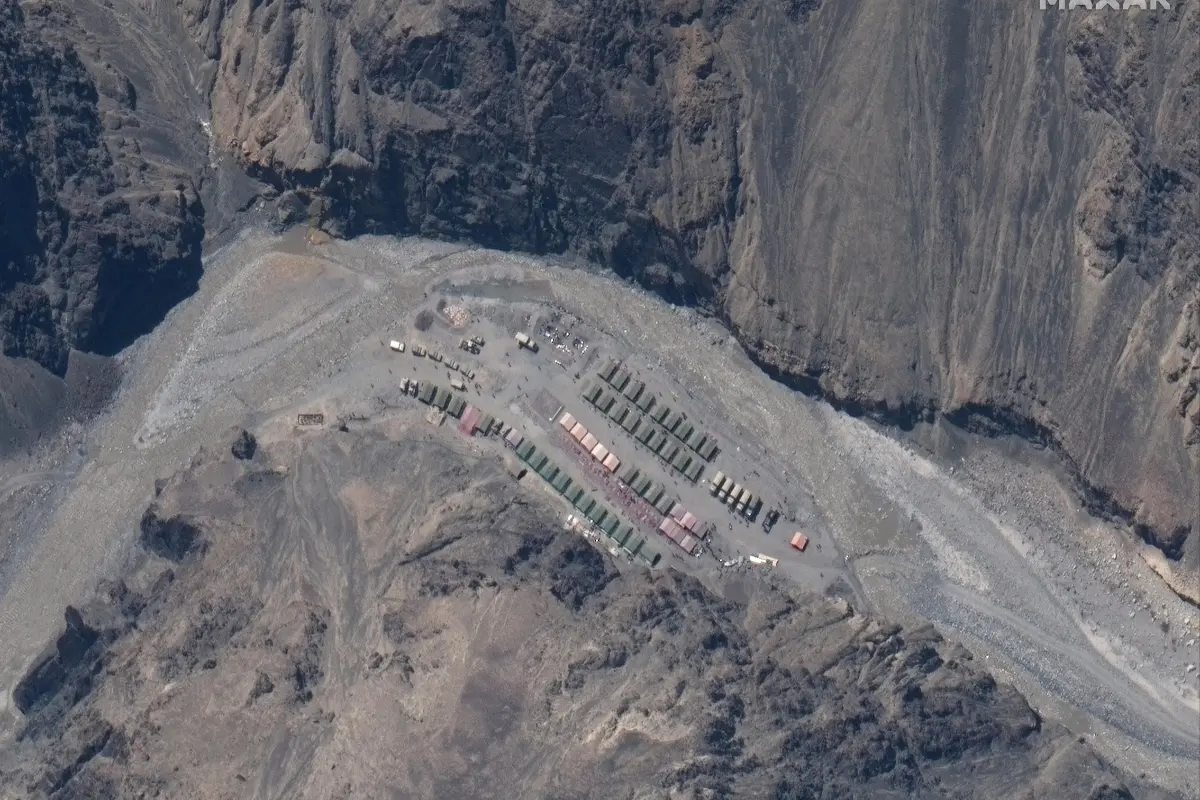
Beijing: New satellite imagery has revealed a large-scale Chinese military construction project in a remote desert region, which analysts believe is designed to strengthen Beijing’s nuclear deterrence capability.
According to images reviewed by Reuters, China has built more than 80 launch pads along with three large octagon-shaped military installations near the Hami missile silo field in north-western China.
Experts say the scale and layout of the infrastructure point to a coordinated effort to ensure China’s nuclear forces remain operational even in the event of a first strike.
Launch pads and command hubs under construction
Security analysts reviewing the imagery say the launch pads could support mobile missile launchers and air-defence systems, while the larger octagonal structures may function as command, communications, and electronic warfare hubs.
The installations are spread across thousands of square kilometres of desert terrain, forming what appears to be an integrated military support network around China’s missile infrastructure.
Alexander Neill, an adjunct fellow at the Pacific Forum think tank, said the development represents a “very considerable enhancement and diversification” of China’s strategic deterrent.
Experts believe the new network is intended to ensure that China’s nuclear arsenal can survive and respond even after a potential pre-emptive strike.
Unlike traditional silo-based systems alone, the expanded infrastructure appears to support mobility, redundancy, and rapid command coordination, making the system harder to neutralise.
According to TOI, Hans Kristensen, a nuclear weapons analyst cited in the report, described the scale of development as unprecedented, saying: “I’ve never seen anything quite like it.”
Rising concerns in the Indo-Pacific region
The findings come amid growing concern in the Indo-Pacific over China’s expanding military capabilities.
US Defence Secretary Pete Hegseth recently warned that countries in the region are increasingly alarmed by China’s military build-up, although Washington says it does not seek confrontation with Beijing.
He said regional governments are closely monitoring China’s expanding operations across both the Indo-Pacific and beyond.
China maintains a declared “no first use” nuclear policy, stating it would only deploy nuclear weapons in retaliation after an attack.
However, analysts argue that the expansion of hardened infrastructure and mobile systems may also serve a deterrence role in geopolitical flashpoints such as Taiwan.
Missile silos in Xinjiang and neighbouring Gansu remain central to China’s land-based nuclear force, but the new facilities suggest a broader shift toward a more dispersed and resilient system.
Growing global scrutiny
China’s rapid military modernisation under President Xi Jinping has drawn increasing scrutiny from Western governments, particularly over transparency in its nuclear programme.
While Beijing insists its strategy is defensive and based on deterrence, the scale of construction in the desert has raised questions about the future direction of its nuclear capabilities.
Both Chinese defence authorities and the Pentagon have declined to comment on the latest satellite findings.