Boeing wins $20 billion US Navy fighter jet deal: What is the F/A-XX?
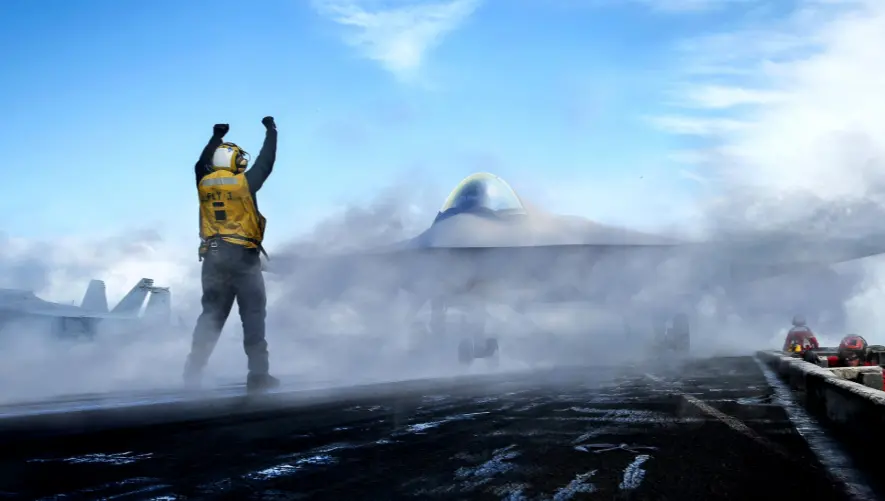
Washington: The Pentagon has selected Boeing to develop the US Navy's next-generation fighter jets under a contract worth $20 billion, marking a major defence win for the aerospace giant.
The programme will produce the F/A-XX "strike fighters" as part of the Pentagon's Next Generation Air Dominance Program. The new aircraft are expected to begin replacing the Navy's ageing F/A-18 Super Hornet fleet in the 2030s, according to the Pentagon.
The contract marks the second time Boeing has been picked by the Pentagon during the second Trump administration for a sixth-generation fighter programme. In March 2025, President Donald Trump announced that Boeing had been selected to build a new stealth fighter for the US Air Force.
"Delivering two advanced fighters in parallel was always our plan, and we invested accordingly. We are ready and able to build multiple concurrent future combat aircraft franchise programs," said Steve Parker, head of Boeing Defense, Space & Security.
Pentagon Undersecretary Michael Duffey described the F/A-XX programme as a key investment in future US military capabilities.
"The F/A-XX platform represents a crucial, non-negotiable investment in America's national security and long-term air combat capabilities," said Pentagon undersecretary Michael Duffey. "We are joining forces with Boeing to field these capabilities."
Boeing said work on the aircraft was already continuing at its "secure manufacturing" facility in St. Louis, which the company described as the largest facility of its kind in the United States.
"The technical and programmatic details of F/A-XX remain classified under US national security and export laws," it said.
Boeing secured the contract after competing against Northrop Grumman, which had also proposed a sixth-generation fighter for the Navy.
"For F/A-XX, Northrop Grumman offered a highly survivable, digitally advanced sixth-generation fighter to the US Navy," Northrop said Tuesday. "We look forward to receiving additional information about their selection."
What the Navy wants from the new fighter
The F/A-XX is expected to operate alongside unmanned systems and provide greater range, survivability and combat capability for carrier-based operations.
At a US Senate hearing in May 2026, Admiral Daryl Caudle, chief of naval operations, said the next-generation system needed to "extend the reach, survivability and lethality" expected to work with unmanned systems.
"Failure to field next-generation carrier aviation capability on schedule will introduce risk to air superiority, strike reach and the long-term viability of carrier-based operations in contested environments," Caudle said.
The contract comes at a significant moment for Boeing, which has been working to recover from years of difficulties affecting both its commercial and defence businesses.
The company has faced sustained scrutiny following two fatal 737 MAX crashes in 2018 and 2019, followed by a 2024 Alaska Airlines flight in which a fuselage panel blew out during flight.
Boeing has made increasing 737 MAX production a central part of its recovery strategy and is also working towards certification of the 737 MAX 10, the largest variant of the aircraft.
However, US air safety regulators recently postponed certification of the MAX 10 while assessing whether a new issue involving its automated navigation software poses a safety risk.
Boeing shares fell 6.9 per cent on Monday following news of the certification pause.
The Navy fighter contract came a day after NASA announced plans for new missions involving Boeing's Starliner spacecraft. The announcement marked the first such missions since the spacecraft's troubled test flight left two astronauts stranded at the International Space Station for months.
Boeing shares gained around two per cent in after-hours trading on Tuesday, while Northrop Grumman initially fell 3.6 per cent before recovering to about 1.2 per cent lower.