Ballots next door, headaches in Delhi: Why Bangladesh’s elections are critical for India
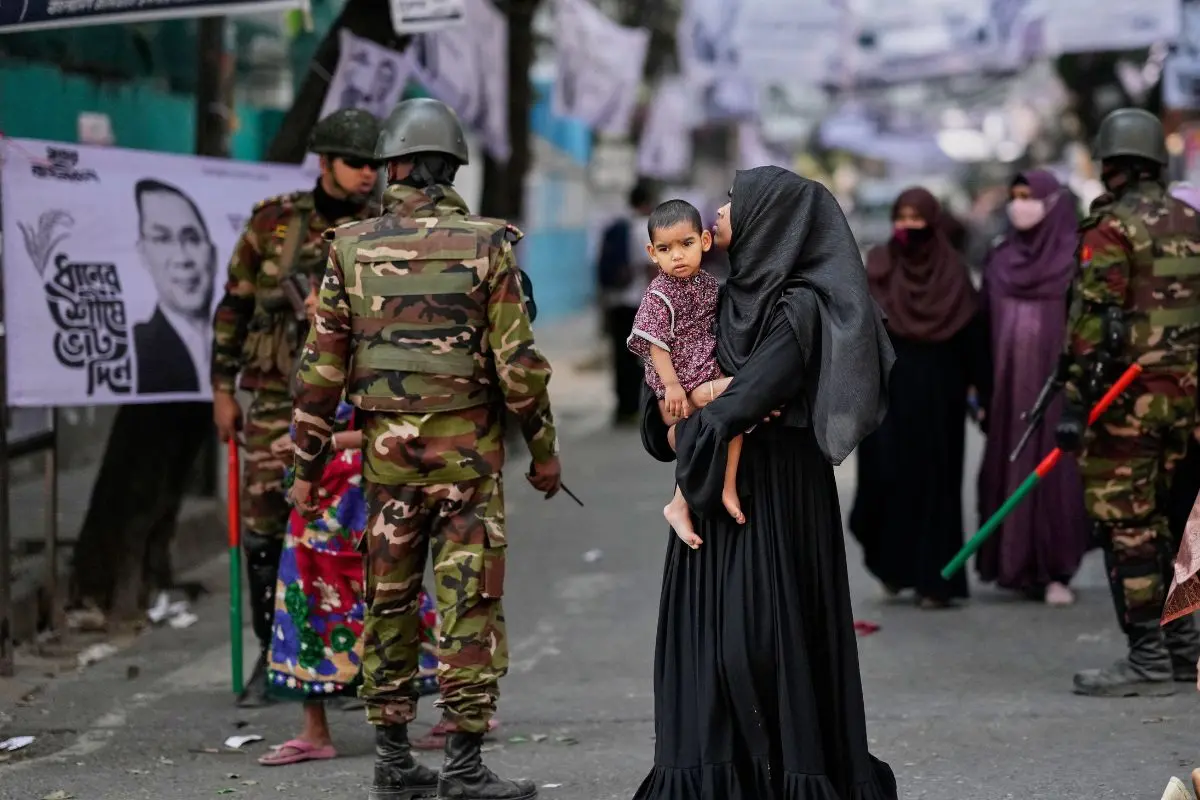
New Delhi: Bangladesh’s long-anticipated elections have begun amid reports of sporadic violence, allegations of vote irregularities, and a tense political climate. While the immediate contest is domestic, the implications ripple far beyond Dhaka.
For India, which shares its longest land boundary, roughly 4,000 kilometres, with Bangladesh, the outcome carries consequences for security, regional connectivity, trade, and geopolitical balance in South Asia.
Security and border management
India’s eastern frontier with Bangladesh spans five states and includes riverine stretches, densely populated zones, and segments that remain unfenced.
Stability in Bangladesh has historically translated into better border coordination, intelligence sharing, and smoother handling of transnational challenges.
Security agencies in India closely monitor developments, mindful of concerns such as illegal migration, cattle smuggling, narcotics trafficking, and counterfeit currency networks.
A cooperative government in Dhaka has often meant more effective joint operations, coordinated patrols, and diplomatic engagement through established mechanisms.
Another dimension is counter-terrorism. In previous years, India and Bangladesh built a reputation for strong security cooperation, including action against insurgent groups and extremist networks operating across borders.
Any political transition that disrupts this coordination could complicate India’s internal security environment, particularly in the Northeast.
Geopolitical balancing in the neighbourhood
Bangladesh’s elections unfold against a backdrop of intensifying strategic competition in South Asia. China’s economic footprint in the region has grown through infrastructure investments, energy projects, and connectivity initiatives. Pakistan, too, remains a factor in Bangladesh’s political discourse.
For India, Bangladesh’s foreign policy orientation matters. New Delhi has long sought friendly ties anchored in shared history, cultural links, and mutual economic interests.
Analysts note that shifts in Dhaka’s external alignments, especially toward Beijing, could influence regional power equations, maritime dynamics in the Bay of Bengal, and India’s broader neighbourhood policy.
Bangladesh’s position is also crucial to groupings such as BIMSTEC and subregional connectivity frameworks linking South and Southeast Asia. A government inclined toward balanced diplomacy could reinforce cooperative regionalism, while sharper alignments may introduce friction.
Trade, connectivity, and the Act East policy
Economic engagement is another pillar. Bangladesh is among India’s largest trading partners in the neighbourhood, with ties spanning textiles, energy, pharmaceuticals, and consumer goods. Cross-border power trade, fuel supply arrangements, and infrastructure cooperation have deepened interdependence.
Connectivity projects, including rail links, inland waterways, and road corridors, are central to India’s Act East policy, which envisions smoother access to Southeast Asia via the Northeast.
Political stability in Bangladesh is essential for sustaining these initiatives, ensuring logistical reliability, and attracting long-term investments.
Any prolonged instability could slow project execution, disrupt supply chains, and dampen investor confidence on both sides.
Political equations and India’s approach
India’s official stance emphasises democratic processes and stability in Bangladesh. New Delhi traditionally engages with whichever government assumes office, seeking continuity in bilateral cooperation irrespective of party lines.
Political observers in India nevertheless assess potential scenarios. The Bangladesh Nationalist Party (BNP) is viewed by some analysts as a familiar interlocutor given past interactions, while others caution against oversimplification, noting that bilateral ties have endured under varied political dispensations.
The role of parties such as Jamaat-e-Islami also draws attention in Indian strategic circles, largely due to perceptions about ideological positions and foreign policy preferences. Yet diplomats underline that state-to-state relations are shaped by pragmatic interests, not merely party identities.
The broader stakes
Ultimately, Bangladesh’s elections represent more than a leadership contest. They are a test of institutional resilience, democratic credibility, and governance direction.
For India, the priorities remain clear: a stable neighbour, secure borders, sustained economic cooperation, and a balanced regional order.
As ballots are cast and results awaited, New Delhi’s watchfulness reflects geography’s enduring truth, neighbours cannot choose each other, but they must manage their destinies together.