Bangladesh Elections 2026: Why Jamaat failed as BNP surged ahead
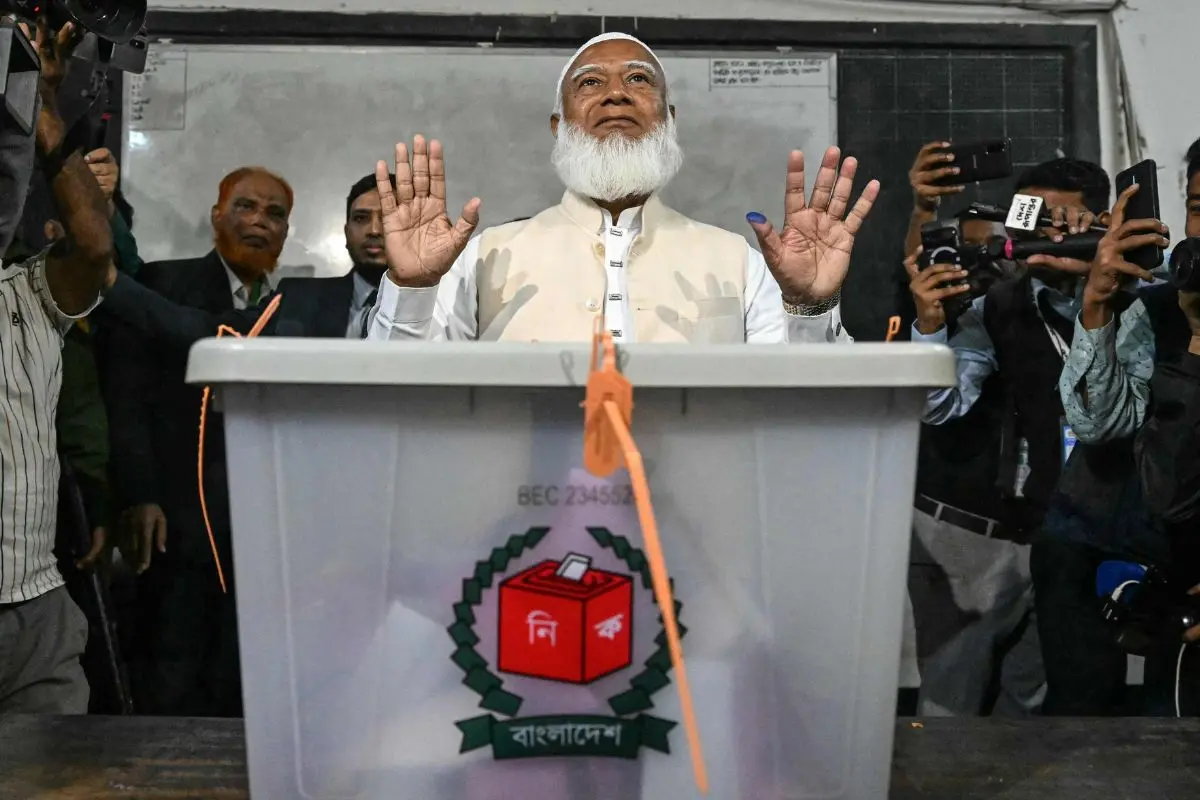
Dhaka: Bangladesh’s 2026 parliamentary elections are poised to deliver a decisive mandate for the Bangladesh Nationalist Party (BNP), with early trends and post-poll assessments indicating a sweeping victory, while Jamaat-e-Islami’s performance has fallen short of expectations despite a turbulent and violence-tinged run-up to the vote.
The elections, the first held after the dramatic political upheaval that reshaped the country’s landscape following the 2024 uprising, unfolded amid sporadic violence, allegations of intimidation, and heightened communal tensions. Yet analysts say the electorate’s response suggests a complex recalibration rather than a simple reaction to unrest.
Jamaat’s underwhelming showing
Jamaat-e-Islami entered the election cycle hoping that its revived organisational machinery and expanding grassroots mobilisation would translate into significant parliamentary gains. However, multiple factors appear to have constrained the party’s prospects.
Political observers point to Jamaat’s enduring legacy challenges and ideological positioning as key hurdles.
While the party remains influential within its traditional support base, its Islamist platform struggled to resonate with broader segments of voters, particularly urban moderates and younger citizens seeking economic certainty and political stability.
“The assumption that pre-poll instability would consolidate votes for Jamaat did not fully materialise,” said Dhaka-based political analyst Rezaul Karim. “Many voters appeared wary of further polarisation and instead gravitated toward what they saw as a more mainstream alternative.”
Alliance fragmentation also played a significant role. The absence of cohesive coordination among Islamist-leaning groups diluted Jamaat’s ability to maximise seat-level advantages. Breakaways and independent contestations split vote shares in several constituencies where united opposition strategies might have altered outcomes.
Additionally, critics argue that Jamaat faced difficulties broadening its demographic appeal. Limited traction among female voters and sections of the youth electorate, increasingly decisive in Bangladesh’s electoral arithmetic, further restricted its reach.
Despite reports of violence and communal incidents before polling day, voter behaviour suggested that instability did not automatically translate into support for hardline narratives.
Instead, the unrest appears to have reinforced concerns over governance and security, areas where Jamaat’s messaging struggled to gain dominance.
Jamaat leaders have alleged bias by sections of the election administration and law enforcement agencies, claiming their candidates encountered operational disadvantages.
While these accusations have intensified political debate, they have not significantly altered the broader perception of the results.
BNP’s commanding surge
In contrast, BNP’s electoral momentum reflects a convergence of political opportunity, strategic positioning, and voter sentiment.
Central to BNP’s rise has been the reshaped competitive field. With the Awami League absent from direct contestation following political and legal setbacks after the 2024 crisis, BNP emerged as the principal beneficiary of the anti-incumbency space and the primary vehicle for mainstream opposition voters.
The return of Tarique Rahman to an active leadership role after years in exile injected renewed energy into the party’s campaign. His re-engagement was widely seen as galvanising BNP’s base, revitalising party cadres, and strengthening internal cohesion at a critical moment.
BNP’s campaign strategy focused heavily on themes of stability, economic recovery, and institutional normalisation, messages that resonated strongly after nearly two years of political volatility.
“Voters were not merely reacting to parties; they were responding to circumstances,” said election researcher Farhana Sultana. “There is fatigue from prolonged unrest. BNP successfully positioned itself as a credible force promising order and predictability.”
BNP also benefited from robust constituency-level organisation, effective voter outreach, and targeted messaging addressing inflation, employment, and governance reforms.
The party’s emphasis on restoring democratic processes and re-engaging international partners broadened its appeal among business communities and urban professionals.
A verdict shaped by stability concerns
The election outcome underscores a broader voter preference for perceived stability over ideological experimentation.
While Jamaat retains relevance within Bangladesh’s political matrix, its inability to convert a volatile environment into expanded electoral gains highlights the limits of unrest-driven mobilisation.
For BNP, the expected landslide signals not only a comeback but also the electorate’s demand for governance continuity and economic reassurance.
As final results are consolidated, attention is likely to shift toward government formation, policy direction, and how Bangladesh navigates reconciliation and reform in a post-upheaval era.