ASEAN leaders gather in Philippines amid Middle East crisis and regional tensions
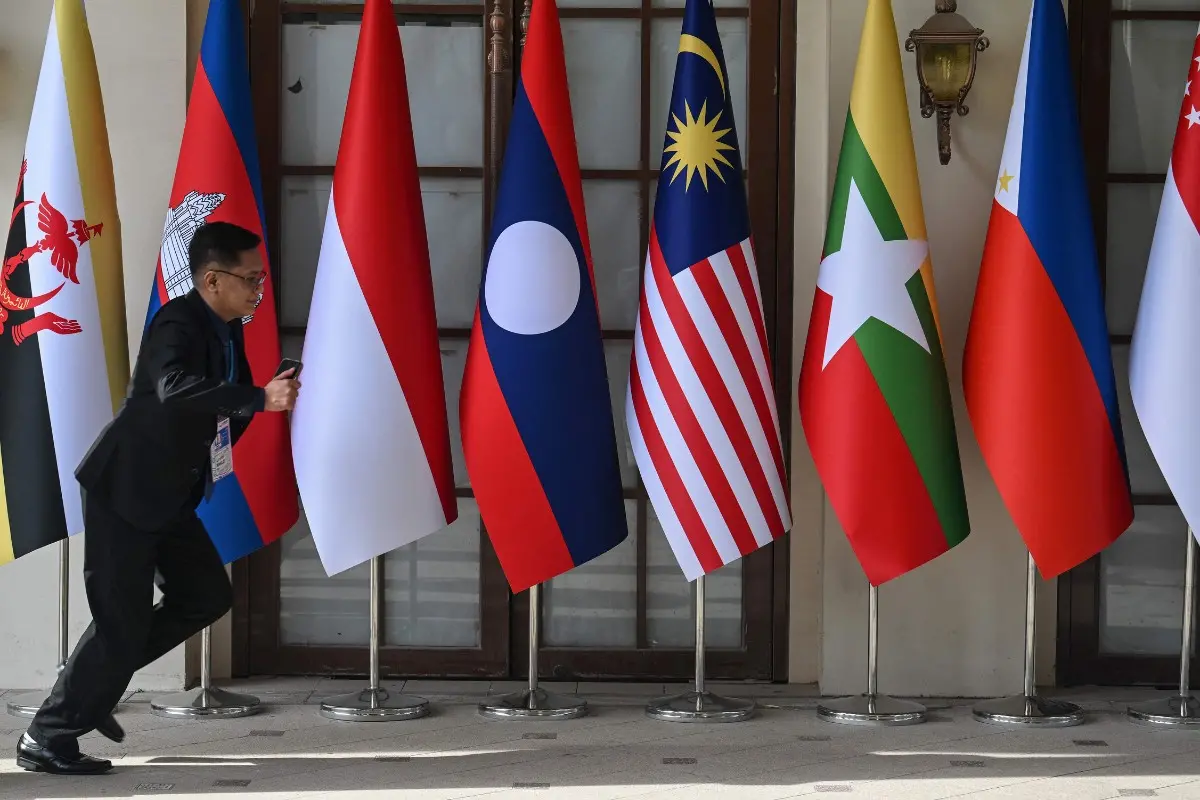
Cebu: Leaders from the member nations of the Association of Southeast Asian Nations (ASEAN) have begun arriving in Cebu for a regional summit that Philippine President Ferdinand Marcos Jr. said would be a “bare bones” meeting centred largely on economic challenges linked to the ongoing conflict in the Middle East.
The summit comes as concerns grow over supply chain disruptions caused by the US-Israeli strikes on Iran. However, ASEAN leaders are also expected to discuss unresolved regional issues, including Myanmar’s continuing civil conflict and tensions in the South China Sea.
ASEAN has now expanded to 11 members following the inclusion of Timor-Leste.
Energy, food prices and worker safety high on agenda
According to Marcos, the most urgent concerns for member states include declining fuel supplies, rising food prices and the safety of migrant workers living near conflict zones in the Middle East.
In March, shortly after declaring a national energy emergency, the Philippine president stressed the importance of regional cooperation.
“What we really need at this time is for leaders to talk about... how can we help each other,” he said while dismissing speculation that the summit could be cancelled because of the crisis.
Despite previous discussions on energy cooperation, ASEAN currently lacks any binding framework that would require coordinated action among member states.
One such example is the bloc’s long-standing Petroleum Security Agreement, a voluntary fuel-sharing arrangement designed to support energy stability during emergencies. The mechanism has never been activated.
On Wednesday, the Philippines said it had backed a collective ASEAN “response to the crisis” in the Middle East, which it hoped would be issued during the summit. No further details were disclosed.
An ASEAN diplomat familiar with an early draft of the document told on condition of anonymity, that the statement would likely include a call for the reopening of the Strait of Hormuz and for unrestricted movement through other key maritime routes.
Myanmar crisis remains unresolved
Myanmar continues to remain excluded from major ASEAN summits after the military seized power in a 2021 coup, triggering widespread violence and a prolonged civil war.
Questions remain over whether recent developments in Myanmar, including the election that saw junta chief Min Aung Hlaing become president and the transfer of democracy leader Aung San Suu Kyi from prison to house arrest, could improve the country’s ties with ASEAN.
After taking office last month, Min Aung Hlaing said his administration would “work to restore normal relations” with ASEAN. However, the bloc appears divided over how to respond.
Thailand’s Foreign Minister Sihasak Phuangketkeow told in January that Bangkok had proposed a “calibrated engagement” approach with Myanmar’s new administration, expressing hope that the election could mark “the start of the transition”.
Philippine Foreign Minister Theresa Lazaro also said at January’s ASEAN gathering that “a good number” of member states shared a similarly “pragmatic” position.
However, some countries within the bloc are reportedly taking a stricter stance.
The ASEAN diplomat said the organisation effectively had “only one card” to use in dealing with Myanmar, namely the restoration of full diplomatic recognition.
On Wednesday, the Philippines welcomed Myanmar’s decision to place Suu Kyi under house arrest, while also requesting that an ASEAN special envoy be granted “brief access” to the 80-year-old leader.
South China sea talks continue without final agreement
Maritime security is also expected to feature prominently during the summit, with ASEAN leaders likely to release a declaration on “maritime cooperation”.
However, the long-awaited Code of Conduct for the South China Sea is not expected to be finalised.
ASEAN and China have spent more than two decades negotiating the proposed code aimed at regulating behaviour in the disputed waters.
Brunei, Malaysia, the Philippines and Vietnam all claim parts of the South China Sea, while China claims almost the entire area despite an international ruling stating that Beijing’s position has no legal basis.
The Philippines, whose vessels have repeatedly clashed with Chinese ships in the disputed waters, had earlier expressed hope that negotiations could conclude this year while Manila holds the ASEAN chairmanship.
Talks, however, have repeatedly stalled due to disagreements surrounding the code’s scope, enforcement measures and legal standing.
Manila-based geopolitical analyst Don McLain Gill told earlier this year that although the Philippines was likely to prioritise maritime security, any agreement accepted by China would probably lack strong enforcement provisions.
The Southeast Asian diplomat also said there was “no way” China would agree to a legally binding arrangement, adding that Beijing would instead prefer a “political declaration”.
Agency inputs