Ancient bronze age town unearthed in Saudi Arabia oasis | PHOTOS
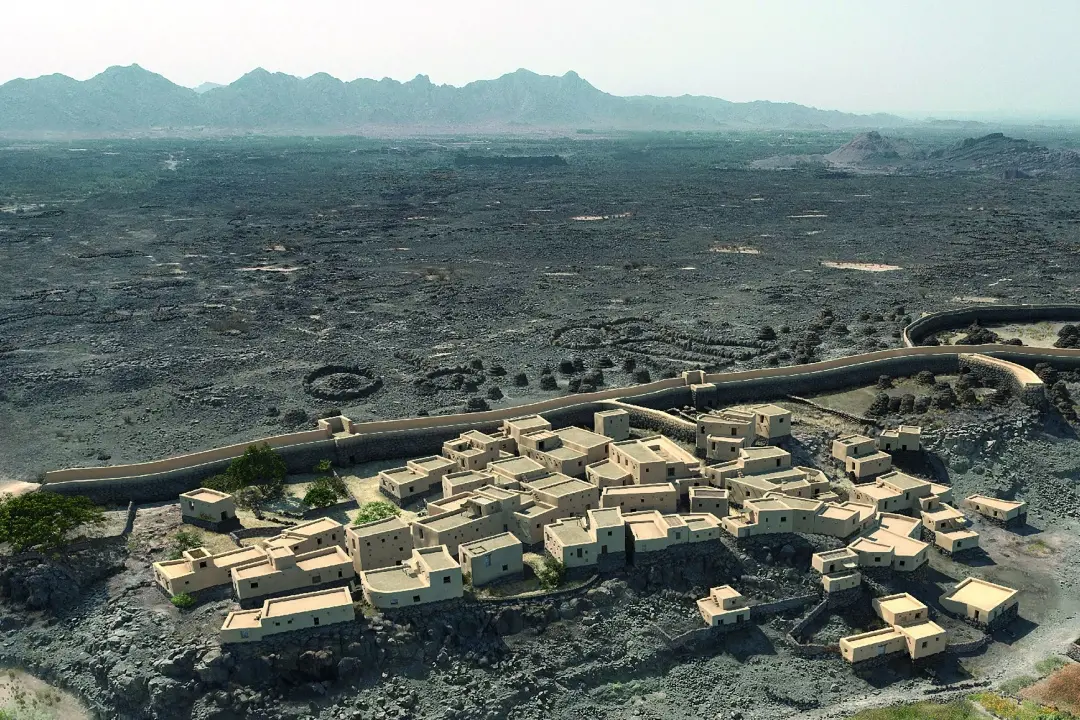
Riyadh, Saudi Arabia: The Royal Commission for AlUla (RCU) has announced the discovery of a Bronze Age town in the Khaybar Oasis, in northwestern Saudi Arabia. This exciting finding, published in the scientific journal PLOS ONE, was revealed during a press conference in Riyadh.
Cultural heritage and global impact
The discovery highlights Saudi Arabia's dedication to preserving its cultural heritage and sharing knowledge with the world. It aligns with the goals of the Kingdom's Vision 2030, promoting awareness of shared human history and fostering international partnerships to showcase this rich heritage for future generations.
A shift in lifestyle
This find illustrates a major change from a nomadic lifestyle to settled urban living during the second half of the third millennium BC. Led by Dr. Guillaume Charloux from the French National Centre for Scientific Research and Dr. Munirah AlMushawh from RCU, the Khaybar Longue Duree Archaeological Project challenges previous beliefs that nomadic societies were the main economic model in northwestern Arabia during the early and middle Bronze Age.
Urban centres of trade and agriculture
Research indicates that areas like Khaybar were vital urban centres that provided stability through agriculture and served as hubs for trade among nomadic communities. This urban development significantly influenced the region's economy.
Details of the discovery
The newly discovered town, named Al-Natah, reveals distinct residential and burial areas within its fortified walls. Covering 2.6 hectares, it housed about 500 people between 2400 and 2000 BC, with evidence of habitation continuing until around 1500-1300 BC. The town was protected by a 15-kilometre stone wall.
Collaborative research efforts
The study was conducted in partnership with the French Agency for the Development of AlUla (AFALULA) and the French National Centre for Scientific Research (CNRS). The Khaybar Oasis, located near the Harrat Khaybar volcanic field, was found on the northern edge of the oasis, buried under layers of basalt rock for thousands of years.