TCS plunges 4.5% as chairman Chandrasekaran exits Tata Sons: What investors need to know
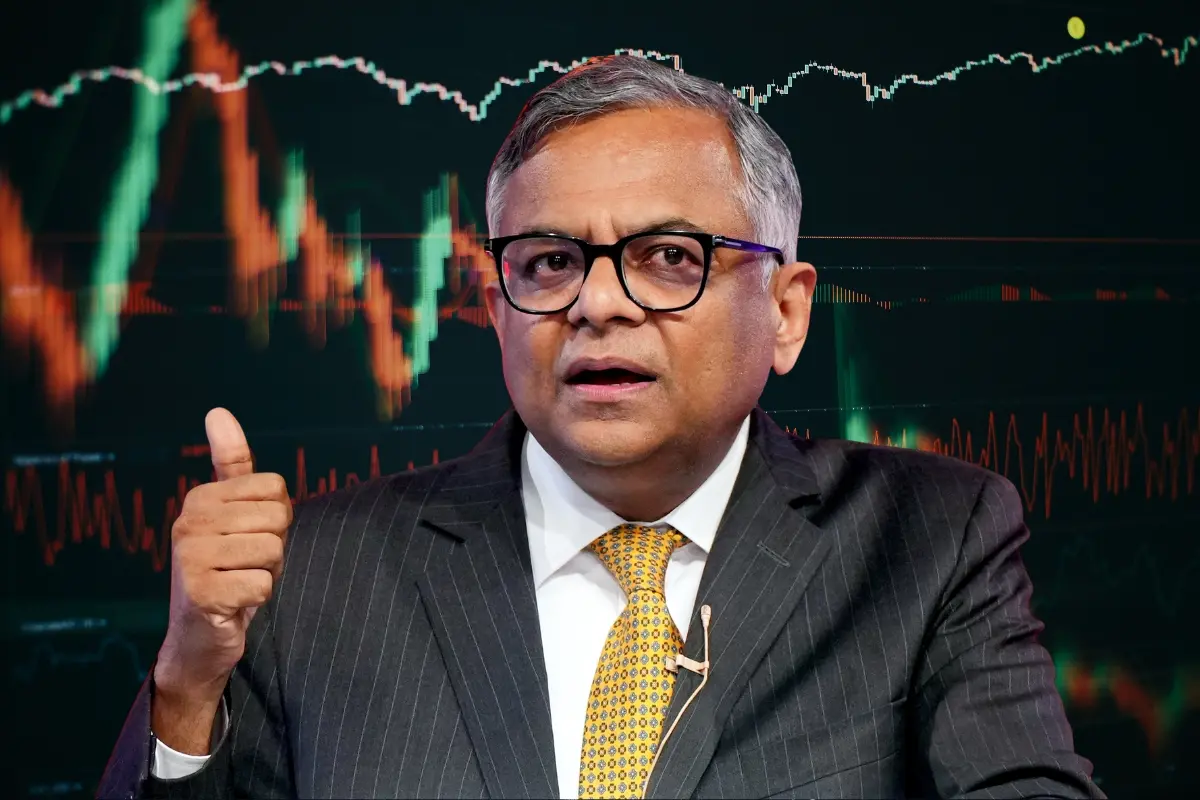
Mumbai: N Chandrasekaran’s resignation as Tata Sons chairman has triggered a sell-off across several Tata group stocks, with Tata Consultancy Services (TCS) taking the biggest hit. Chandrasekaran has resigned but will complete his current term through February 2027, according to a source cited by Reuters.
TCS shares fell by more than 4% during Wednesday’s trading, while Titan, Tata Consumer Products and other Tata companies also traded lower. The market reaction reflects investor concerns over leadership continuity and governance at the group’s holding company rather than an immediate change in the day-to-day management of each listed company.
“Bit surprising, markets don’t like uncertainty. it is good that his term lasts till February 2027. So, we have a 6 months transition period. A succession plan along with the resignation would have been better,” market expert Ajay Bagga said on reports of N Chandrasekaran stepping down as Tata Sons Chairman.
What happened?
Chandrasekaran has submitted his resignation as chairman of Tata Sons and will not seek reappointment, although he is expected to remain in the role until his current term ends in February 2027. The development comes just days before the Tata Sons AGM scheduled for August 18.
The leadership change follows reported differences within the Tata group over governance and the future direction of Tata Sons. Tata Trusts holds about 66% of Tata Sons, giving the relationship between the holding company and the trusts significant importance for the wider group.
Why did Tata stocks fall?
The immediate market concern is leadership uncertainty at Tata Sons.
Tata Sons is the principal holding company of the Tata group and has stakes across major businesses. Chandrasekaran has also had a particularly strong association with TCS: he was its CEO before becoming Tata Sons chairman in 2017.
That history helps explain why TCS reacted particularly sharply. TCS was among the biggest decliners as investors assessed what the leadership transition could mean for the wider group.
What does it mean for Tata stocks?
The impact is unlikely to be identical across all Tata companies.
TCS: The most immediate sentiment impact because of Chandrasekaran’s long association with the company and its importance within the group.
Tata Motors: Investors may focus on whether the leadership transition affects the group's capital allocation and major strategic investments.
Titan and Tata Consumer Products: These companies are independently managed, but their shares can still react to changes in broader Tata group sentiment.
Tata Steel and other group companies: Their operating performance remains driven largely by their own sectors, but group-level governance uncertainty can weigh on investor sentiment.
The broader sell-off therefore does not automatically mean that the underlying businesses of all Tata companies have weakened.
What are investors watching now?
The key questions are:
- Who will eventually succeed Chandrasekaran at Tata Sons?
- How will the relationship between Tata Trusts and Tata Sons evolve?
- Will the leadership transition affect capital allocation?
- What happens at the August 18 AGM?
- Will major investments and expansion plans continue at the same pace?
- How quickly can the group provide clarity on its next leadership structure?
Why TCS is particularly sensitive
Chandrasekaran joined TCS in the early stages of his career, eventually becoming its CEO before taking over Tata Sons. His association with the technology company therefore goes beyond his role as group chairman.
That helps explain why TCS became the clearest market barometer for the leadership news. However, TCS continues to have its own management structure and business fundamentals, meaning the immediate share-price reaction should not be interpreted as evidence of a change in its operating performance.
Analysis: what the stock reaction really signals
The sell-off appears to be primarily a confidence and governance reaction.
Investors are trying to assess whether the leadership change represents a temporary transition or signals deeper disagreements over how Tata Sons should be governed and how the conglomerate's major investments should be managed.
The fact that Chandrasekaran is expected to remain until February 2027 gives the group some transition time. However, until there is clarity on his successor and the relationship between Tata Sons and Tata Trusts, Tata stocks could remain sensitive to further developments.
For investors, the key distinction is between short-term sentiment pressure and long-term business fundamentals. A fall in TCS, Titan or Tata Motors shares following the leadership news does not by itself indicate deterioration in those companies' individual businesses.
(Disclaimer: This article is for informational purposes only and does not constitute investment, financial or trading advice. Stock prices can change rapidly, and past performance is not indicative of future returns. Readers should conduct their own research and consult a qualified financial adviser before making any investment decisions.)