Check petrol, diesel rates today; know why crude oil price above $100 a barrel concerns India
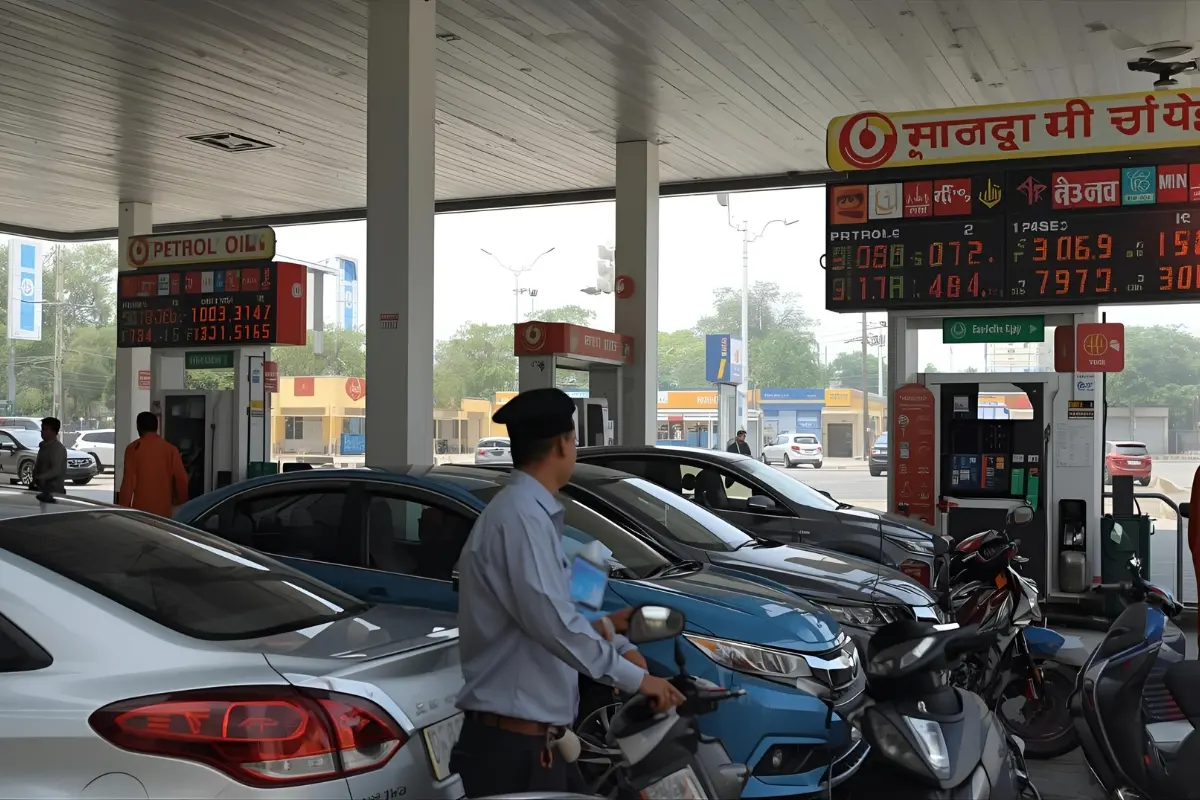
India’s retail fuel prices held steady on Monday, even as global crude oil soared above $100 per barrel, driven by escalating geopolitical tensions in West Asia. Consumers in major cities continued to pay existing rates, while analysts warn that prolonged crude volatility could affect costs across the economy.
City-wise fuel rates: petrol and diesel today
Petrol prices in metros ranged from ₹94.30 per litre in Chandigarh to ₹107.49 in Thiruvananthapuram. While some cities saw minor changes, most remained unchanged:
- New Delhi: ₹94.77, unchanged
- Mumbai: ₹103.54, unchanged
- Chennai: ₹101.23, +0.17
- Bangalore: ₹102.92, -0.07
- Hyderabad: ₹107.46, unchanged
- Jaipur & Patna: ₹105.21/₹105.23, slight dip -0.19
Diesel rates showed a similar pattern, ranging from ₹82.45 in Chandigarh to ₹96.48 in Thiruvananthapuram, with minimal changes in most cities.
- New Delhi: ₹87.67, unchanged
- Mumbai: ₹90.03, unchanged
- Chennai: ₹92.81, +0.20
- Bangalore: ₹90.99, -0.07
- Hyderabad: ₹95.70, unchanged
Oil marketing companies update prices daily at 6 AM to reflect crude price movements and currency fluctuations, ensuring transparency and accuracy.
Why crude oil above $100 matters for India
India imports over 85% of its crude requirements, making the economy highly sensitive to international oil movements. Every $10 per barrel increase can raise the import bill by $13–14 billion, widening the current account deficit by about 0.3% of GDP. With crude rising from around $85 to $100 per barrel, India could see an additional $20–25 billion in annual imports.
Higher crude prices raise transportation and logistics costs, feed into manufacturing expenses, and eventually affect consumer prices. A weaker rupee may follow, as more dollars are needed for oil imports, further inflating costs.
Global supply disruptions push prices higher
The West Asia conflict has disrupted oil flows through the Strait of Hormuz, a key maritime corridor carrying roughly one-fifth of global oil trade. Strikes on Iran and production cuts by Kuwait, UAE, and Iraq have tightened supply. Brent crude jumped nearly 20% to $111.04 per barrel, while West Texas Intermediate climbed 22%, marking levels unseen since mid-2022.
The United States’ temporary 30-day waiver allowing India to import Russian crude already at sea provides some short-term supply relief, though global market volatility remains high.
Domestic fuel buffer cushions consumers
Despite the crude rally, India’s government has instructed state-run oil marketing companies to absorb price increases temporarily. This policy shields consumers from immediate pump shocks while global tensions persist. Petrol and diesel prices are unlikely to rise in the short term, though sustained crude price spikes could eventually impact retail rates.
For now, urban buyers continue to fill tanks at familiar rates, but rising international benchmarks serve as a reminder of the fragility of India’s fuel pricing amid global uncertainty.