Nine budgets, nine handlooms: A look at Nirmala Sitharaman’s iconic Budget Day sarees
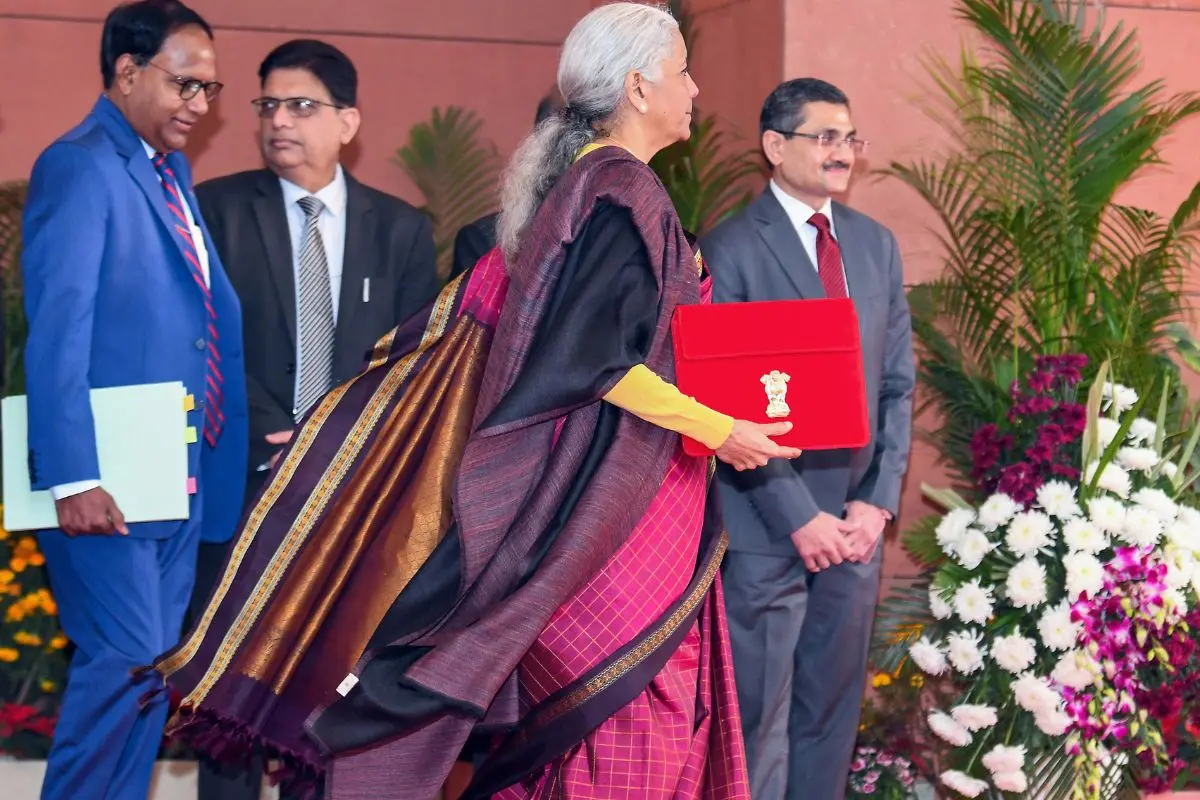
As Union Finance Minister Nirmala Sitharaman presents the Union Budget year after year, her speeches and numbers dominate headlines. Running parallel to this, however, is a quieter tradition that has steadily taken shape since 2019 — her consistent choice of handloom sarees on Budget Day. Each drape has reflected a different region of India, turning the Budget presentation into a showcase of the country’s rich textile heritage. From her home state Tamil Nadu to eastern India’s folk art traditions, Sitharaman’s wardrobe tells a story of craft, continuity and cultural pride.
2026:
For her record ninth consecutive Union Budget presentation, Sitharaman chose a handwoven Kancheevaram silk saree from Tamil Nadu. The saree featured a purple checked body with light golden-brown tones, a coffee-brown border with intricate thread work, and a mustard-gold pallu accented with violet and gold borders. Paired with a woollen shawl, the choice paid tribute to her home state while reinforcing her long-standing support for traditional handlooms.
2025:
In 2025, the Finance Minister wore an ivory saree hand-painted in the Madhubani style. The saree, gifted by Padma Shri awardee Dulari Devi, highlighted Bihar’s renowned folk art tradition and stood out for its delicate motifs and narrative illustrations.
2024 (Interim Budget):
During the interim Budget session in 2024, Sitharaman opted for a blue Tussar silk saree adorned with Kantha embroidery. The ensemble brought together natural silk and intricate hand-stitching, showcasing eastern India’s textile and embroidery heritage.
2024 (Full Budget):
For the full Budget later that year, she returned to a Mangalagiri silk saree. The choice echoed her first Budget appearance in 2019 and underscored the enduring relevance of Andhra Pradesh’s handloom tradition in her public persona.
2023:
In 2023, Sitharaman selected a Karnataka Ilkal saree, known for its distinctive pallu and sturdy weave. The saree represented one of Karnataka’s oldest handloom traditions, rooted in everyday wear yet rich in cultural identity.
2022:
The 2022 Budget saw the Finance Minister in an Odisha Bomkai saree. Recognised for its elaborate borders and traditional motifs, the Bomkai weave reflected Odisha’s deep artisanal legacy and rural craftsmanship.
2021:
For the 2021 Budget presentation, Sitharaman wore a Pochampally Ikat saree from Telangana. The geometric patterns and complex dyeing technique drew attention to one of India’s most globally recognised handloom styles.
2020:
In 2020, she chose a yellow-gold silk saree, maintaining a restrained and elegant look. The understated choice continued her emphasis on indigenous fabrics and artisan-made textiles.
2019:
Sitharaman’s first Union Budget in 2019 set the tone for the years to follow. She appeared in a bright pink Mangalagiri saree and introduced the red bahi-khata, replacing the traditional briefcase — a moment that marked both a visual and symbolic shift in Budget Day tradition.
Over nine years, Sitharaman’s Budget Day sarees have come to represent more than personal style. By spotlighting handwoven textiles from across India, her choices align with broader narratives around cultural heritage, local craftsmanship and self-reliance, turning a functional political moment into a visual celebration of India’s diverse handloom traditions.