IndiGo fuel charge shock: Why your next flight could cost up to ₹10,000 more
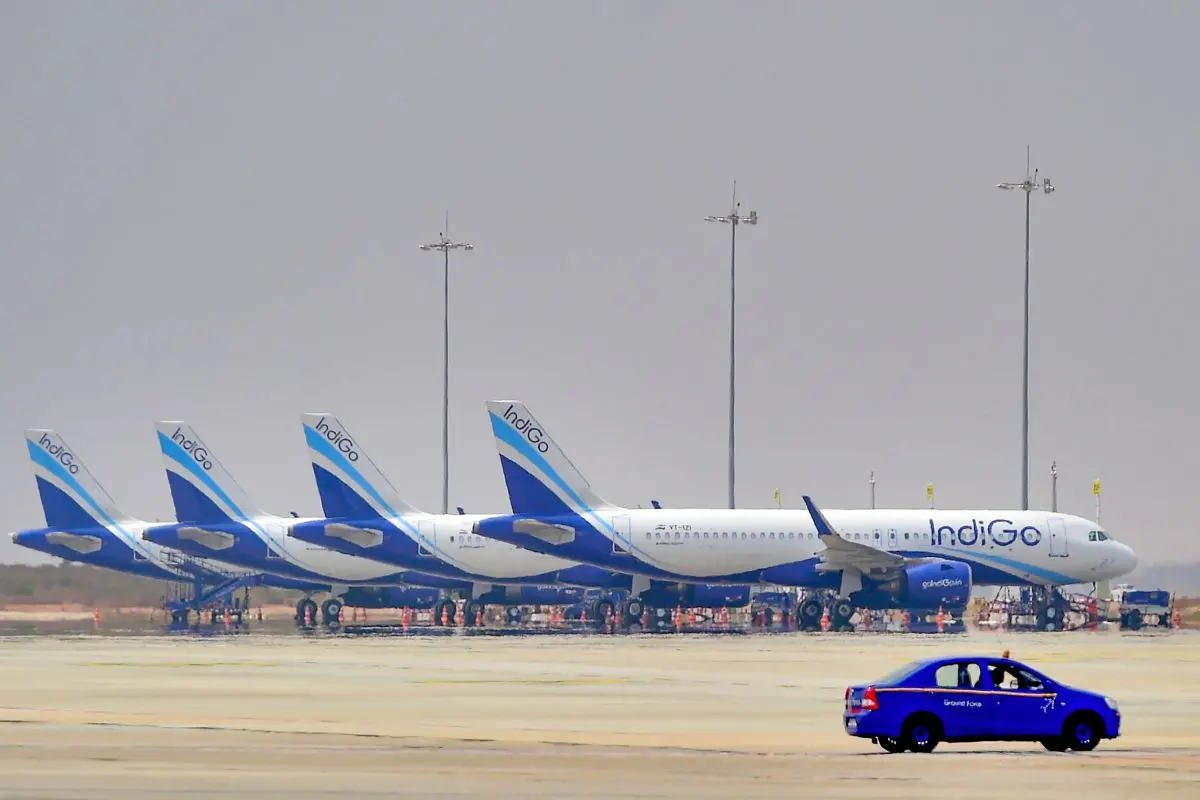
IndiGo has raised fuel charges on domestic and international flights again, citing a more than 14% month-on-month increase in aviation turbine fuel (ATF) prices, with the revised charges applying to new bookings made from October 6, 2026.
India's largest airline IndiGo has announced another increase in fuel charges on its domestic and international flights, citing a sustained rise in aviation turbine fuel (ATF) prices.
The revised charges will apply to all new bookings made from 12.01 am on October 6, 2026. IndiGo said the latest month-on-month increase in ATF prices has exceeded 14%, taking jet fuel costs to among their highest levels in the past decade.
The move means passengers booking flights from Tuesday will pay an additional fuel charge depending on the distance and destination.
How much will domestic IndiGo flights cost?
The revised domestic fuel charges are linked to the distance travelled:
- Up to 500 km: ₹375
- 501 km to 1,000 km: ₹600
- 1,001 km to 1,500 km: ₹900
- 1,501 km to 2,000 km: ₹1,150
- More than 2,000 km: ₹1,300
These charges will apply to new bookings made from October 6 and are in addition to the other components that make up the final airfare.
International fuel charges
International passengers will face higher additional charges depending on the region.
For SAARC destinations, the charge will be ₹1,000 for flights up to 500 km and ₹3,000 for journeys of 501 km and above.
Flights to Southeast Asia, the Gulf Cooperation Council (GCC), the Middle East, and North and East Asia will carry a ₹5,500 fuel charge.
The charge for Africa-bound flights will be ₹6,000, while flights to Europe will carry the highest charge of ₹10,000.
Why has IndiGo increased the charges?
The main reason is the sharp increase in ATF prices.
Jet fuel represents one of the largest operating expenses for airlines. When ATF prices rise significantly and remain elevated, carriers face higher costs for operating every flight.
IndiGo said the latest increase was driven by sustained volatility in fuel prices, particularly amid geopolitical developments in the Middle East.
The airline said it could have introduced a substantially larger increase to fully offset the additional fuel expense but instead opted for what it described as a “measured and relatively modest adjustment”.
“While offsetting the increase in fuel costs would have required a significantly larger increase in the fuel charges, IndiGo has implemented a measured and relatively modest adjustment to minimise the impact on customers,” the airline said.
This is not IndiGo's first fuel charge hike
The latest revision follows another increase announced by IndiGo in April 2026.
At that time, domestic fuel charges ranged from ₹275 for journeys of less than 500 km to ₹950 for flights covering more than 2,000 km.
International fuel charges in the earlier revision ranged from ₹900 to ₹10,000, with the highest charge applying to several European and UK destinations.
The latest revision therefore represents a further increase in the fuel component paid by passengers.
Why the timing matters for passengers
The latest hike comes ahead of the festive travel period, when demand for domestic and international flights traditionally increases.
Diwali travel, school holidays, family visits, weddings and year-end trips can put additional pressure on available seats, particularly on popular routes connecting major cities with smaller cities and towns.
The fuel charge is only one component of an airline ticket. The final amount paid by passengers also includes the base fare, taxes and other applicable charges.
As a result, the actual increase in the price of a ticket will depend on the route, fare category, taxes and other components.
What does the hike mean for families?
The impact becomes more significant when several people are travelling together.
For example, a ₹1,300 domestic fuel charge on a long-distance flight would amount to ₹5,200 for four passengers, before taxes and other ticket components.
For international travel, the difference can be considerably larger. A ₹5,500 charge would amount to ₹22,000 for four passengers, while a ₹10,000 European fuel charge would add ₹40,000 to the cost for a family of four.
These calculations relate only to the fuel charge and do not represent the total airfare.
Will other airlines increase fares too?
IndiGo's decision does not automatically mean that other airlines will introduce the same surcharge.
However, airlines operating in the Indian market face broadly similar fuel-cost pressures. Carriers such as Air India, Akasa Air and SpiceJet can decide whether to absorb some of the additional cost, introduce their own fuel-related charges or adjust base fares.
The structure and timing of any such changes would depend on each airline's costs, pricing strategy and market conditions.
The wider concern for passengers is therefore not simply the size of IndiGo's latest surcharge but whether elevated ATF prices lead to broader increases across the aviation sector.
How Middle East tensions are affecting fuel costs
IndiGo has linked recent fuel-price volatility partly to geopolitical developments in the Middle East.
Crude oil prices and refined petroleum products can respond to concerns about supply disruptions, regional instability and changes in global energy markets. ATF prices are consequently affected by movements in the broader oil market.
For airlines, sustained increases can put pressure on margins because fuel costs are incurred on every flight.
If elevated fuel prices persist, airlines may continue to pass part of the additional cost on to passengers.
What passengers should know before booking
The revised charges apply to new bookings made from 12.01 am on October 6, 2026.
Passengers who are planning festive-season travel should therefore compare the total fare rather than looking only at the base ticket price.
Travellers with flexible schedules may also find differences between flights on adjacent dates because airline fares vary according to demand, inventory and fare categories.
The fuel charge itself, however, is determined according to IndiGo's revised distance- or destination-based structure.
The latest IndiGo decision highlights the sensitivity of airline ticket prices to fuel costs.
For passengers, the immediate impact is a higher additional charge. For airlines, the issue is more fundamental: sustained increases in ATF can raise the cost of operating flights across the network.
IndiGo has described its latest revision as a relatively modest adjustment rather than a full pass-through of the increase in fuel costs. Whether further changes follow will depend largely on how ATF prices and broader energy-market conditions develop.
For travellers, the key question is therefore not only how much IndiGo's fuel charge has increased today, but whether elevated fuel prices result in further increases in the overall cost of flying during the festive and year-end travel period.