'Necessity Cycle' widens: Why the Metals bull run is just getting started
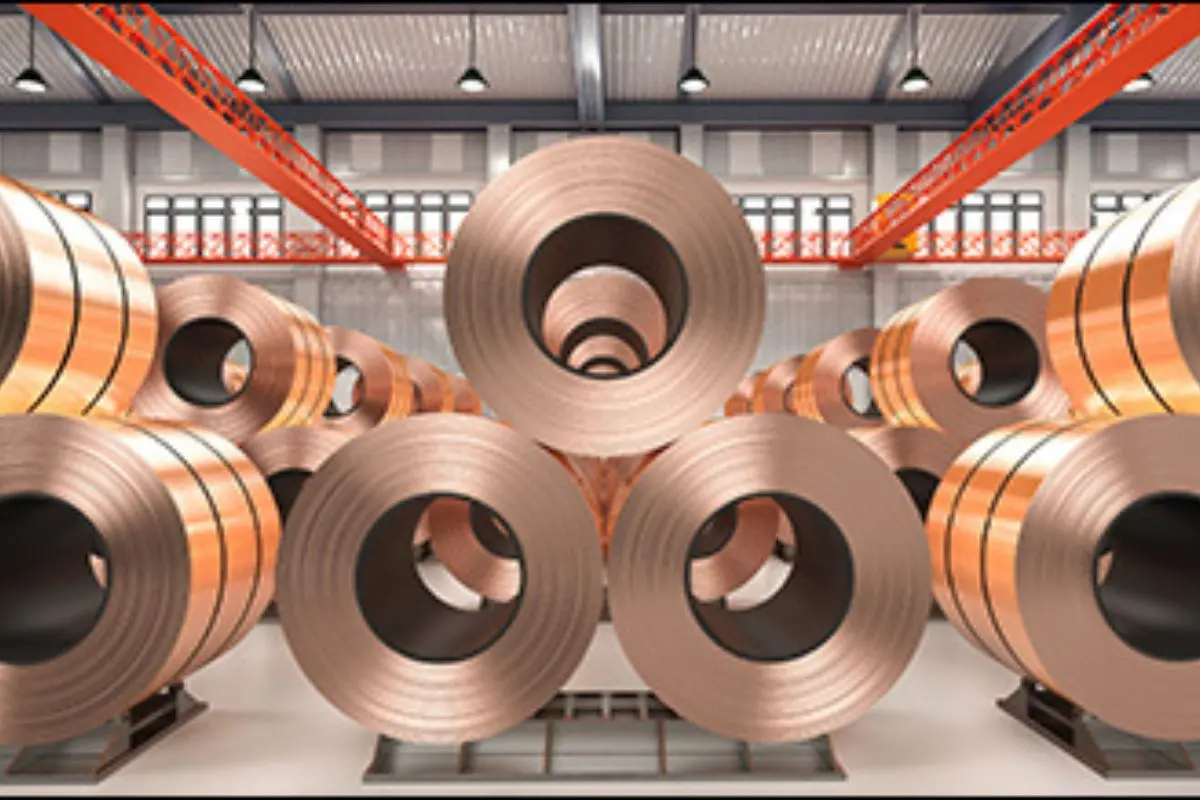
Mumbai: Copper has surged toward record territory around US14,200 per tonne, signalling a fundamental structural pivot across global industrial commodity markets. According to research from Aditya Birla Money analysts Amit Lahoti and Manav Gogia, the market has entered "Year Two" of a multi-year macroeconomic expansion termed the "Necessity Cycle."
This new regime, which emerged from a cyclical trough of roughly US8,500 per tonne in April 2025, is broadening both in scope and intensity across the non-ferrous complex despite a subdued global macroeconomic background.
Deconstructing this transformation reveals a sharp departure from classic commodity cycles, which historically relied on broad-based, short-term macroeconomic growth to stimulate cyclical consumption. Instead, the current expansion is driven by a structural shift in which industrial metals are no longer treated as discretionary cyclical inputs, but as critical national assets required to underwrite generational infrastructure transitions.
As these fundamental realities harden, acute physical shortages at major mining assets are rapidly converting long-term demand models into immediate, real-world market deficits.
Smelter Squeeze and Capex Starvation
An unrelenting combination of operational disruptions and a decade-long capital strike has locked the copper market into a prolonged structural deficit. The physical fragility of global extraction hubs is on clear display as severe operational setbacks at Tier-1 assets -- most notably Indonesia's Grasberg mine and Chile's El Teniente complex -- sharply restrict raw concentrate availability.
The acute nature of this bottleneck is visible across intermediate markets, where treatment and refining charges (TC/RCs) have collapsed into negative territory. In practical terms, negative TC/RCs mean custom smelters are forced to pay miners for raw ore concentrate rather than receiving a processing fee, a clear sign that global smelting capacity now vastly outstrips available physical supply.
This operational crunch is the direct consequence of rigorous capital discipline following the 2012 peak in global mining capital expenditures. That prolonged underinvestment left the industry with an ultra-thin pipeline of greenfield projects and extended development timelines, rendering primary supply mathematically incapable of responding to price signals.
Compounding these physical deficits, proposed US tariff policies under the Trump administration threaten to distort global trade flows by pulling physical stocks directly into American warehouses, accelerating localised scarcity across non-US regions and pushing physical supply deficits into insatiable, price-inelastic demand pools.
Price inelasticity and strategic buying realities
Corporate and sovereign buyers are fundamentally rewriting the demand curve for industrial metals, placing material availability and supply-chain security well ahead of raw material price sensitivity. Global megatrends—including massive data centre buildouts for artificial intelligence, the overarching energy transition, and mounting trade protectionism—have rendered end-user demand increasingly inelastic.
Proof of this paradigm shift is already visible across downstream supply chains, where industrial consumers have absorbed 50% tariffs on steel and aluminium with negligible impact on underlying baseline demand.
Furthermore, the decoupling of physical spot premiums from paper exchange pricing -- evident in end-users paying elevated US Midwest premiums on aluminium purely to guarantee physical delivery -- demonstrates that physical scarcity now overrides cost concerns.
Macroeconomically, industrial metals remain strikingly cheap when benchmarked against global liquidity and the vast expansion of money supply in recent years. Against a backdrop of persistent fiscal spending, soaring sovereign debt levels, and systemic currency debasement, hard commodities are increasingly prized as strategic stores of value capable of securing critical electrification goals and national industrial policies.
A textbook structural run
When quantitative analysts review four decades of industrial metal trading data, the current rally looks less like a temporary spike and more like a textbook commodity expansion in its infancy.
In their quantitative study of seven completed copper cycles dating back to 1992, Aditya Birla Money analysts Amit Lahoti and Manav Gogia mapped historical price trajectories 12 months prior to a trough and 36 months beyond it.
Historically, metal prices fell by an average of 26% in the 12 months leading into a cyclical trough. Once a structural bull market takes hold, empirical data shows these cycles persist for 28 to 36 months before reaching a peak, typically cresting between months 28 and 30.
During these expansions, cumulative returns average roughly 80% by month 30, with peak gains reaching 83% between months 0 and 28. Measured from the April 2025 trough of ~US$8,500 per tonne, the current market is approximately 17 months into its run and has delivered a 62% gain.
Because the current advance is tracking historical precedents closely -- and in certain phases moving faster -- the quantitative record confirms that the Necessity Cycle remains in its build-up stage, leaving substantial runway before reaching historical duration and return limits.
Supply Chain Pass: Throughs and equity beneficiaries
As physical market tightness intensifies, equity markets are creating distinct opportunities for investors to capture compounding earnings momentum across the mining and industrial value chain.
Primary non-ferrous producers are positioned as direct beneficiaries of elevated spot prices, particularly key Indian mining and metals champions identified in Aditya Birla Money's equity research. =
Major producers like Hindalco Industries (HCP), National Aluminium Company (NACL), Hindustan Zinc (HZ), Vedanta Ltd (VEDL), and specialised miners like Gujarat Mineral Development Corporation (GMDC) offer varied exposure to base metals while actively expanding operational capabilities in critical minerals and rare earth elements.
Beyond primary extractors, midstream industrial sectors are proving equally resilient. Cables and wires manufacturers operate as effective pass-through beneficiaries within the value chain, utilising strong pricing power to pass elevated raw copper input costs directly down to end consumers without compressing operating margins.
Ultimately, the broadening scope and physical realities of today's market confirm that the Necessity Cycle is not a short-term speculative rally, but a multi-year macroeconomic realignment that will continue to redefine the global metals landscape.