Archer and Anduril unveil a futuristic eVTOL ‘Halo and Thunder’
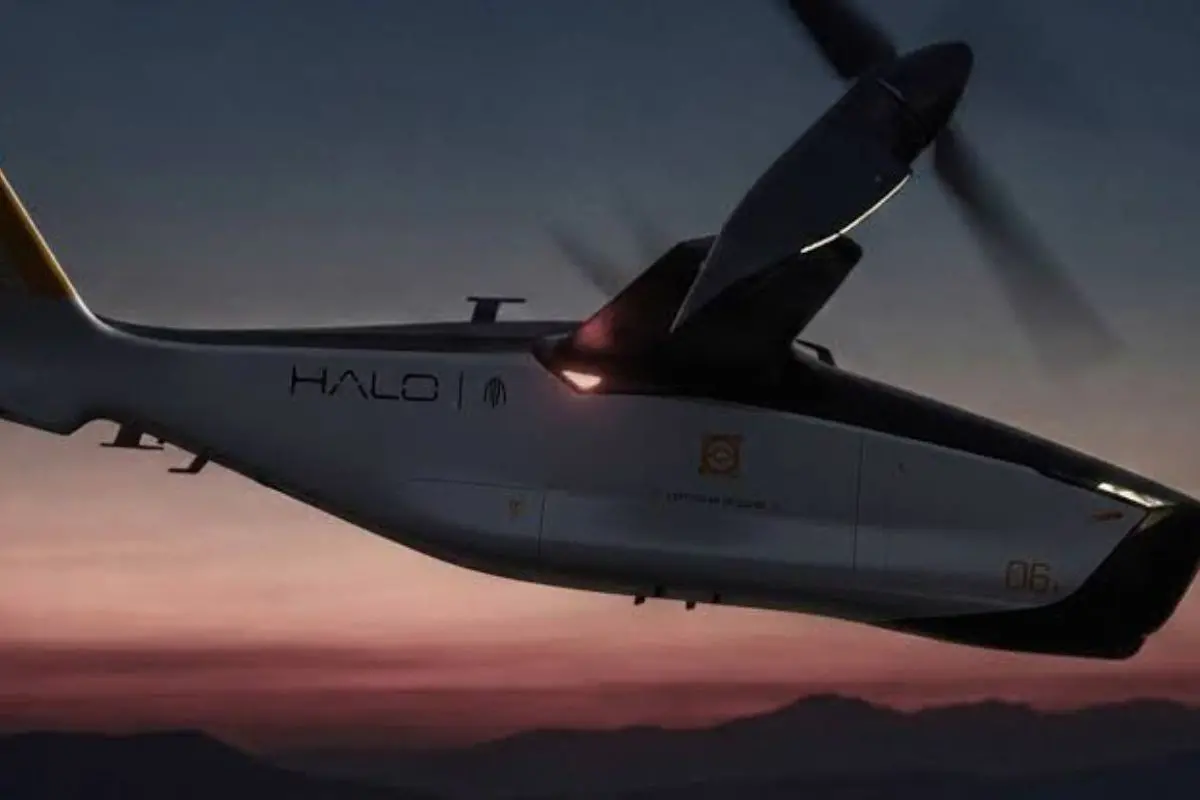
A sleek new hybrid-electric aircraft called Halo and its military sibling Thunder could redefine the future of flight, far beyond the dream of urban air taxis.
For years, electric air taxis have been promoted as the next revolution in aviation, promising to whisk passengers above city traffic in quiet, zero-emission aircraft. But as the industry has struggled with certification delays, infrastructure challenges and high development costs, many companies have begun looking beyond urban transport to find larger commercial opportunities.
Now, one of the world's leading electric aircraft developers, Archer Aviation, has taken a major step in that direction.
At the Farnborough International Airshow 2026, Archer Aviation and defence technology company Anduril Industries unveiled an entirely new aircraft platform that combines futuristic design, hybrid-electric propulsion and autonomous flying capabilities. The platform has been developed simultaneously for civilian and military use, making it one of the most ambitious projects to emerge from the fast-growing electric vertical take-off and landing (eVTOL) industry.
The announcement also reflects a broader shift taking place across aviation, where technologies originally designed for air taxis are increasingly finding applications in logistics, defence, emergency response and regional transportation.
A new aircraft designed from scratch
Unlike many aircraft programmes that adapt existing helicopters or airplanes, Archer and Anduril chose a completely different approach. The companies designed the new platform from the ground up, creating an aircraft specifically for future missions rather than modifying an existing model.
The result is a remarkably sleek and elegant aircraft that looks unlike a conventional helicopter. Its streamlined fuselage, long aerodynamic wings and twin tiltrotors give it an appearance closer to a futuristic aircraft seen in science fiction than today's rotorcraft. Yet every design element serves a practical purpose, improving speed, efficiency, range and operational flexibility.
Its tiltrotors allow the aircraft to take off and land vertically like a helicopter before rotating forward for efficient wing-borne flight, enabling much higher speeds and longer ranges than traditional rotorcraft.
Meet Thunder, the military variant
The first version introduced at Farnborough is called Thunder, a military aircraft designed to operate without a pilot onboard. Thunder has been developed as what defence planners call a "loyal wingman", an autonomous aircraft capable of flying alongside crewed military helicopters such as the AH-64 Apache.
Instead of replacing human pilots, Thunder is designed to support them by carrying weapons, conducting reconnaissance missions, transporting supplies and entering dangerous areas that would otherwise expose crews to significant risk.
According to Anduril, Thunder can operate from remote locations without needing a runway, making it suitable for modern battlefields where mobility and rapid deployment are essential. The aircraft is expected to carry heavy payloads, including missiles, rockets and surveillance equipment, while using advanced autonomous software to fly low over difficult terrain and maintain formation with crewed aircraft.
Its first flight is planned for 2027.
Halo brings the same technology to civil aviation
While Thunder targets defence missions, Archer's commercial version is known as Halo. Unlike Archer's well-known Midnight air taxi, which is designed for short urban flights, Halo is aimed at much longer missions involving cargo transport, medical evacuation, emergency response and regional connectivity. Archer plans to reveal its first commercial customers later this week.
The aircraft could prove especially useful in areas where airport infrastructure is limited. Because it can take off vertically and fly efficiently over long distances, Halo may eventually serve remote communities, offshore energy operations, humanitarian relief missions and time-sensitive logistics. Industry analysts believe this broader range of applications could significantly improve the commercial viability of next-generation eVTOL aircraft.
Challenges
One of the biggest limitations of today's electric air taxis is battery technology. Most purely electric eVTOL aircraft are designed for relatively short flights because current batteries cannot store enough energy for extended operations while carrying heavy payloads.
To overcome this challenge, Archer and Anduril have chosen a series hybrid-electric propulsion system. Instead of relying solely on batteries, the aircraft combines electric propulsion with onboard power generation, dramatically increasing its range and endurance while maintaining the smooth, quiet operation associated with electric flight.
The dual tiltrotors also continuously adjust their rotational speed throughout different phases of flight, improving efficiency, reducing fuel consumption and lowering noise levels.
For military missions, the reduced acoustic signature offers an additional tactical advantage by making the aircraft more difficult to detect.
Defence and eVTOLs
The unveiling of Thunder highlights an important change taking place across the global eVTOL industry. Only a few years ago, most manufacturers focused almost exclusively on urban air mobility, an industry that was expected to become a trillion-dollar market.
However, slower-than-expected certification timelines, the enormous investment required to build passenger infrastructure and uncertainty over commercial demand have encouraged many companies to diversify. Defence applications offer faster procurement opportunities, higher-value contracts and more immediate operational requirements.
For Archer, partnering with Anduril provides an entry into defence aviation while simultaneously creating technologies that can also strengthen its commercial aircraft portfolio.
Speaking about the project, Archer Founder and CEO Adam Goldstein said the aircraft was never intended to be a modified version of an existing design. "This mission required a clean sheet design, built from the ground up to meet the needs of modern commercial and defence applications. We couldn't simply tweak our existing aircraft. Instead, we took a bold first-principles approach alongside Anduril to develop what we believe is the most sophisticated vertical lift aircraft ever made."
Similarly, Shane Arnott, senior vice president of Maneuver Dominance at Anduril, said the programme demonstrates how commercial aviation technologies can rapidly strengthen military capability. "From raw performance to producibility, harnessing the best technologies from the commercial eVTOL market for defence is central to how Thunder will deliver operational value to our customers. The clean-sheet, dual-use platform that we've built with Archer truly represents a step change in capability."
Years of development behind the scenes
Although the aircraft was unveiled only this week, its development has been underway for nearly two years. The partnership between Archer and Anduril began in late 2024, bringing together Archer's expertise in electric propulsion, rotor systems and aircraft manufacturing with Anduril's advanced autonomy software and defence technologies.
The companies have already completed multiple test flights using full-scale surrogate aircraft to validate key systems before integrating them into the final design.
These tests have helped refine propulsion performance, autonomous flight controls and aircraft handling ahead of Thunder's planned maiden flight in 2027.
A new direction
The introduction of Halo and Thunder signals that the future of eVTOL aircraft may extend well beyond flying passengers across busy cities. As hybrid-electric propulsion matures and autonomous systems become increasingly capable, these aircraft could transform a wide range of industries from defence and disaster response to cargo logistics, medical evacuation and regional air mobility.
For the aviation industry, this represents a significant evolution. Instead of being viewed solely as futuristic air taxis, next-generation vertical lift aircraft are emerging as highly versatile platforms capable of serving multiple markets with a common technological foundation.
Whether carrying passengers, transporting life-saving medical supplies, supporting military operations or delivering cargo to remote locations, aircraft like Halo and Thunder suggest that the future of aviation may not simply be electric, it may also be autonomous, highly adaptable and remarkably efficient.
As Archer prepares to reveal Halo's first commercial customers later this week, the industry will be watching closely. The success of this elegant new aircraft may determine not only the future of one company, but also the direction of the global eVTOL industry for years to come.