‘A born fighter, had his baptism by fire’: What US intelligence thought of VS Achuthanandan
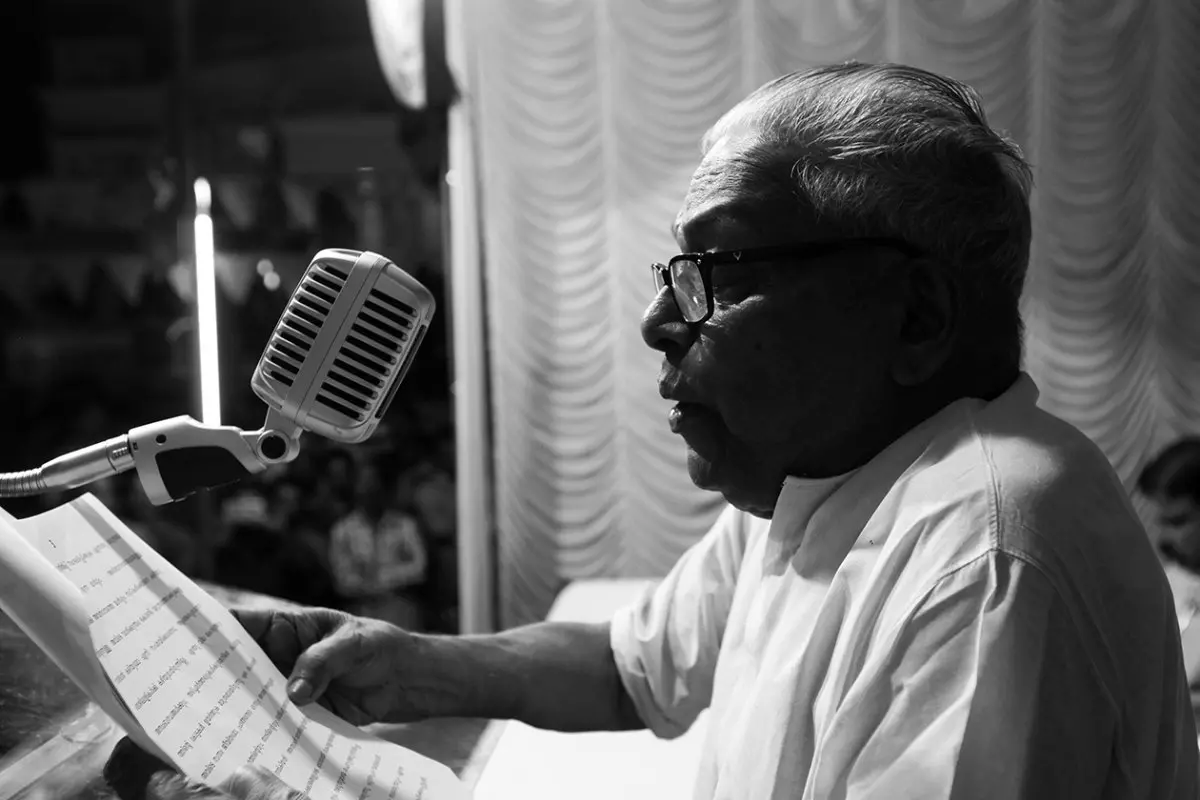
VS Achuthanandan was one of Kerala’s most well-known and respected political leaders. From a tough childhood to becoming the Chief Minister at 83, his life was full of struggles and bold stands.
After his passing, an old US intelligence report gives a closer look at how he was seen by the outside world; as a hardliner, a fighter, and a leader who often stood alone.
A Chief Minister like no other
At 82 years of age and with little formal education, Kerala's former Chief Minister VS Achuthanandan of the Communist Party of India stood apart from the state's previous communist Chief Ministers in that he hailed from a low-caste and working-class background.
Within the party, he led a faction that shunned reform and liberalisation. In his cabinet, he was surrounded by party opponents who despised his egocentric style and policy inflexibility.
He had been at the forefront of the agitation against Coca-Cola’s bottling plant in Kerala. Despite his ‘lone crusader’ image and his then-current popularity in the state, he was considered unlikely to make Kerala more business-friendly or create jobs for its five million unemployed.
6 decades of party experience, none as minister
Velikkakathu Sankaran (VS) Achuthanandan, “VS” to party comrades, became Chief Minister of Kerala on 18 May 2006. After leading the CPI(M) and its coalition, the Left Democratic Front (LDF), to a massive electoral victory earlier in the month, Achuthanandan emerged as a frontrunner for the post, riding a wave of popular support.
The Chief Minister’s role was an entirely new experience for him, however. He had been a communist party worker for 66 years, a party politburo member for ten years, a member of the state assembly for five terms, and the opposition leader in the state assembly twice. Achuthanandan, however, had never held a minister's post.
A born fighter who came up through struggles
Achuthanandan was born on 20 October 1923 in a poor, "Ezhava" (lower caste of palm toddy-tappers) home in Paravur village in the coastal Alleppey district of the then-princely state of Travancore, southern Kerala. He advanced in life and the party through a series of struggles.
At the age of four, he lost his mother, and at 11, his father. At age 12, Achuthanandan had to discontinue his education while in seventh grade to assist his brother in a small textile shop.
Later, Achuthanandan took a job in a company that made soldiers’ tents. In 1939, at the age of 16, he joined the Kerala Congress party, which was then fighting for Indian independence.
The times were turbulent: his Ezhava caste was at that time organising agitations against upper caste Hindus who denied them access to temples. The nascent Communist movement was focusing on the lower castes and poor people in coastal areas, organising trade unions and party units. Achuthanandan was attracted to this movement of the have-nots and became a member of the Communist Party at age 17.
Baptism by fire: His role in the Communist uprising
Achuthanandan took active part in the violent Communist uprising against the Travancore state police in 1946. In what became known as the "Punnapra-Vayalar agitation", rural communists from Achuthanandan’s neighbourhood attacked the police with wooden spears, leading to police firings that killed an estimated 300 communists. The police quelled the uprising in four days.
Achuthanandan went into hiding but was arrested a few days later, severely tortured, and imprisoned for four years at the Central Jail in Thiruvananthapuram city, where he would later preside over the state government.
During the 1960s, Achuthanandan was imprisoned several times along with other Indian communist leaders on political charges. He had years of experience conducting political work while remaining ‘underground’, cunningly evading arrest.
Ambition fulfilled after missing thrice
One of the few surviving founder-leaders of the CPI(M), Achuthanandan contested eight state assembly elections and won five (1967, 1970, 1991, 2001, and 2006). Twice he worked as opposition leader in the state assembly (1992–96, and 2001–06).
In the party, he held important positions for half a century: District Secretary of the undivided Communist Party of India from 1956; National Council Member from 1959; Central Committee Member of CPI(M) from 1964; party State Secretary from 1980–1992; and party politburo member since 1986.
His hopes of becoming the Chief Minister of Kerala were dashed on three different occasions: in 1991, he won the state elections but his party lost; in 1996, his party won but he lost; and in 2001, he won again but again his party lost.
5 years of campaigns against corruption
It was Achuthanandan’s latest role as Opposition Leader (2001–06) that earned him much of the popularity he later enjoyed. Projecting a ‘lone crusader’ image, he relentlessly attacked allegedly corrupt and morally wayward politicians. Some of these attacks were directed against his own party colleagues, which helped boost his personal reputation.
For example, while he relentlessly attacked Muslim League minister Kunjalikkutty for his alleged involvement in a sexual harassment case, indirectly, he was also hitting hard at his own party colleagues who, as sitting ministers, had allegedly helped Kunjalikkutty escape prosecution. In another sex scandal, Achuthanandan hinted that two of his own party colleagues had played a role in the affair, embarrassing them in public.
He chose not to support his own party State Secretary, Pinarayi Vijayan, when allegations of corruption were raised against Vijayan on a deal with the Canadian power company, SNC Lavalin.
Achuthanandan championed the strong agitation against the Coca-Cola facility in Kerala, even though the bottling plant had been established during the LDF government's 1996–2001 term.
A factionalist surrounded by party opponents
Achuthanandan’s political campaigns created bitter enemies within his own party. Several CPI(M) state leaders, members of the party’s powerful State Secretariat, who hated his egocentric style and policy inflexibility, plotted to refuse him a seat to contest in the assembly elections. As a result, his name did not figure in the list of candidates originally announced by the party. His omission created a huge uproar.
Achuthanandan’s supporters marched in the streets, chanting slogans against party bosses. Fearing a major popular backlash, the CPI(M) politburo, in an unprecedented decision, reconsidered and brought Achuthanandan into the electoral fray. The massive victory the CPI(M) scored in the election vindicated the decision and catapulted him to the Chief Minister’s chair.
According to the Post’s journalist sources, factionalism was still raging in the Kerala CPI(M). The party refused the Chief Minister the traditional Home portfolio, fearing that he would use the state police to settle political scores.
Adding to the embarrassment, Achuthanandan had to give up the vigilance portfolio, another potent weapon, to a party colleague within a few days of his initial decision to take it.
Kerala’s local newspapers were abuzz with stories of the continuing factionalism and mutual distrust within the CPI(M) in Kerala. They pointed out that Achuthanandan’s faction was a minority in the cabinet, which was dominated by the powerful party secretariat members from the opposite camp.
A hardliner limited by his own past campaigns
Achuthanandan also had a reputation for opposing all reform and development. His opponents described him as a “communist hardliner”, and as one “belonging to the ideological Jurassic Age when the party believed in its since-revised 1964-programme of rigid anti-imperialism, anti-feudalism and anti-monopoly.” Much of this perception was based on his own campaigns and statements as the opposition leader.
For example, opposing the UDF Government’s “Modernisation of Government Plan” which was aided by the Asian Development Bank in 2002, Achuthanandan went to the extent of warning that a future LDF government would not repay the ADB loan.
In 2006, Achuthanandan strongly opposed the signing of the agreement for the $350 million “Smart City Project” for Cochin, a software infrastructure project of Dubai Internet City (DIC) which promised 33,000 jobs. Achuthanandan’s contention was that the terms of the transfer of land and buildings were too advantageous to the company.
Limited english, reluctant host
Achuthanandan’s English was limited although he could understand and speak the language at a very basic level. He had difficulty sustaining long conversations with foreigners or engaging in small talk. He had been reluctant to meet US diplomats in the past.
On one occasion when he agreed to receive a Consul General in 1994, he cut the meeting short without apologies. He had visited Russia, China, Mongolia, and the United Kingdom.
Person and family
He practised yoga and strictly controlled his diet. He reportedly woke at five in the morning and went to bed at midnight, while maintaining a busy schedule throughout the day. He was married to Vasumathy, who retired as Head Nurse from the Alleppey Medical College. They had a son and a daughter.
Outlook: case-by-case approach; Policy conservatism
Lack of administrative experience kept Achuthanandan away from economic realities and political pragmatism. It remained to be seen whether it was too late for the octogenarian to change his stripes as his West Bengal counterparts had done. At least in some cases, such as on Coca-Cola’s bottling plant at Palakkad, his constituency district, it was difficult for him to retreat from his previous extreme positions.
Opting for a case-by-case approach, he remained friendly to non-controversial investors such as US Technology Resources in the Thiruvananthapuram Technopark.