How does the F-35 episode in Kerala connect with CIA’s Cold War history?
In a recent Indian Express article, Paul McGarr, historian and author of Spying in South Asia: Britain, the United States and India’s Secret Cold War, explored how a modern fighter jet drama in Kerala revives memories of Cold War intrigue involving the CIA, MI6 and India’s communists.
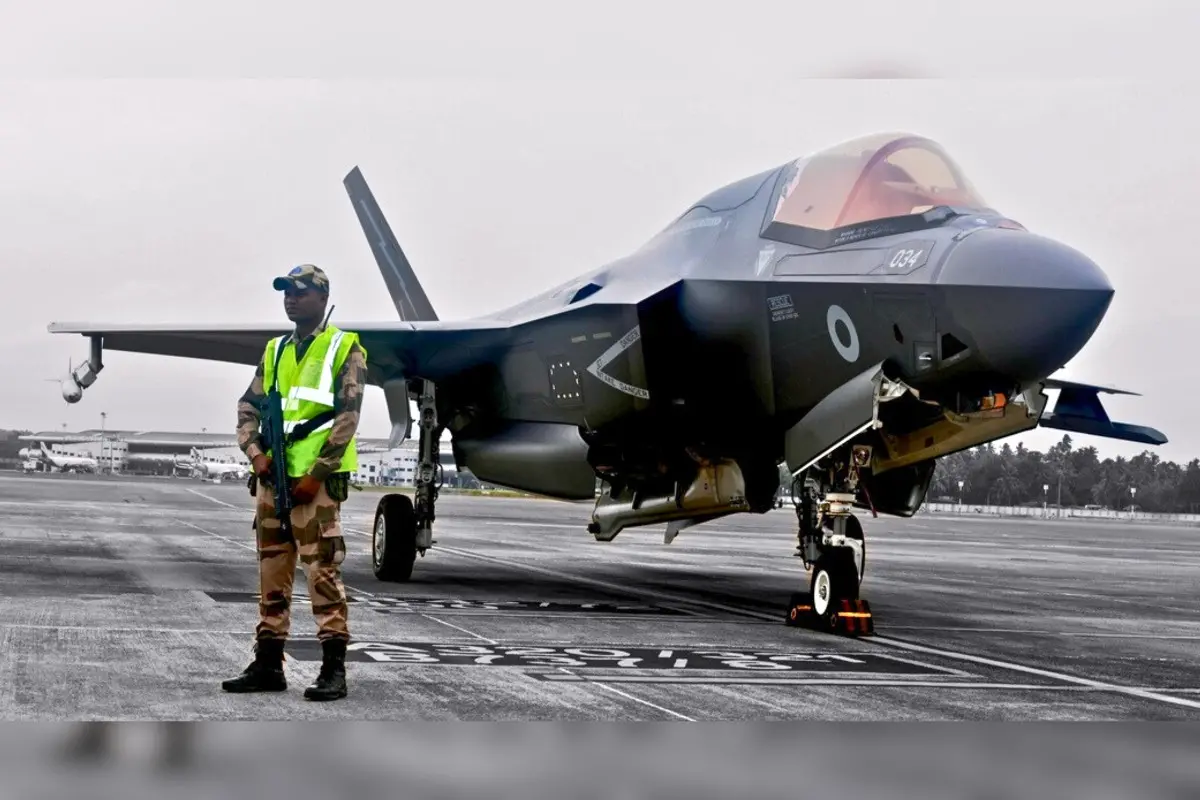
In June, a British F-35B Lightning II stealth fighter made an emergency landing in Thiruvananthapuram after rough weather disrupted joint exercises with the Indian Navy. The $115 million aircraft remained grounded for weeks due to technical faults. Kerala Tourism seized the moment with a playful social media post claiming Kerala was a place “you never want to leave”.
As McGarr points out, the humour contrasted with the secrecy that once defined Britain’s presence in the state.
According to McGarr, Kerala stunned global powers in 1957 by electing the world’s first communist government through democratic means. Washington and London feared this would embolden Soviet influence in India.
McGarr highlights how the CIA, working with sections of the Congress Party, secretly funded labour unrest and political agitation. By 1959, escalating tensions gave New Delhi grounds to dismiss the CPI-led government.
McGarr’s article also draws on newly declassified British records to show London’s hidden role. MI6 and MI5, in collaboration with India’s Intelligence Bureau, trained Congress leaders and trade unionists in anti-communist tactics. While Prime Minister Nehru hesitated, Home Minister Govind Ballabh Pant supported covert cooperation, enabling Indian operatives to undergo training in Britain before returning to Kerala.
As McGarr concludes, the F-35 episode may have ended quietly, but Kerala has long been a stage for global rivalries. His research underlines how Cold War powers once treated the state as a testing ground—where democracy, communism and foreign intelligence collided in ways that continue to shape historical memory.
CIA officer review of McGarr’s book
Interestingly, McGarr’s book was even reviewed by Charles Heard, the pen name of a CIA officer, whose review appears on the CIA website. Heard described the study as detailed, engaging, and richly researched, drawing on ten years of archival work across three continents.
What the review said
The book explores cooperation, failures, and tensions from 1947 to the late 1980s. It covers the CIA’s Himalayan nuclear sensor mission in the 1960s, covert involvement in the 1971 India-Pakistan war, and the scepticism of leaders like Nehru and Indira Gandhi towards foreign intelligence.
McGarr also details US backing for India’s Aviation Research Center and paramilitary operations against China, while noting intelligence missteps by both the UK and US.
Heard praised McGarr’s clarity, wit, and attention to operational detail, calling the book highly readable. Despite minor editorial errors, he considered it likely the definitive account of India’s Cold War intelligence history, warning against simplistic assumptions about India’s alignment with the West.