How a childhood brush with Gandhiji and his mother’s stark question shaped ‘Vaikom’ Muhammad Basheer
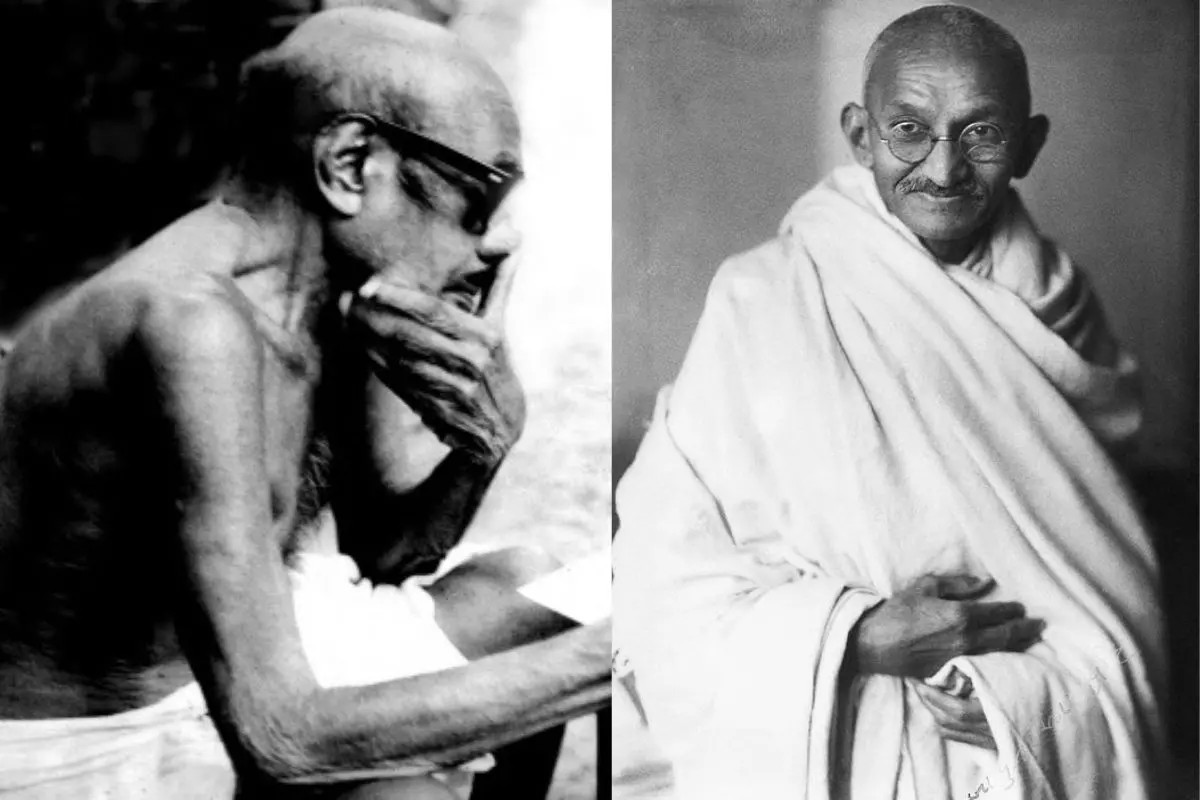
When Mahatma Gandhi visited Vaikom in March 1925 to express his support for the Vaikom Satyagraha, he went to meet the Namboothiri of the Indamthuruthi Mana, a household with significant influence over the temple.
Even the most beloved figure in India, the Mahatma himself, was not allowed to enter the Mana. Instead, a temporary portico was built outside for their discussion; a stark reminder of the rigid caste system during those times.
The Vaikom Satyagraha left a profound impact on young people from all castes and faiths, at a time when there was no extensive news media or social networks as we have today.
Among those captivated by Gandhi was a schoolboy named Kochu Muhammad, who later came to be known as Vaikom Muhammad Basheer, then studying at the Vaikom English Medium School. Hearing that Gandhi was coming, the boy walked many miles from Thalayolaparambu to Vaikom to see him.
Gandhi’s earlier visit to Kerala had been during the 1920 Salt Satyagraha in Kozhikode. Kochu Muhammad was already deeply drawn to the Mahatma and the national movement.
Teachers had tried repeatedly to keep the boy away from the protest site, but his enthusiasm for Gandhi and the freedom struggle kept drawing him back. It was during this time that he learned Gandhi would be visiting Vaikom.
Skipping school, Kochu Muhammad rushed to the protest camp and managed to see Gandhi. Overcome with devotion, he ran behind Gandhi’s motor car, clung to the vehicle, climbed onto it, and touched the Mahatma’s hand. In a note he wrote later, Basheer described the moment saying, “I held on to the car door and ran behind it. I climbed onto it and touched Gandhi. He looked at me and smiled.”
As he raced home to share the news, he saw his mother standing outside. Hearing what had happened, her first question was, “Son, will this Gandhi get rid of our hunger?” This single question captured the poverty gripping society at the time.
Inspired by the freedom movement, Basheer later left home and travelled to Kozhikode, where he joined the struggle alongside Mohammed Abdurahiman Sahib, and was eventually arrested.
Touching Gandhi’s hand must have sent a shock of energy through the young boy. Years later, when he became a renowned writer in independent India, his decision to adopt the suffix ‘Vaikom’ before his name may well have been born from the passion and inspiration he absorbed during the Vaikom Satyagraha.
We as Malayalees cannot forget the Vaikom Satyagraha, one of Kerala’s greatest social reform struggles. Many of the freedoms we enjoy today are owed to this historic movement.
(The writer is Vaikom Muhammad Basheer’s son.)