The spirit of Onam in geometry: Pookkalams blooming with nature’s palette | WATCH
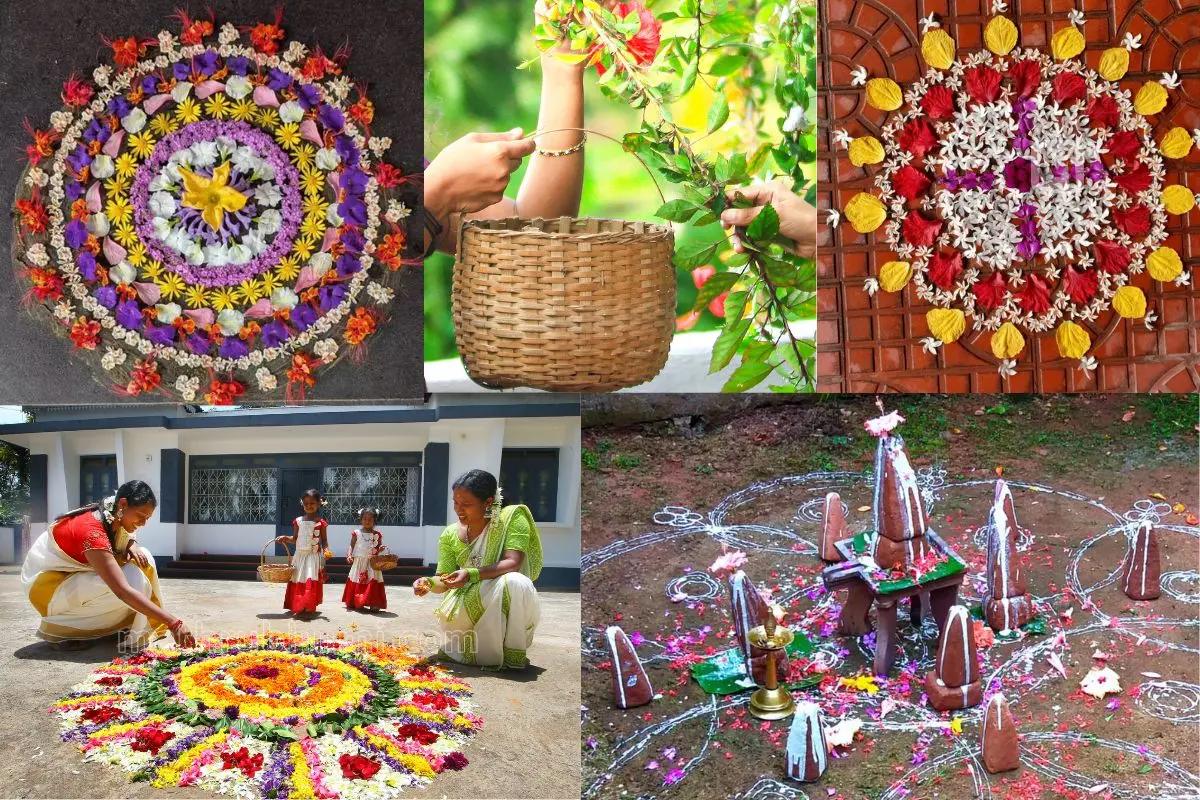
"Arpey… Iroo… Iroo…" is the familiar sound that marks the beginning of Onam festivities. For the people of Kerala, Onam is more than just a festival celebrated during the month of Chingam, the first month in the Malayalam Kollavarsha calendar. It is more related to family gatherings, sumptuous sadya feasts, new clothes, and the joy of togetherness. Rooted in harvest traditions, it marks a time of prosperity and cultural expression. Among its many customs, Pookkalam, the intricate floral carpet, is an inevitable and colourful highlight.
The ten-day Onam celebrations commence with Atham and conclude on Thiruvonam, with each day named after the Malayalam star: 'Atham', 'Chithira', 'Chothi', 'Visakham', 'Anizham', 'Thrikketta', 'Moolam', 'Pooradam', 'Uthradam', and 'Thiruvonam'. These days mark the progressive creation of the Pookkalam, which grows in layers, colour, and complexity each day. While there are regional variations in how Onam is celebrated across Kerala, the preparation and decoration of Pookkalam remains a festive constant in most places.
Traditionally, children would roam the neighbourhood collecting flowers for the Pookkalam, making the preparation itself a communal and joyous activity.
Though it looks simple, creating a Pookkalam is an art in itself. Modern trends have introduced more elaborate designs and alternative materials, but the age-old geometric and colour principles remain at the heart of this tradition.
Typically, the Pookkalam is circular with a fixed centre and is placed outside households. Before starting, a small amount of cow dung is plastered on the floor to act as a natural canvas. And slowly the canvas unfolds to take in the different colour combinations. The centre of pookkalam is marked with a green flower, usually Thumba poo (Leucas aspera) or Tulsi(Holy Basil), which remains a constant element in the daily colour palette.
Let's look into the patterns, colour combinations and the flowers used to create the Pookkalam on these 10 days.
- Atham: The first day sees a single-layer Pookkalam of white flowers like Thumba poo, Nandyarvattam (Pinwheelflower), or Mandaram (Bauhinia acuminata).
- Chithira: The second layer, often green flowers or leaves, is added—Tulsi or Mukkutti (Biophytum sensitivum) being preferred.
- Chothi: Bright colours make their first appearance, with red flowers such as Hibiscus introduced.
- Visakham: Additional layers honour deities, enhancing both design and significance.
Anizham: A circular platform of soil, called 'Pooppada' or 'Poothalika', is built.
The Pookkalam now has five layers, with orange or other bright flowers introduced.
- Thrikketta: Six layers of flowers are arranged, often incorporating Violet Sanghupushpam ( Butterfly Pea). The 'Kudakuthal', a floral arrangement mounted on plantain stems or stalks of coconut leaves, is placed in the centre.
- Moolam: Moolam in Malayalam can also be explained as 'pointed'. So, on the day of Moolam, the Pookkalam change its shape, adopting elongated, pointed, or square designs.
- Pooradam: The floral layers grow larger, reflecting regional variations. In some homes, 'Onathappan' or 'Thrikkakarayappan' (traditionally made out of mud, but now seen in wood and other materials) are placed in the centre in odd-numbered counts (1, 3, 5, 9…) on specially built platforms. There will be a tall one, and if others are placed, they will always be smaller. The tall one always remains in the centre surrounded by the small ones.
- Uthradam: Known colloquially as ‘Onnam Onam’, preparations peak. The Pookkalam reaches its maximum size to welcome the main celebration the next day. This day, referred to as ‘Uthradapachil’, sees people bustling to purchase groceries and other essentials for the festivities.
- Thiruvonam: The festival’s pinnacle, often called ‘Randam Onam’, is when families celebrate with grandeur. It is believed that King Mahabali visits homes on this day, witnessing the devotion of his people and enjoying the feast.
Special rituals are performed for Thrikkakarayappan, including offerings of Poovada (a rice flour and jaggery delicacy steamed in plantain leaves) and an abundant use of Thumba poo, symbolically covering the deity and extending from the entrance towards the road, welcoming Mahabali into the home. Rice flour is used to create designs, which are known as 'Aniyal', symbolising prosperity. On this day, some people even create a fresh Pookkalam to mark the occasion. But it is primarily a time for family gatherings and visiting the homes of relatives.
Though it is a creative progression of designs, some people put multiple layers from the first day itself, but adhere to the colour code.
From creating Pookkalam, the selection of flowers to the precision in layering and symmetry, it embodies Kerala’s love for colour, geometry, and nature that make the Onam special.