‘Satan destroyer’ of Kerala: Botanists discover 5 new spiked rock-grass species
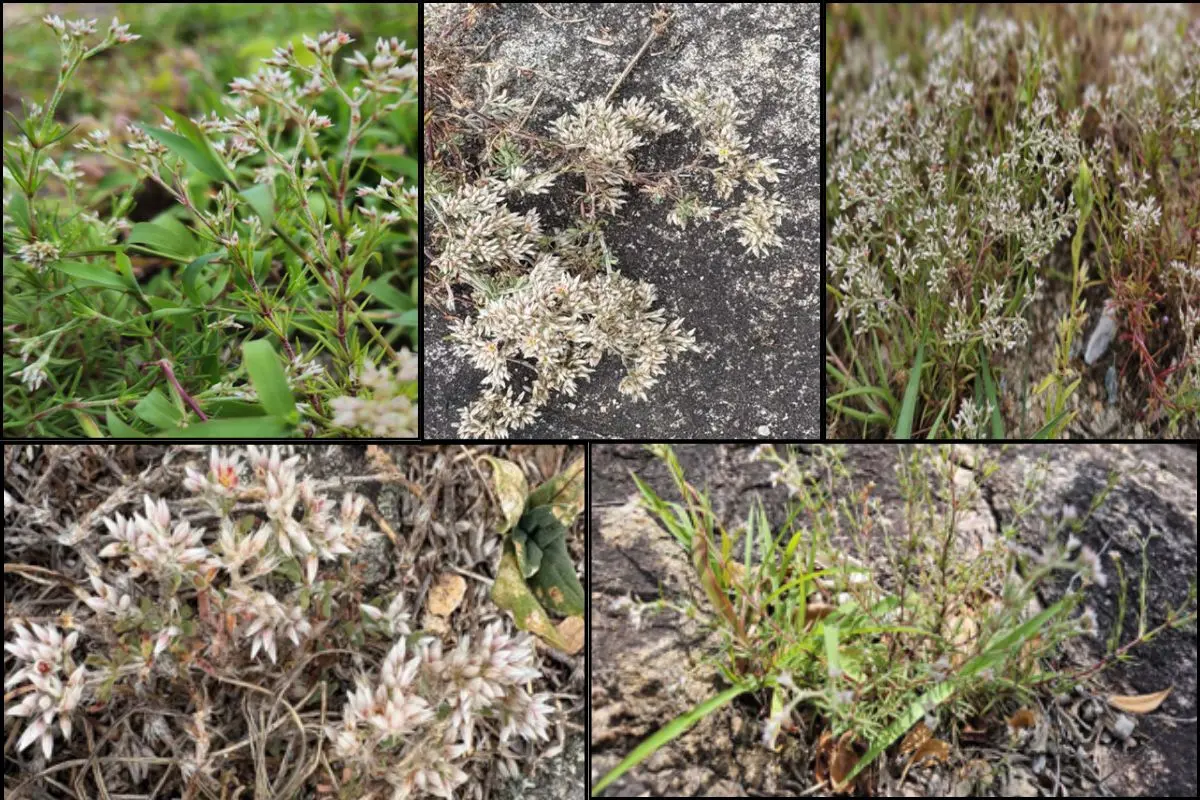
Botanists in Kerala have unearthed five new species of spiked rock-grass (Polycarpaea), locally known in Malayalam as Acharamkolli. These delicate plants belong to the carnation family (Caryophyllaceae).
Published in the international botany journal Phytotaxa, the discovery comes after more than three years of field studies, comparative morphology and microscopic analysis examining flower structures, seed capsules and pollen grains. Before this research, only seven species of spiked rock-grass were known in India. These five additions bring the national total to 12, complete with detailed taxonomic descriptions, high-resolution photographs and distribution maps.
The team behind the finding
This breakthrough highlights the rich, unexplored biodiversity hidden across the Western Ghats and Kerala's coastal ecosystems. The discovery was spearheaded by a team of local researchers – Dr Salvy Thomas and Dr Arya Sindhu from St Berchmans College in Changanassery, independent researcher Dr Manuel Thomas and Dr Rojimon P Thomas, Head of the Department of Botany at CMS College in Kottayam.
Speaking on the local relevance of the plant to Mathrubhumi English, Dr Rojimon P Thomas notes, “Acharamkolli is considered a regional variant of Parpataka (diamond flower) from the Rubiaceae family, and its primary medicinal uses are to cool the body, reduce inflammation and neutralise toxins,” says Dr Rogimon.
“It is also widely used by local tribal communities in puja rituals, where it is known as the 'Satan destroyer,'” he adds.
The 5 newly discovered species
Polycarpaea kurialacherryana
Nestled in the hills of Kanthalloor in Idukki, this plant stands out with vibrant yellow flowers. It is named in honour of Mar Thomas Kurialacherry, founder of St Berchmans College in Changanassery, recognising his vision for higher education. While morphologically similar to Polycarpaea apetala, it can be distinguished by its distinct petals, as well as the unique size and shape of its bracts and bracteoles (the tiny leaf-like structures near the bloom).
Polycarpaea johnii
Found in Cherthala, this species features deep green foliage sprinkled with yellow dots. It honours Rev Prof M C John, former Botany Head and Principal of CMS College in Kottayam, for his lifelong contributions to classical botany. Though similar to Polycarpaea barbellata and Polycarpaea psammophila, it differs in the shape of its seed capsules and the proportions of its sepals and bracts.
Polycarpaea sureshii
Discovered in the Kollengode hills of Palakkad, this striking plant bears coffee-brown blooms dotted with crimson spots. It is named after Dr V Suresh, a botany teacher and research guide at Victoria College in Palakkad, who has introduced numerous plant species to science. It resembles Polycarpaea ebracteata and Polycarpaea palakkadensis, but stands apart due to its complete lack of stipules (the leafy scales at the stem joint) and the unique shape of its petals and sepals.
Polycarpaea marayoorensis
Discovered high in the misty hills of Marayoor, this plant displays unusual golden-green flowers and is named directly after its native home. While similar to Polycarpaea barbellata, it is identified by its irregular, loosely spread flower clusters (an irregular lax cyme arrangement) and distinct shapes in its bracts, petals, capsules and seeds.
Polycarpaea kanthalloorensis
Also hailing from Kanthalloor in Idukki, this species takes its name from its location of discovery. It shares key traits with Polycarpaea aurea, but botanists confirmed it as a separate species due to clear structural differences in its bracts, bracteoles, sepals, stipules and seed capsules.