This Kerala teacher's mission in a China-border village goes beyond bringing Onam to children
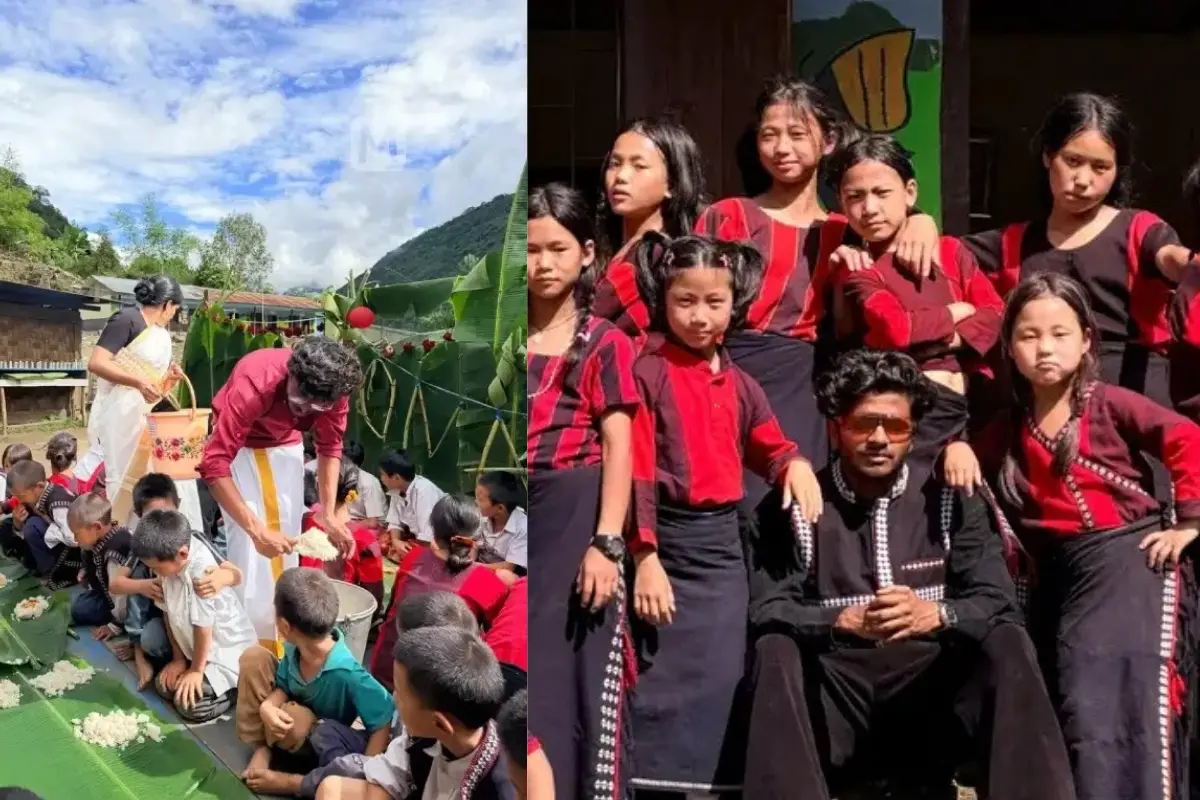
Back in August, viral videos on social media captured an extraordinary cultural celebration in Karo, a remote village near the India-China border in Arunachal Pradesh. Children and adults gathered in traditional Kerala attire to celebrate Onam, performing to Malayalam songs thousands of kilometres away from South India. Months later, the story of the young teacher behind the celebration continues to attract national attention. He continues to make headlines across the nation. Ali Ashqar, a 28-year-old teacher from Areekode in Kerala’s Malappuram district, travelled nearly 3,000 kilometres to teach at Netaji Subhas Chandra Bose Awasiya Vidyalaya in Shi-Yomi district.
Ashqar’s academic path led him through a Bachelor’s degree in Kerala, a Master’s degree in Punjab, a Bachelor of Education in Puducherry, and a Master of Education from Shillong, alongside a teaching stint in Kashmir. Realising that rural regions needed educational support more than cities with established systems, he joined the non-governmental organisation Sunbird Trust to work at Karo. When he arrived, the residential school faced falling enrolment, lacked proper hostel facilities, and was on the brink of closure. Today, through joint efforts by the government, the NGO, and staff, student enrolment has reportedly risen from under 40 to 102 children, with 62 residing in the hostel.
Daily life in Karo presents severe challenges unknown in urban centres. Located 200 kilometres from the nearest city, accessing basic supplies or medical care requires an eight-hour journey over roads damaged by frequent landslides. The village lacks basic shops, restaurants, and regular electricity, relying partly on solar power installed by the NGO. Mobile network connectivity remains highly erratic, occasionally disappearing for up to 45 consecutive days. In medical emergencies, reaching the nearest airport takes nearly two days by road, while Ashqar manages to visit his family in Kerala only once a year.
Bridging cultures through lessons and festivities
Despite these obstacles, Ashqar organised an elaborate Onam festival to introduce students to India’s cultural diversity. Arranging supplies required careful planning, as a fellow teacher travelled kilometres to procure feast ingredients while local villagers contributed fresh vegetables. Teachers wore traditional sarees and mundus, while children dressed in gal, the local traditional attire. Together, they collected flowers from village homes to craft a floral pookkalam and prepared a traditional Sadya feast served on banana leaves. The children performed an eight-minute dance routine to Malayalam and Tamil songs, learning the lyrics and steps during a week of practice.
The event gained national attention after videos posted online garnered nearly five million views and were re-shared by Union Minister Kiren Rijiju. Ashqar documents school life and student talents on his social media platform, Teacher Tales, aiming to showcase the potential of border-region children to the wider world. The school celebrated the online recognition by cutting a cake with the excited students.
A mission rooted in nature and mutual learning
In the classroom, Ashqar teaches English and Environmental Studies, using experiential learning methods to address gaps in basic literacy and numeracy. With limited digital resources, he turns the surrounding hills into learning spaces by connecting textbook lessons directly to nature. Living alongside the community has also provided him with valuable personal lessons. He notes that the local children display remarkable resilience and joy while helping their families collect firewood and farm in steep terrain.
Demonstrating his dedication to Karo, Ashqar passed up an opportunity to pursue higher studies in Russia to remain at the school. He hopes to equip the institution with smartboards and modern learning facilities so border children receive opportunities equal to those in cities. He encourages young educators across India to consider teaching in remote rural areas, emphasising that the positive impact on underserved communities far outweighs any hardship.