Netizens puzzled: Why is Vedan charged over a leopard tooth while tusks at Kerala Collectorate are legal?
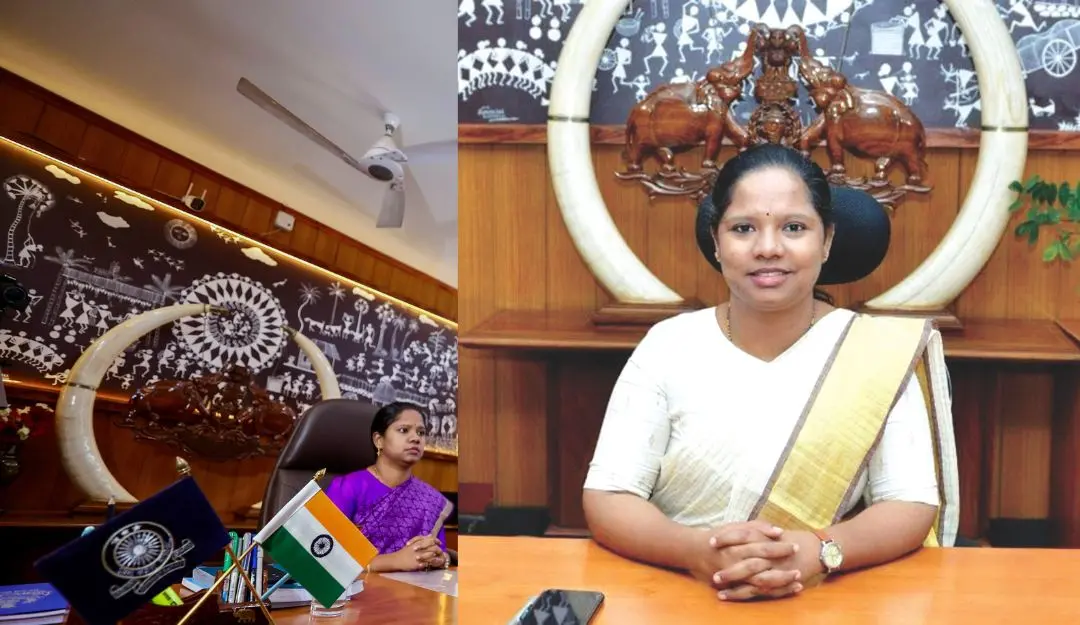
The display of elephant tusks in the Wayanad District Collector’s chamber has triggered fresh legal and social scrutiny in Kerala. This follows the booking of rapper Vedan—real name Hirandas Murali—under non-bailable offences for allegedly wearing a leopard tooth pendant.
Public debate is intensifying around whether government offices are legally allowed to showcase wildlife trophies outside designated museums.
The tusks in question have been on display in the Collectorate for over three decades. According to Wayanad Collector Dr D R Meghashree, the tusks were certified by the Forest Department and are legal under a 1990 government order. “They are symbols of wildlife conservation and forest wealth,” she said, adding that their display should continue.
Responding to an earlier complaint to the Human Rights Commission, the Collector said there had been no incident where the display had encouraged harm to wildlife. Judicial officer K Baijunath dismissed the complaint after accepting the Collector's submission that the tusks were allotted to Wayanad as per a government order dated 21 December 1990.
The tusks were handed over to the Wayanad Collectorate by the Forest Department following the death of a wild elephant in 1989. The elephant had earlier attacked then-Collector Michael Vedasiromani and animal later died in the forest after a clash with another tusker. The tusks were subsequently recovered and officially by forest departmemt and transferred for display.
Questions of double standards
Despite the clarification, the incident has reignited debate on social media. Critics have questioned whether legal action against private individuals like Vedan contrasts unfairly with sanctioned displays in government institutions.
Vedan’s legal troubles
Vedan faces multiple charges under the Wildlife Protection Act, relating to illegal possession of animal parts and acquiring wildlife-derived property. The forest department acted after spotting what was suspected to be a leopard tooth on his chain.
Although Vedan is currently out of custody, the charges carry a maximum sentence of seven years. His arrest triggered strong online reactions, with many alleging selective enforcement and media sensationalism.
Lawyer and activist Harish Vasudevan suggested the action may be politically motivated due to Vedan’s art, which critiques caste hierarchies and social norms. He also referenced the lack of punitive action in a previous case involving actor Mohanlal, who was allegedly found with ivory tusks.
Cultural and caste dimensions
The debate has taken a cultural turn, with Dalit writer K K Baburaj expressing solidarity with Vedan. He criticised what he described as “cultural purists” imposing moral codes on artists and drew parallels with recent legal actions against filmmakers in narcotics-related cases.
Baburaj argued that these incidents reflect broader caste and class biases in Kerala’s legal and cultural environments.
Complaint against Union Minister Suresh Gopi
Adding another layer to the controversy, Youth Congress leader A A Mohamed Hashim filed a complaint against Union Minister and actor Suresh Gopi. He alleged that Gopi was seen wearing a pendant made from a leopard tooth.
Visual evidence has reportedly been submitted to the State Police Chief, with the complaint demanding an explanation on how the minister acquired the item.
Legal consistency under question
The growing list of individuals involved—from a rapper to a Union Minister—has fuelled public concerns over legal consistency. At stake is a larger question: are India’s wildlife protection laws being applied uniformly?