Kerala degree reforms: Shift classes, divided halls and fast-track graduation proposed
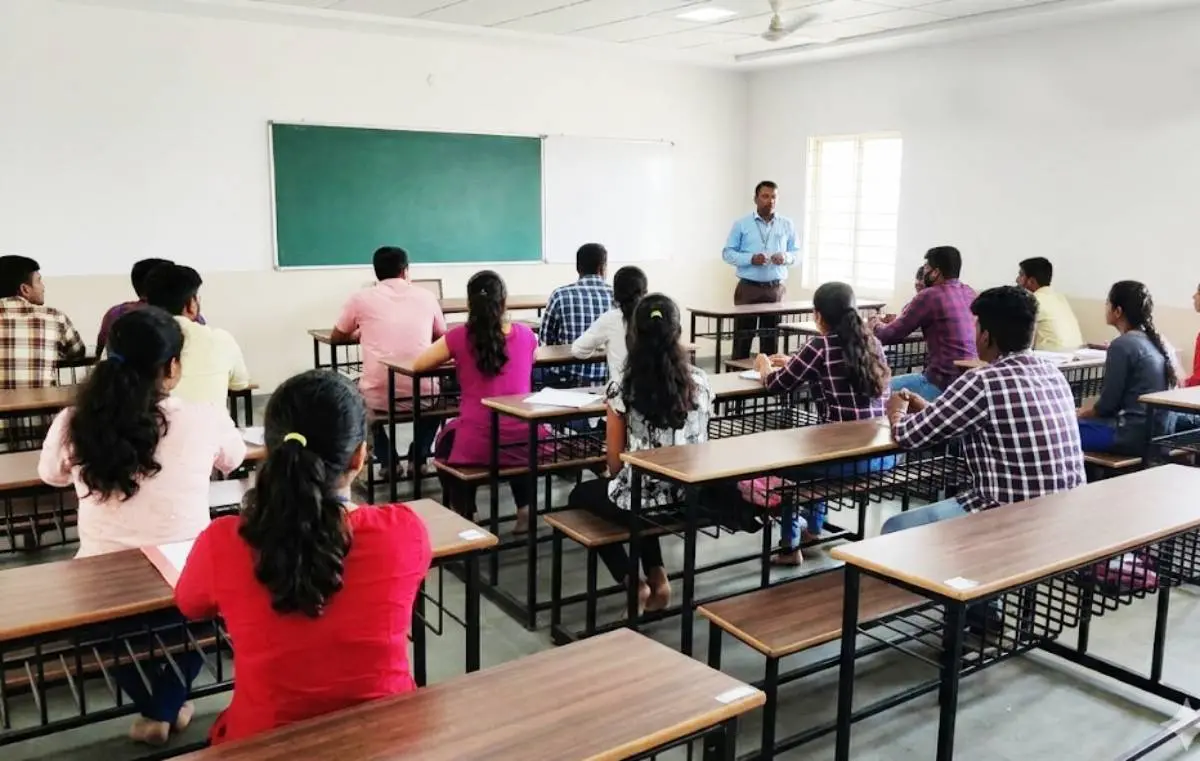
Thiruvananthapuram: A draft report by the review committee appointed by the Kerala State Higher Education Council has proposed sweeping changes to the existing structure of the four-year undergraduate programme. The report includes recommendations to overcome the challenges faced by students entering the seventh semester after completing three years. Key proposals include conducting classes in two shifts – morning and afternoon – dividing large college halls into separate classrooms, and appointing guest lecturers.
The report was prepared by a committee chaired by Prof Dr Gladstone Raj S of Government College, Kariavattom, with Higher Education Council Member Secretary Prof Dr Abida Farooqui serving as convener. It was submitted to the Council following direct inspections and consultations held across 30 universities and colleges in the state between July 1 and October 31.
The committee has recommended renaming the four-year degree programme as the ‘Flexible Graduate Programme’ (FGP), standardising total credits to 132 and 176, and introducing an ‘Accelerated Degree Programme’ (ADP) to enable academically excelling students to complete their degrees faster. The new name, FGP, has been proposed because the label ‘four-year degree’ creates huge confusion among students who opt to exit after three years and those progressing to postgraduate courses in the fourth year.
To align with the University Grants Commission’s (UGC) 50 per cent major credit stipulation, total credits will be reduced from 133 to 132 for three-year degrees, and from 177 to 176 for four-year honours degrees. This will allow credits to be distributed evenly at an average of 22 credits per semester.
Relaxation in minor subjects
To ensure students are not forced to study uninteresting minor subjects due to a lack of facilities in colleges, the report recommends that single-major students need only earn 12 credits in minor subjects. Furthermore, instead of restricting minor courses to the first three semesters, students will be permitted to spread them across semesters one to eight.
The committee also suggested permitting single-faculty departments in colleges to teach emerging subjects such as Artificial Intelligence, Data Science, FinTech and Cyber Security.
Option to graduate faster or at a slower pace
Under the Accelerated Degree Programme, the top 10 per cent of academically excelling students can earn up to a maximum of 27 credits per semester, enabling them to complete a three-year degree in five semesters and a four-year degree in six to seven semesters.
For students wishing to reduce their academic workload, an Extended Degree Programme has been proposed, allowing them to take a minimum of 18 credits per semester and take up to two additional semesters to finish. Provisions will also be made for eight-week summer fast-track courses to earn extra credits or clear failed papers. A uniform rule should be introduced allowing students to take a continuous study break of up to three years and complete their degree within seven years.
Eliminating varying examination schedules, the report calls for a uniform two-hour written examination carrying 60 marks (including cool-off time) across all subjects. Results must be declared within 30 days of the examination, supplementary exams conducted within 45 days, and revaluation results published within 20 days. Provisional certificates should be issued via DigiLocker within 10 days of result declaration.
Shift system for the fourth year
For Honours with Research programmes, 60 per cent of seats should be allocated to students from the parent college and 40 per cent to students from other institutions. A maximum of five students should be allotted under a single research guide, and general transfers of teachers must be completed by April.
To address classroom shortages, the committee proposed dividing large halls using acoustic partitions and operating classes in two shifts: 8 am to 1.30 pm and 12 pm to 5.30 pm. It also urged the appointment of additional guest lecturers immediately rather than waiting until 2028 for fourth-year classes.
To bridge faculty shortages, teach specialised subjects and support research activities, the committee recommended appointing retired professors.
Finally, the report advises reinstating the system of appointing external examiners from other colleges to conduct practical examinations, utilising the services of retired teachers if necessary so that the regular classes of existing faculty are not disrupted.