Have dams in Kerala filled up? Here's the reality behind the recent heavy rainfall
Kottayam: While Kerala witnessed intense rainfall over the past few days, concerns of a repeat of the devastating 2018 floods have eased significantly because the state's major reservoirs still have substantial storage capacity.
Despite the recent spell of heavy rain, most major dams remain well below full capacity due to a weaker-than-normal southwest monsoon this year, influenced in part by El Niño-related weather patterns.
Major dams still far from full
The latest reservoir data shows that Kerala's largest dams have absorbed a significant portion of the recent inflows, reducing downstream flood risks.
The Idukki Dam, Kerala's largest hydroelectric reservoir, received 36.88 million cubic metres (MCM) of water in a single day, increasing storage from 449.28 MCM to 485.61 MCM. Even after the sharp rise, the reservoir stands at only 33% of its total capacity.
During the 2018 floods, Idukki Dam had reached full capacity and had to be opened, worsening flooding in several downstream areas. This time, the available storage has helped contain floodwaters.
Similarly, the Kakki Dam under the Sabarigiri hydroelectric project recorded an increase of 16.50 MCM in a day, taking storage to 170.38 MCM, or 38.16% of its capacity.
The opening of the Kakki Dam in 2018 had contributed to severe flooding along the Pampa River, affecting areas such as Ranni, Aranmula, Chengannur and nearby regions. In contrast, this year's rainfall was largely absorbed by the reservoir.
Rainfall still below normal
Although parts of Kerala experienced cloudbursts and extremely heavy rainfall on August 1, seasonal rainfall remains below average in several catchment areas.
In Idukki district, which hosts the state's largest hydropower project, rainfall has been significantly deficient. The district received 893 mm of rain against a normal 1,697 mm, representing a 48% deficit.
Pathanamthitta district, home to the Sabarigiri project, recorded 919 mm of rainfall against a normal 1,011 mm, a deficit of around 9%.
The rainfall shortage explains why reservoir levels remain relatively low despite recent heavy showers.
Other reservoir levels
The Pamba Dam received an additional 1.99 MCM, taking its storage to 62.49 MCM, which is only 16% of its total capacity.
The Idamalayar Dam recorded an increase of 17.43 MCM, with total storage reaching 433.46 MCM.
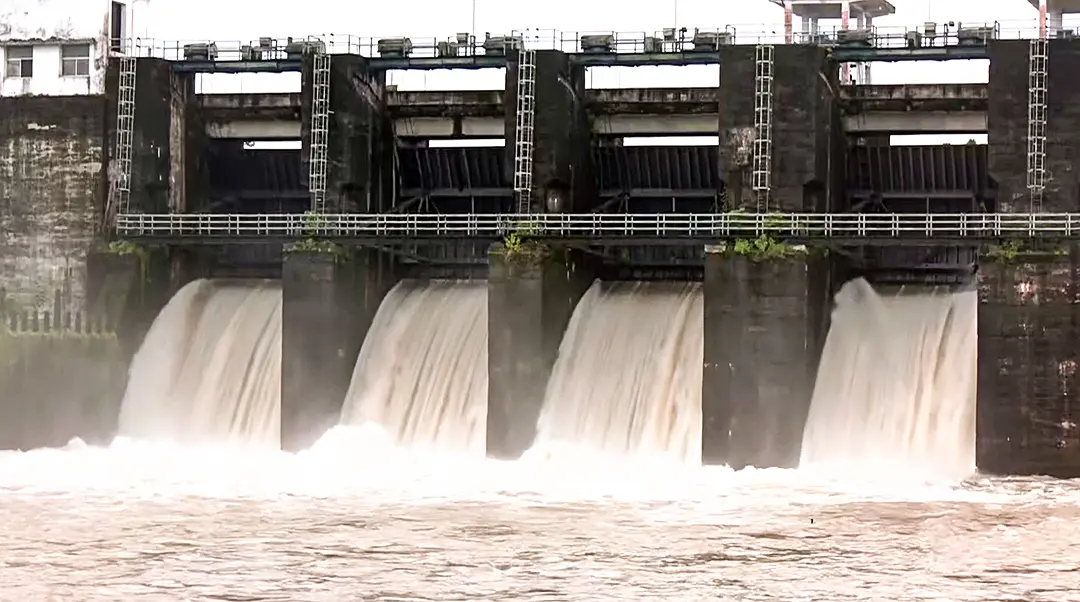
Among the major reservoirs, Moozhiyar Dam was the only one opened following the recent rainfall.
Why the flood impact was lower
One of the key reasons the recent heavy rainfall did not trigger widespread flooding similar to 2018 is that the state's reservoirs had enough vacant storage to capture much of the runoff.
Had the southwest monsoon been normal and the reservoirs already near full capacity, the intense rainfall experienced in parts of Kerala on August 1 could have resulted in a much more severe flood situation.
With most major dams still below half their capacity, the available storage continues to serve as a crucial buffer against further flooding.