Nileshwar mishap: A re-look into what Kerala HC, state, and union govts say on fireworks in temples
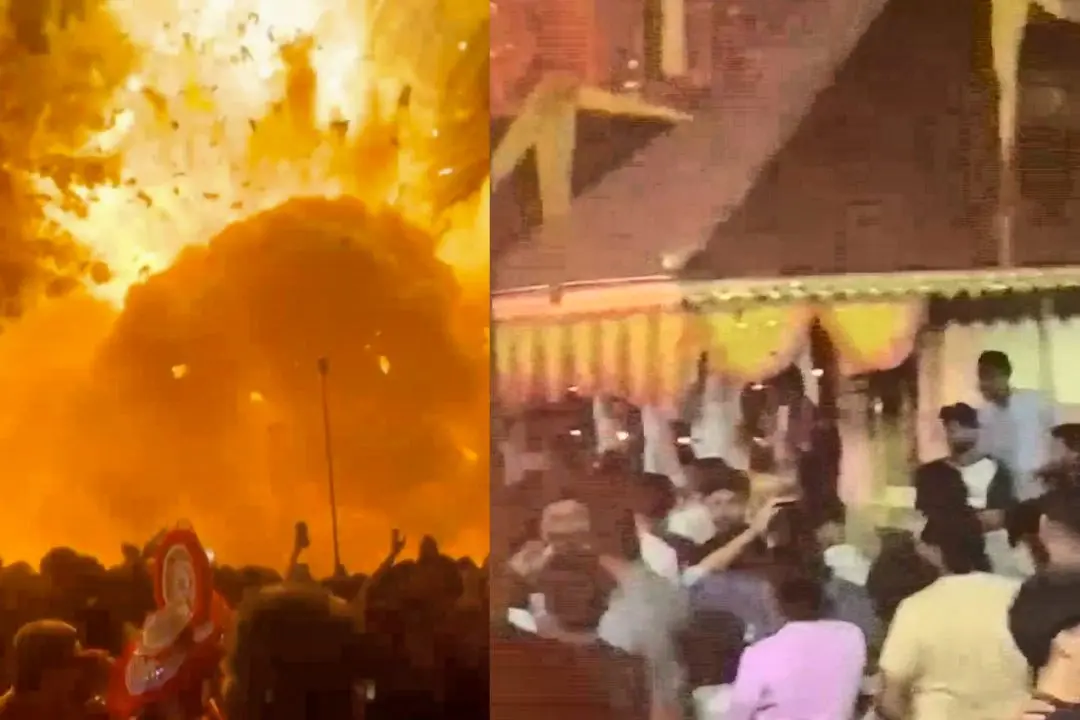
The recent fireworks accident at Veerarkavu Temple near Kasaragod's Nileshwar, where over 150 people were injured, including ten seriously, has once again drawn attention to the ongoing debate over the use of fireworks at religious festivals in Kerala. Authorities concerned reported that the incident occurred due to fireworks being stored too close to the area where they were being burst, with no safety precautions or permissions in place. The District Collector confirmed that safety guidelines, including maintaining a 100-metre distance between the storage and display areas, were not followed, leading to this tragic event. The firework, also occurred after midnight—violating the Kerala High Court’s “odd hours” rule that prohibits fireworks between 10 p.m. and 6 a.m. The accident has reignited discussions about regulations concerning fireworks at temples, and both the Kerala High Court and government responses on this matter have become central to the conversation.
Kerala High Court's stance on fireworks at temples
In 2023, the Kerala High Court partially quashed a single-bench order that had mandated raids on religious places to seize illegally stored firecrackers. The division bench, headed by Chief Justice AJ Desai and Justice VG Arun, overturned parts of the ruling, while rejecting the directive that prohibited bursting crackers at religious sites during "odd times."
Clarifying what constitutes "odd times," the court stated that firecrackers should not be used between 10 p.m. and 6 a.m. However, it allowed district administrations to decide whether firecrackers could be permitted during restricted hours, if necessary. The court also emphasised that bursting firecrackers is not a religious necessity.
This ruling came after Justice Amit Rawal, in a single-bench judgement, had imposed a ban on crackers and ordered district police chiefs to conduct raids in religious places, seizing any illegally stored fireworks. He warned that violations would lead to contempt of court proceedings. The Kerala government appealed this decision, challenging its legal and factual basis.
Kerala government's appeal on the 2023 single-bench ruling
The Kerala government, in its appeal, argued that the single-bench order had overstepped the original petition's relief. It contended that there was no evidence to support claims of illegal firecracker storage at any religious site at the time of the judgement. Moreover, the government highlighted the ambiguity of the term "odd time," which could be interpreted differently by different people.
The appeal also criticised the observation that no religious texts mandate the use of firecrackers to please deities, claiming this remark was unnecessary. The government further argued that the court had not examined whether fireworks were part of the essential religious practices in Kerala’s temples. It pointed out that fireworks have historically been an integral part of temple festivals, bringing people together and promoting the state’s secular and multicultural ethos.
Kerala High Court's guidelines for fireworks in Ernakulam Shiva Temple
In 2024, the Kerala High Court directed the District Collector to issue guidelines for fireworks during the Valiya Vilakku and Arattu festivals at Ernakulam Shiva Temple, to be held in January. The decision was based on the 2023 division bench ruling, which allowed fireworks displays under strict conditions.
The court stipulated that only specific fireworks items, as approved by the court, could be used, and the display must be supervised by licensed professionals. Additionally, storage areas for fireworks had to be at least 200 metres away from the display site, and spectators were barred from entering within 100 metres of the display zone. Barricades were to be set up accordingly to ensure safety.
Stricter Union government regulations on fireworks
The Union government has also introduced new regulations governing fireworks displays, raising concerns about their impact on Kerala's iconic festivals like Thrissur Pooram. The guidelines call for stringent safety measures, including a minimum distance of 200 metres between the fireworks storage and display areas, and at least 100 metres between spectators and the display site. Additionally, fireworks must be at least 250 metres from hospitals and schools.
The regulations mandate that fireworks can only be handled by those certified by the Petroleum and Explosives Safety Organisation (PESO). These changes were implemented following the 2016 Puttingal temple tragedy, which led to increased scrutiny of fireworks safety.
Event organisers are required to submit applications 15 days in advance, detailing the types of fireworks used and the potential risk areas in case of accidents. They must also obtain public liability insurance and conduct a mock safety drill two days prior to the event. Substances like potassium chlorate are banned, and organisers must adhere to fire safety guidelines set by local fire services.
The tragic accident at the Veerarkavu Temple highlights the pressing need for stricter enforcement of fireworks regulations at religious festivals. While the Kerala High Court has ruled on the conditions for fireworks, and the state government has argued for preserving tradition, incidents like this underscore the importance of prioritising public safety. With the Union government tightening norms, the challenge will be balancing cultural traditions with the need to prevent further tragedies.