Interfaith marriage without conversion is illegal: Allahabad High Court
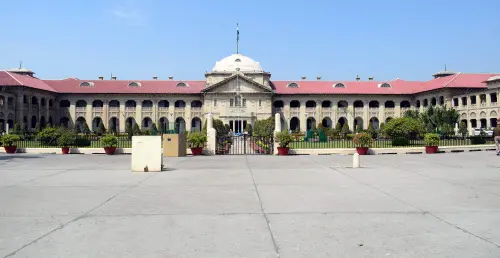
Allahabad: In a significant legal development, the Allahabad High Court on Saturday ruled that interfaith marriages conducted without religious conversion do not hold legal validity. The observation was made during a hearing concerning the alleged kidnapping and marriage of a minor girl by a man named Sonu alias Sahnoor.
The petitioner had approached the court seeking quashing of criminal proceedings against him, claiming that he and the girl—now an adult—had been married at an Arya Samaj temple and were living together. However, Justice Prashant Kumar dismissed the plea, stating that the Arya Samaj-issued marriage certificate was invalid as the girl was a minor at the time and no religious conversion had occurred.
The court expressed serious concern over Arya Samaj institutions allegedly issuing marriage certificates indiscriminately, often for a fee, without verifying legal eligibility or following statutory procedures. It described such practices as violative of the law and ordered the Uttar Pradesh Home Secretary to conduct a probe into the activities of such institutions, led by a DCP-rank IPS officer. A compliance report is expected by August 29.
An FIR had been registered against Sahnoor under charges of kidnapping, rape, and provisions of the POCSO Act. Despite the petitioner’s claim that the marriage was consensual and the couple now lives together, the state opposed the plea, arguing that both individuals belonged to different religions and had not undergone any religious conversion—thus rendering the marriage legally untenable.
Arya Samaj Marriage Under Scrutiny
An Arya Samaj marriage follows simple Vedic rituals and is often chosen for its quick and affordable process. However, legal recognition under the Hindu Marriage Act, 1955, requires that both parties be Hindus or have formally converted to Hinduism through a purification ritual known as Shuddhi.
The Arya Samaj process typically involves age and identity verification, photographs, witnesses, and a Vedic ceremony conducted by a priest, followed by the issuance of a certificate. While the official Arya Samaj websites claim their certificates have full legal standing, courts have repeatedly questioned their validity, especially in cases lacking documentation, proper conversion, or legal eligibility.
Conflicting Court Opinions
While the court acknowledged that Arya Samaj marriages can be valid under Section 7 of the Hindu Marriage Act if performed according to proper Vedic rites, it has also noted that the certificate alone is insufficient proof of a legal marriage.
Just days earlier, in a separate case, the Lucknow bench of the Allahabad High Court reiterated that an Arya Samaj certificate is not in itself a valid marriage certificate. The court dismissed a woman’s claim for a government job on compassionate grounds, as she was unable to prove legal marriage solely based on such a certificate.
The court has also referenced past cases such as Dolly Rani vs Manish Kumar Chanchal and Shruti Agnihotri vs Anand Kumar Srivastava, which similarly questioned the standalone legitimacy of Arya Samaj-issued marriage documents.
In April, the court clarified that such certificates are not “waste paper” but require proper corroboration during trial—such as the testimony of the priest who solemnised the marriage—under the Bharatiya Sakshya Adhiniyam, 2023.
Broader Concerns
Last year, in a separate ruling, the Allahabad High Court raised alarms over Arya Samaj marriages being misused to legitimize underage unions and bypass legal checks. Justice Vinod Diwaker observed that such practices often result in exploitation, human trafficking, and emotional trauma for minors, while burdening the judicial system.
The court emphasized the need for a stricter system to verify documents and hold institutions accountable, particularly in districts like Gautam Budh Nagar and Ghaziabad.
This latest ruling marks yet another step in the judiciary’s ongoing scrutiny of loosely regulated marriages, particularly those involving minors, interfaith couples, and informal conversion processes.