Why did Gandhi not attend the historic Independence Day celebrations in Delhi?
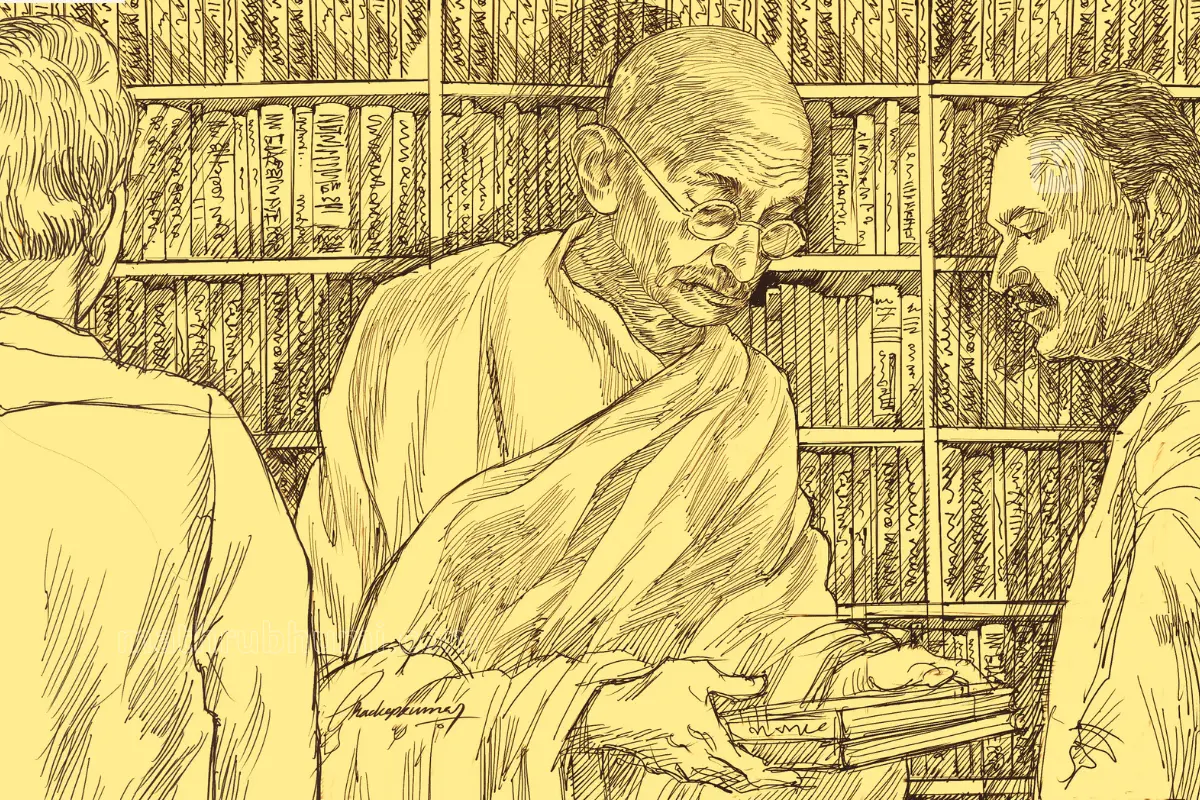
As India prepares to celebrate Independence Day on August 15, accounts of the first Independence Day recall how Mahatma Gandhi stayed away from Delhi's celebrations.
In 1947, while celebrations marked the transfer of power in Delhi, Gandhi was in Calcutta, now Kolkata, trying to prevent communal violence. Accounts by British Quaker Horace Alexander, Gandhi's great-grandson Tushar Gandhi and former Union minister MJ Akbar offer different perspectives on why he chose to remain there.
Horace Alexander recalls the 'miracle of Calcutta'
British Quaker Horace Alexander, who spent those crucial hours with Gandhi, documented the experience in his book Gandhi Through Western Eyes and in a 1983 feature for the journal Darshan.
According to Alexander, Gandhi deliberately ignored the official transfer of power in Delhi because his priority was to stop communal bloodshed in Bengal. Rather than joining celebrations, Gandhi fasted, seeing little reason to feast when millions of Indians were still hungry.
Alexander recalled that the day began with prayers at 3 am. What followed, he said, was an unexpected calm that spread across Calcutta after days of communal tension.
He famously described the turn of events as the 'miracle of Calcutta'.
For Alexander, Gandhi's presence in the violence-hit city was therefore not simply an absence from the Independence Day celebrations in Delhi. It was part of his effort to bring peace to a city caught in the aftermath of Partition.
Tushar Gandhi recalls a quiet night in Beliaghata
Writing in The Hindu, Gandhi's great-grandson Tushar Gandhi provides another account of how the Mahatma spent the night India became independent.
Tushar Gandhi says the Mahatma was actually asleep when Jawaharlal Nehru delivered his famous midnight speech announcing India's freedom.
Instead of being at the grand ceremony in Parliament, Gandhi was resting on a thin mattress in Beliaghata, a poor neighbourhood in Calcutta.
According to Tushar Gandhi, Gandhi's attention had shifted by morning to spinning yarn and the challenges facing the new country.
He also writes that Gandhi sent a message to the newly appointed ministers, warning them about the responsibilities that came with power.
The ministers, Gandhi advised, were now wearing a 'crown of thorns' and should resist the temptations of office. Their priority, he said, should be serving the poor in India's villages.
MJ Akbar links Gandhi's absence to Partition
Former Union minister MJ Akbar offers another interpretation in his book Gandhi's Hinduism: The Struggle Against Jinnah's Islam.
Akbar writes that Gandhi's decision to remain in Calcutta rather than travel to Delhi was also an act of defiance against Partition. According to Akbar, Gandhi regarded the division of the country as a moment of temporary madness.
Akbar further notes that Gandhi intended eventually to live in what had become Pakistan, where he wanted to protect Hindu minorities.
In Akbar's account, Gandhi did not regard the newly created borders as natural divisions between people. He believed the shared cultural spaces of the subcontinent could not simply be separated by political boundaries.