Why activists are opposing the Transgender Amendment Bill 2026 | Explained
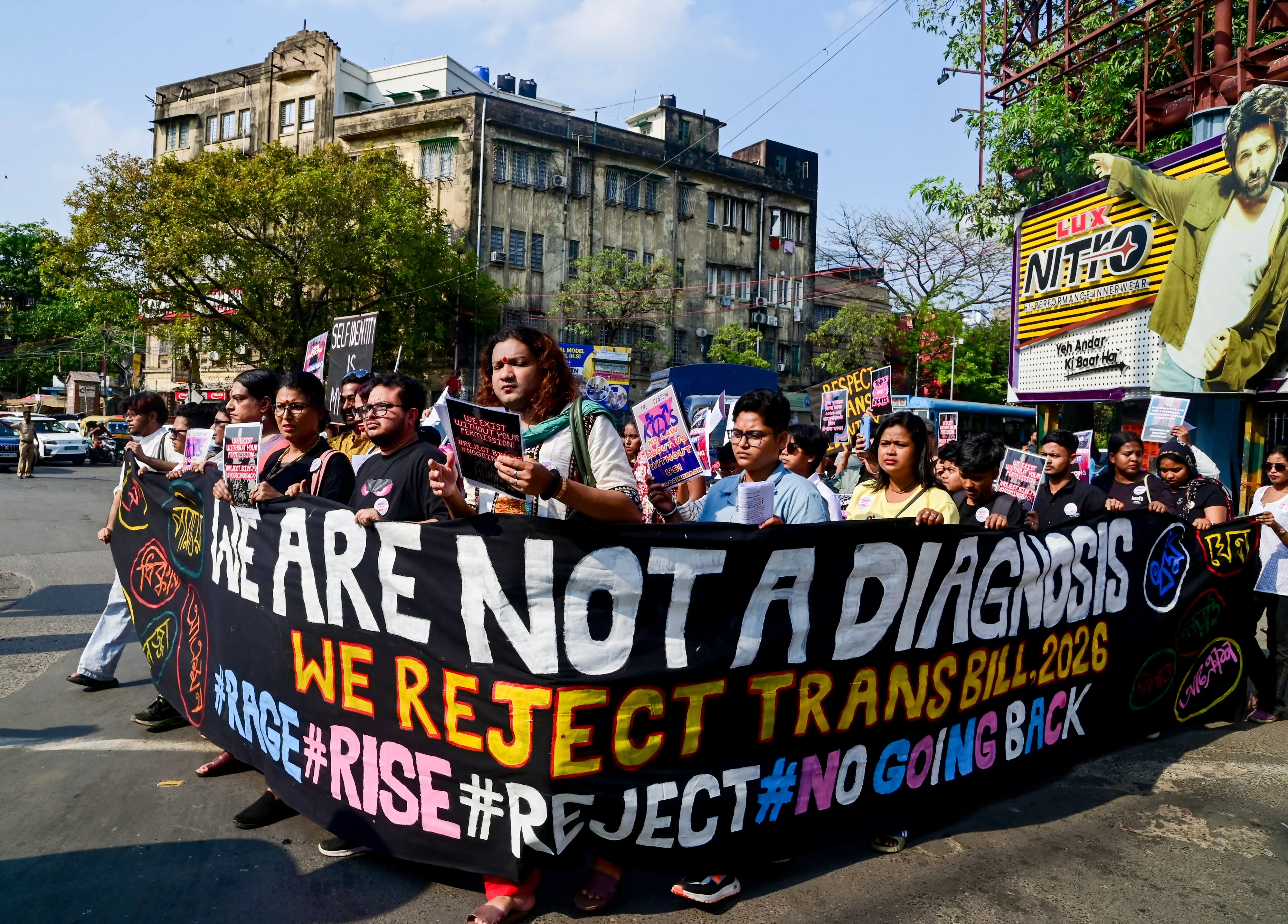
Transgender and queer collectives have strongly opposed the Transgender Persons (Protection of Rights) Amendment Bill, 2026, demanding its immediate withdrawal and warning that the proposed changes threaten the rights and dignity of the community.
The activists and community representatives described the Bill as “discriminatory” and said it undermines key protections guaranteed under the Transgender Persons (Protection of Rights) Act, 2019.
One of the primary objections relates to the Bill’s redefinition of “transgender persons.” According to activists, the amendment removes the existing definition, “a person whose gender does not match with the gender assigned at birth”, and instead lists specific categories.
Definition of a transgender person
The Act defines a transgender person as a person whose gender does not match with the gender assigned at birth, and specifies certain persons who are included. The Bill removes this definition. It instead lists categories of persons to be included. The Bill also states that it will not include or will never have included persons with different sexual orientations and self-perceived sexual identities.
The Bill retains categories such as socio-cultural identities like hijra, kinner, aravani or jogta, but removes “a trans-man or trans-woman… irrespective of whether such a person has undergone sex reassignment surgery… and genderqueer.” It also states that it will not include “persons with different sexual orientations and self-perceived sexual identities.”
Community members argue that this effectively erases a wide spectrum of identities, including trans men, trans women, non-binary and gender-diverse individuals.
Right to self-identification under threat
Activists say the amendment removes the fundamental right to self-identification. Under the 2019 Act, individuals could apply for a certificate of identity as a transgender person. The Bill now requires that the District Magistrate issue such a certificate “after examining the recommendation of a designated medical board.”
They argue that this introduces medical scrutiny and undermines autonomy, violating principles laid down in the landmark NALSA v. Union of India, which recognised transgender identity as a matter of self-determination.
The Bill further mandates that in cases of gender change, “the concerned medical institution must furnish information regarding the gender change surgery to the District Magistrate.”
Activists say such provisions violate the right to privacy affirmed by the Justice K.S. Puttaswamy v. Union of India, which recognised bodily autonomy and decisional freedom as fundamental rights.
Criminalisation and ‘vague’ provisions
Community representatives also raised concerns about new offences and penalties introduced in the Bill. It proposes strict punishments, including imprisonment of up to life, for acts such as forcing a person to assume a transgender identity.
While intended to address coercion, activists argue that the provisions are “vague” and could lead to misuse.
Activists in the Northeast said the Bill fails to recognise region-specific identities. While transgender persons have historically been part of Assamese cultural spaces, including Bhaona, identities such as Nupi Manbi and Nupa Manba in the Meitei community remain excluded.
They argue that even the 2019 Act, though limited, allowed self-identification, whereas the amendment “removes this right entirely” and risks erasing diverse identities across India.
Demand for withdrawal
Calling the Bill a threat to the “dignity and existence” of transgender communities, activists said it reflects a broader pattern of exclusion in policymaking.
“The language used in the Bill is vague, broad and violates fundamental rights, and if passed, will lead to misuse and violence, affecting an already marginalised community,” representatives said.
The Bill was introduced in the Lok Sabha by Union Minister Virendra Kumar on March 13, seeking to amend the 2019 law governing the rights and welfare of transgender persons.