SC refuses interim suspension of CEC Gyanesh Kumar, issues notice to EC
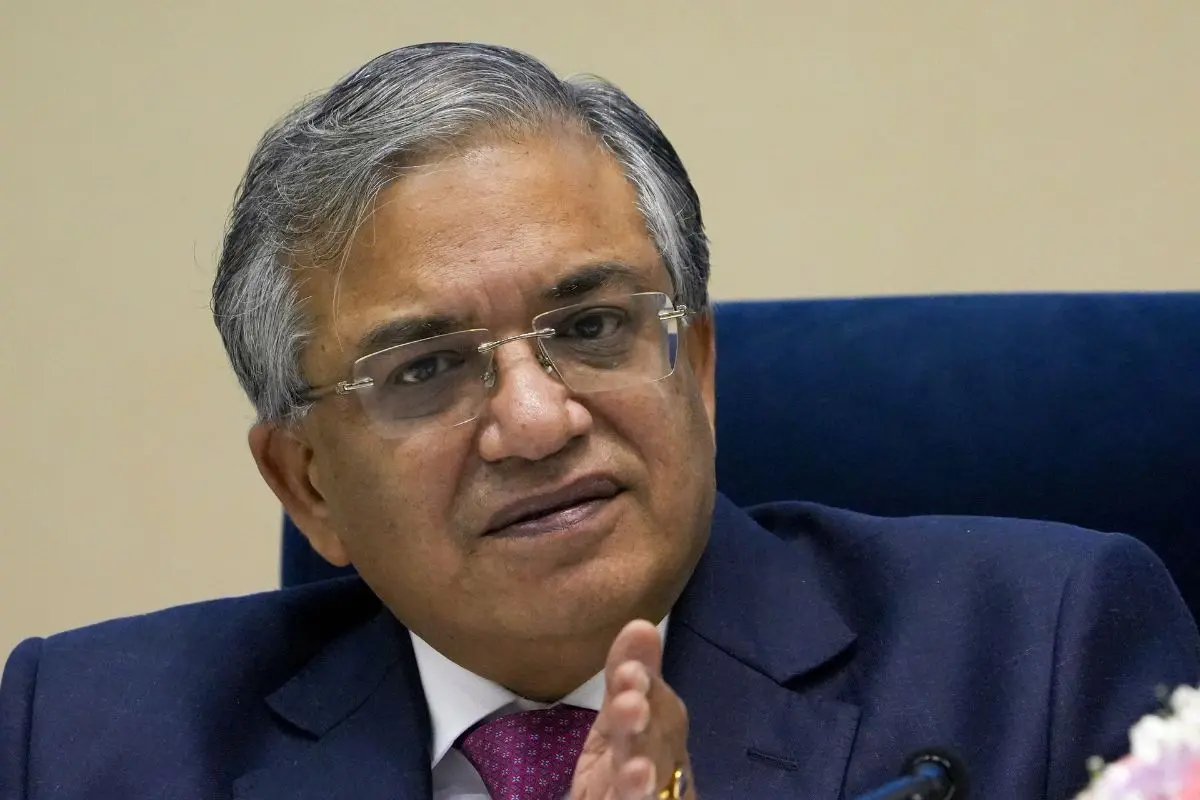
New Delhi: The Supreme Court on Monday refused to pass an ex-parte interim order seeking suspension of Chief Election Commissioner Gyanesh Kumar over allegations that key decisions relating to the Special Intensive Revision (SIR) of electoral rolls were taken unilaterally, saying the Election Commission and others must first be heard.
A bench of Chief Justice of India Surya Kant and Justices Joymalya Bagchi and V Mohana issued notices to the Centre, Election Commission of India, CEC Gyanesh Kumar, Election Commissioners Sukhbir Singh Sandhu and Vivek Joshi, Deputy Election Commissioner Maneesh Garg and DG (IT) Seema Khanna.
“After notice, if they come and show that ABC decisions were taken without unanimity, we will take those decisions back”, the court said.
Senior advocate Vikas Singh, appearing for one of the petitioners, Rakesh Kumar Singh, sought immediate suspension of the CEC, contending that the alleged unilateral decisions posed a serious threat to electoral democracy.
Referring to Section 18 of the Chief Election Commissioner and Other Election Commissioners Act, Singh submitted that ECI decisions were required to be unanimous or, failing that, taken by majority.
As Singh sought suspension of the CEC, the bench questioned the feasibility of suspending the CEC, observing that it could stall the functioning of the poll panel.
“Who will conduct the elections?” the bench asked.
Singh responded that the other two Election Commissioners could discharge the functions.
The bench said it would have to first examine the allegations after receiving responses from the respondents. CJI Kant observed that the statutory framework was mandatory and said, “If there is any violation, we will undo.”
Justice Bagchi also questioned whether the court could grant such relief without hearing the ECI, saying that if the records ultimately showed that decisions were not unanimous, the court could declare them ultra vires.
The CJI further cautioned that the court could not pass an order solely on the basis of newspaper reports.
The bench was hearing a plea challenging decisions, guidelines and software changes allegedly made by CEC Gyanesh Kumar without the concurrence of Election Commissioners Sukhbir Singh Sandhu and Vivek Joshi.
Also read | Kerala Vigilance to file FIR against CEC Gyanesh Kumar in reopened 20-yr-old KSTP graft case
The petitioners have alleged that Kumar has been exercising powers that legally belong to the Election Commission as a whole and have questioned whether decisions were taken collectively as required under law.
The Supreme Court had earlier sought records of the decisions under challenge, including the controversial changes to Form 6, the form used for voter registration.
The court had said it wanted to ascertain whether such decisions were taken solely by Kumar or approved unanimously or by a majority of the three-member poll panel.
“When the record is produced, we want to see who has modified Form 6,” Chief Justice Surya Kant had said.
Also read | ‘Intrinsically arbitrary’: Justice Bhuyan’s remarks trigger fresh Congress attack on Gyanesh Kumar
The petitions also allege that changes relating to ancestral details and links with the previous Special Intensive Revision (SIR) were introduced through the ECI's software without following the statutory procedure required to amend the prescribed form.
The pleas have further raised questions over the handling of electoral roll revisions in Goa and West Bengal and alleged that some decisions were taken without the knowledge or approval of the other election commissioners.
Also read | ‘How many people will you arrest?’ CJP vows nationwide protests on Oct 10 despite arrest threats
The petitioners have sought action against Kumar, including suspension pending the final hearing, arguing that such a step was necessary to preserve the "multi-member character of the Election Commission."
The Election Commission has maintained that differences of opinion and observations are a normal part of deliberations in any institution and that its orders carry full legal sanction and follow established statutory procedures.