Cockroach Janata Party takes over the internet, but who is its creator Abhijeet Dipke?
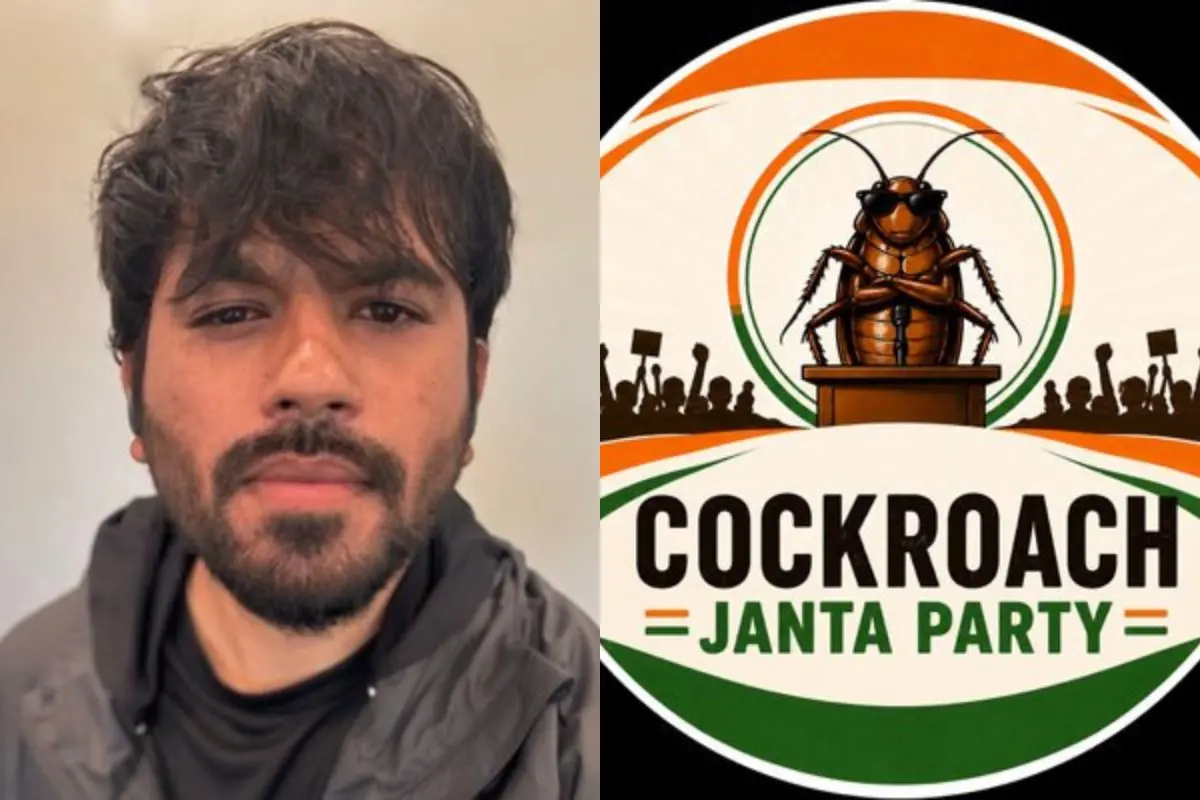
Indian politics has long been seen as a space dominated by entrenched networks, money power and opaque decision-making, a reality that has deterred many young Indians from active political participation. But the landscape shifted overnight when Gen Z suddenly flooded social media with political memes, reels and commentary. The unexpected catalyst, a satirical new outfit calling itself the Cockroach Janata Party (CJP).
At the centre of this digital storm is Abhijeet Dipke, a 30-year-old political communication strategist whose online experiment has morphed into what some describe as a youth-driven political moment. The ‘party’ has amassed tens of thousands of sign-ups within days and even drew playful ‘membership’ nods from public figures like Mahua Moitra and Kirti Azad through social media exchanges.
Dipke’s creation taps into unemployment distress, political fatigue and a sense of invisibility felt by many young people, all delivered through satire wrapped in internet humour. But who is the man behind India’s newest viral political phenomenon?
Who is Abhijeet Dipke?
Dipke began his career far from electoral politics. A journalism graduate from Pune, he later moved to the United States, completing a master’s degree in Public Relations at Boston University. His academic work centred on how communication shapes political perception in an increasingly digital era.
Before leaving for the US, he spent 2020 to 2023 volunteering with the Aam Aadmi Party’s social media team, contributing to meme-led outreach during the Delhi Assembly elections, a campaign credited with energising young online audiences during Arvind Kejriwal’s victory.
In 2023, Dipke returned to Aurangabad while preparing his graduate school applications, experimenting with new formats of political expression. Those experiments laid the groundwork for what would later become the Cockroach Janata Party.
How a courtroom remark became a nationwide satire
The CJP’s name and identity stem from a remark attributed to Chief Justice of India Surya Kant during a hearing. The comment, “There are youngsters like cockroaches, who don't get any employment and don't have a place in a profession”, triggered widespread debate and frustration online.
Although the CJI later clarified that his words were misinterpreted and targeted at those with “fake and bogus degrees,” the moment had already ignited a cultural spark. Young Indians, often dismissed as “lazy” or “chronically online,” seized the insult as a badge of protest.
Dipke transformed that sentiment into a satirical movement. What started as an online joke became a collective venting space for anxieties over unemployment, exam scams and political alienation.
About the Cockroach Janata Party
The CJP introduces itself as the “Voice of the lazy & unemployed.” Its manifesto, deliberately pointed and provocative, makes five promises, including:
- No post-retirement Rajya Sabha seats for Chief Justices
- Arresting election authorities under UAPA if legitimate votes are deleted
- 50% reservation for women
- Cancelling media licences owned by major business houses
- Barring defecting MLAs or MPs from contesting elections for 20 years
The party remains unregistered, but the response suggests it resonates with a section of India’s digitally active youth. Over 350,000 people have officially signed up for its membership via a Google form.
How to join the CJP?
In typical satirical fashion, the party lists humorous yet revealing eligibility criteria:
- Unemployed: By force, choice or principle
- Lazy: Physically, while mentally spiralling
- Chronically online: At least 11 hours a day including bathroom scrolling
- Able to rant: Sharply, honestly, and with purpose
The humour masks a deeper commentary on how many young Indians feel sidelined by mainstream political discourse.
A joke, a protest, or a political preview?
Whether the Cockroach Janata Party becomes a serious political force remains unclear. Supporters hail it as a pressure release for a generation disillusioned with traditional politics. Critics dismiss it as a fleeting internet gimmick.
Dipke himself describes the effort as a youth-driven attempt to influence political conversations “through peaceful and democratic participation,” leaving the door open for more structured action.
For now, the movement sits at a crossroads where political frustration, humour and digital culture meet, raising an important question about the future of Indian democracy.